

Understanding Radiation and Natural Gas Development
Understanding Radiation and Natural Gas Development
By Carrie Crumpton, CNX Vice President of Environmental Strategy
Hey Carrie, how is radiation associated with gas operations?
Much of the petroleum and natural gas developed in the United States was created by the decay of ancient sea life. Naturally occurring radionuclides, which are radioactive forms of elements, and their decay products are found in various natural formations, including shale rock and gas formations, because of the origin of these sedimentary rocks and their organic content. Gas reservoirs often contain detectable amounts of radionuclides like radium-226, radium-228, and lead-210, which occur naturally in the earth. These constituents, collectively known as Naturally Occurring Radioactive Material (NORM), can become what is referred to as Technologically Enhanced1 (TENORM) through human activities such as oil and gas production, mining, and water treatment.
Where can TENORM appear in gas operation activities?
Drilling Waste: Drill cuttings from formations with elevated radioactivity have the potential to convey TENORM back to the surface.
Produced Water: Heavy Brine (or saltwater) separated from the hydrocarbons contains dissolved radionuclides.
Scale and Sludge: Deposits of radium can accumulate forming detectable levels inside pipe, tanks, and equipment when produced water flows from the well through the system.
What is the typical radiation dose from exposure to typical NORM and TENORM sources?
Radiation dose is measured in millirem (mrem), which quantifies the amount of radiation absorbed by the body. According to the Nuclear Regulatory Commission (NRC), the average American receives a dose of about 620 mrem each year from a combination of natural and man-made sources of radiation. Radiation has always been around us as part of our natural environment – this includes cosmic radiation (from outer space), terrestrial radiation (from the ground), and even radiation from food, water, and the air we breathe.
The NRC Personal Annual Radiation Dose Calculator indicates the annual dose of radiation you are typically exposed to if you:
- have porcelain crowns or false teeth (0.07 mrem)
- wear an LCD wristwatch (0.006 mrem)
- use luggage inspection at airports (0.002 mrem)
- watch TV (1 mrem)
- use a video display computer terminal (1 mrem)
- have a smoke detector (0.008 mrem)
- wear a pacemaker (100 mrem)
- have a diagnostic x-ray (40 mrem)
- live within 50 miles of a coal-fired electrical utility plant (0.03 mrem)
For perspective, a dose of 1 mrem results in about 1.2 minutes of reduced life expectancy – this is similar to crossing the street three times, taking three puffs on a cigarette, or consuming 10 extra calories (for a person who is overweight).
When considering radiation doses from oil and gas operations, we can use the Technologically Enhanced Naturally Occurring Radioactive Materials (TENORM) Study by the PA Department of Environmental Protection to compare to other real-world doses, assuming workers are present during drilling, fracturing, and production phases of operations and are exposed to drill cuttings, hydraulic fracturing fluid, flowback water, and produced water.
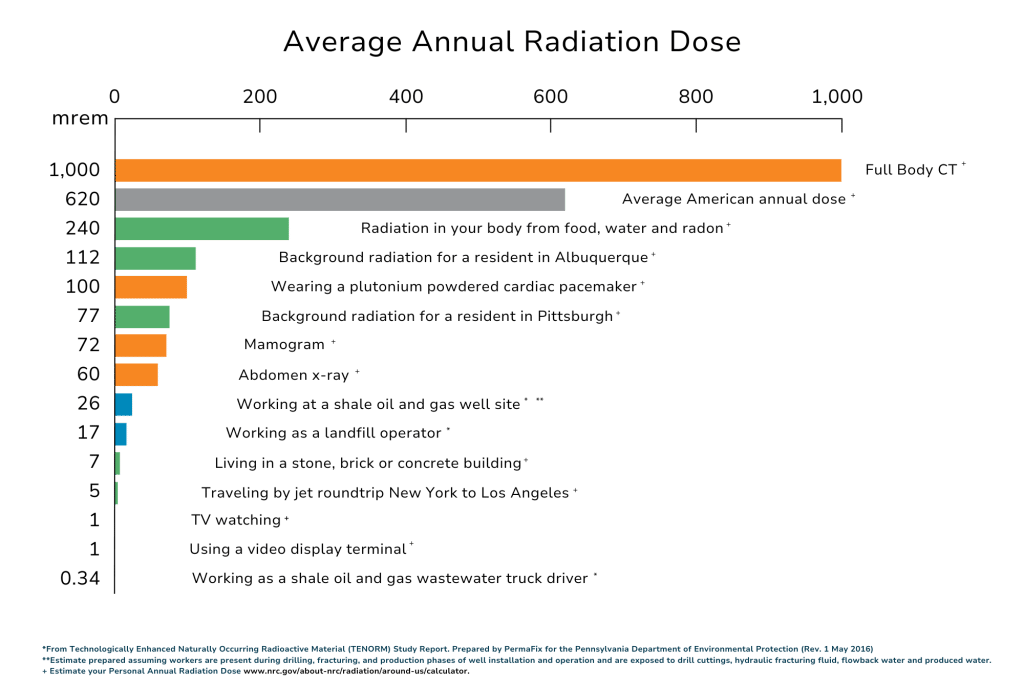
The graphic above provides a summary of estimates of the radiation dose associated with various activities. In any given setting, the actual doses are expected to vary somewhat from the estimates provided. Even so, we can assume that the annual radiation dose resulting from driving a shale oil and gas wastewater truck is likely to be less than 1 mrem, or less than one-tenth of the dose from a single abdomen x-ray. Similarly, the annual radiation exposure to workers at a shale oil and gas well site is expected to be less than 30 mrem, or about one-quarter of the expected annual dose experienced by a resident of Albuquerque.
Hey Carrie, what does CNX do to monitor and mitigate radiation risks?
This same study determined that NORM and TENORM materials associated with the oil and gas industry are well-managed and do not present a risk to the public. The scientific consensus is that there is “little potential for significant radiological exposure to workers and members of the general public related to E&P operations”2. Even so, CNX applies rigorous monitoring and mitigation measures to manage radiation risks effectively. Personnel receive specialized training in radiation protection, proper handling, and proper disposal of NORM and TENORM containing waste. These practices are guided by the CNX Comprehensive Radiation Protection Plan (CRPP), in conformance with 25 PA Code 293.111 requirements.
CNX’s CRPP (publicly available on CNX’s “Radiation Protection and Monitoring” webpage) provides guidance for radiological monitoring, safety protocols and procedures, and regulatory requirements for personnel working at CNX locations. It provides a practical approach to radiation hazard identification and mitigation.
The CRPP outlines CNX’s best‑practice approach to monitoring radiation, training workers, managing waste, and documenting and reviewing performance. This includes:
- Conducting routine radiation surveys of equipment, waste streams, and work areas using dose-rate and contamination meters.
- Training workers on radiation hazards, ALARA principles3, safe work practices, and “stop work” authority.
- Classifying, handling, and disposing of NORM/TENORM containing waste at appropriately permitted facilities under state and EPA regulations.
- Maintaining records, reporting any exceedances to regulators, and periodically auditing the program for continuous improvement.
We hope this helps answer common questions about radiation associated with gas operations and protection measures CNX has in place. Stay tuned for more information as CNX advances its Radical Transparency program and continues to share data and practices openly.
1 “Technologically enhanced” refers to a relative increase in radionuclide concentrations above background radiation levels as a result of changes when human activities alter the radiological, physical, and/or chemical properties of the radioactive material.
2 Pennsylvania Department of Environmental Protection. Technologically Enhanced Naturally Occurring Radioactive Materials (TENORM) Study Report. Rev. 1. Harrisburg, PA: Pennsylvania DEP, May 2016. https://www.pa.gov/agencies/dep/programs-and-services/oil-and-gas/related-topics/radiation-protection
3 ALARA stands for “as low as reasonably achievable.” Read more on “Guidelines for ALARA” from the U.S. Centers for Disease Control and Prevention at https://www.cdc.gov/radiation-health/safety/alara.html.
Read more from the Context Corner Series:
Understanding Radiation and Natural Gas Development
By Carrie Crumpton, CNX Vice President of Environmental Strategy
Hey Carrie, how is radiation associated with gas operations?
Much of the petroleum and natural gas developed in the United States was created by the decay of ancient sea life. Naturally occurring radionuclides, which are radioactive forms of elements, and their decay products are found in various natural formations, including shale rock and gas formations, because of the origin of these sedimentary rocks and their organic content. Gas reservoirs often contain detectable amounts of radionuclides like radium-226, radium-228, and lead-210, which occur naturally in the earth. These constituents, collectively known as Naturally Occurring Radioactive Material (NORM), can become what is referred to as Technologically Enhanced1 (TENORM) through human activities such as oil and gas production, mining, and water treatment.
Where can TENORM appear in gas operation activities?
Drilling Waste: Drill cuttings from formations with elevated radioactivity have the potential to convey TENORM back to the surface.
Produced Water: Heavy Brine (or saltwater) separated from the hydrocarbons contains dissolved radionuclides.
Scale and Sludge: Deposits of radium can accumulate forming detectable levels inside pipe, tanks, and equipment when produced water flows from the well through the system.
What is the typical radiation dose from exposure to typical NORM and TENORM sources?
Radiation dose is measured in millirem (mrem), which quantifies the amount of radiation absorbed by the body. According to the Nuclear Regulatory Commission (NRC), the average American receives a dose of about 620 mrem each year from a combination of natural and man-made sources of radiation. Radiation has always been around us as part of our natural environment – this includes cosmic radiation (from outer space), terrestrial radiation (from the ground), and even radiation from food, water, and the air we breathe.
The NRC Personal Annual Radiation Dose Calculator indicates the annual dose of radiation you are typically exposed to if you:
- have porcelain crowns or false teeth (0.07 mrem)
- wear an LCD wristwatch (0.006 mrem)
- use luggage inspection at airports (0.002 mrem)
- watch TV (1 mrem)
- use a video display computer terminal (1 mrem)
- have a smoke detector (0.008 mrem)
- wear a pacemaker (100 mrem)
- have a diagnostic x-ray (40 mrem)
- live within 50 miles of a coal-fired electrical utility plant (0.03 mrem)
For perspective, a dose of 1 mrem results in about 1.2 minutes of reduced life expectancy – this is similar to crossing the street three times, taking three puffs on a cigarette, or consuming 10 extra calories (for a person who is overweight).
When considering radiation doses from oil and gas operations, we can use the Technologically Enhanced Naturally Occurring Radioactive Materials (TENORM) Study by the PA Department of Environmental Protection to compare to other real-world doses, assuming workers are present during drilling, fracturing, and production phases of operations and are exposed to drill cuttings, hydraulic fracturing fluid, flowback water, and produced water.
The graphic above provides a summary of estimates of the radiation dose associated with various activities. In any given setting, the actual doses are expected to vary somewhat from the estimates provided. Even so, we can assume that the annual radiation dose resulting from driving a shale oil and gas wastewater truck is likely to be less than 1 mrem, or less than one-tenth of the dose from a single abdomen x-ray. Similarly, the annual radiation exposure to workers at a shale oil and gas well site is expected to be less than 30 mrem, or about one-quarter of the expected annual dose experienced by a resident of Albuquerque.
Hey Carrie, what does CNX do to monitor and mitigate radiation risks?
This same study determined that NORM and TENORM materials associated with the oil and gas industry are well-managed and do not present a risk to the public. The scientific consensus is that there is “little potential for significant radiological exposure to workers and members of the general public related to E&P operations”2. Even so, CNX applies rigorous monitoring and mitigation measures to manage radiation risks effectively. Personnel receive specialized training in radiation protection, proper handling, and proper disposal of NORM and TENORM containing waste. These practices are guided by the CNX Comprehensive Radiation Protection Plan (CRPP), in conformance with 25 PA Code 293.111 requirements.
CNX’s CRPP (publicly available on CNX’s “Radiation Protection and Monitoring” webpage) provides guidance for radiological monitoring, safety protocols and procedures, and regulatory requirements for personnel working at CNX locations. It provides a practical approach to radiation hazard identification and mitigation.
The CRPP outlines CNX’s best‑practice approach to monitoring radiation, training workers, managing waste, and documenting and reviewing performance. This includes:
- Conducting routine radiation surveys of equipment, waste streams, and work areas using dose-rate and contamination meters.
- Training workers on radiation hazards, ALARA principles3, safe work practices, and “stop work” authority.
- Classifying, handling, and disposing of NORM/TENORM containing waste at appropriately permitted facilities under state and EPA regulations.
- Maintaining records, reporting any exceedances to regulators, and periodically auditing the program for continuous improvement.
We hope this helps answer common questions about radiation associated with gas operations and protection measures CNX has in place. Stay tuned for more information as CNX advances its Radical Transparency program and continues to share data and practices openly.
1 “Technologically enhanced” refers to a relative increase in radionuclide concentrations above background radiation levels as a result of changes when human activities alter the radiological, physical, and/or chemical properties of the radioactive material.
2 Pennsylvania Department of Environmental Protection. Technologically Enhanced Naturally Occurring Radioactive Materials (TENORM) Study Report. Rev. 1. Harrisburg, PA: Pennsylvania DEP, May 2016. https://www.pa.gov/agencies/dep/programs-and-services/oil-and-gas/related-topics/radiation-protection
3 ALARA stands for “as low as reasonably achievable.” Read more on “Guidelines for ALARA” from the U.S. Centers for Disease Control and Prevention at https://www.cdc.gov/radiation-health/safety/alara.html.
Read more from the Context Corner Series:
CNX Resolves Defamation Lawsuit with Capital & Main

By Positive Energy Hub Staff
CNX and Capital & Main met and discussed the claims in the lawsuit, and have agreed to resolve such claims and to dismiss the lawsuit with prejudice.
Editor’s Note from Capital & Main
Capital & Main has published an Editor’s Note addressing its September 24, 2024 article , “Pennsylvania Gas Driller: Our Operations Pose No Health Risk. You Can’t Be Serious, Activists Say.”
That Editor’s Note states “Capital & Main did not state, and did not intend to imply, that CNX fabricated any reported data in its Radical Transparency program. Further, Capital & Main did not state, and did not intend to imply, that CNX engaged in manipulation of the stock market or any improper attempts to influence its ratings or stock values. Capital & Main has no facts or basis to believe that any fabrication of data or market manipulation occurred.”
Commitment to Facts and Radical Transparency
CNX’s Radical Transparency program continues to provide independently gathered, real-time environmental data to regulators and the public, reinforcing that CNX’s responsible natural gas development poses no public health risk based on measured emissions.
CNX is committed to advancing and vigorously defending its Radical Transparency program.

CNX Resolves Defamation Lawsuit with Capital & Main
CNX Resolves Defamation Lawsuit with Capital & Main
CNX Resolves Defamation Lawsuit with Capital & Main
By Positive Energy Hub Staff
CNX and Capital & Main met and discussed the claims in the lawsuit, and have agreed to resolve such claims and to dismiss the lawsuit with prejudice.
Editor’s Note from Capital & Main
Capital & Main has published an Editor’s Note addressing its September 24, 2024 article , “Pennsylvania Gas Driller: Our Operations Pose No Health Risk. You Can’t Be Serious, Activists Say.”
That Editor’s Note states “Capital & Main did not state, and did not intend to imply, that CNX fabricated any reported data in its Radical Transparency program. Further, Capital & Main did not state, and did not intend to imply, that CNX engaged in manipulation of the stock market or any improper attempts to influence its ratings or stock values. Capital & Main has no facts or basis to believe that any fabrication of data or market manipulation occurred.”
Commitment to Facts and Radical Transparency
CNX’s Radical Transparency program continues to provide independently gathered, real-time environmental data to regulators and the public, reinforcing that CNX’s responsible natural gas development poses no public health risk based on measured emissions.
CNX is committed to advancing and vigorously defending its Radical Transparency program.
CNX Extends Free Cash Flow Streak to 24 Quarters, Boosts Share Repurchase Capacity
CNX Extends Free Cash Flow Streak to 24 Quarters, Boosts Share Repurchase Capacity
By Positive Energy Hub Staff
As temperatures hovered in the low teens across southwestern Pennsylvania on Thursday, January 29, and natural gas reliably warmed and powered countless homes and businesses, CNX Resources released its fourth quarter 2025 earnings results.
Those results underscore both the resilience of the region’s energy backbone and the strength of CNX’s Sustainable Business Model, which has now delivered 24 straight quarters—six full years—of free cash flow.
CNX generated $132 million in free cash flow in the fourth quarter and $646 million for the full year 2025, bringing total free cash flow under its seven-year plan, launched in 2020, to roughly $2.9 billion.

“The fourth quarter represented our 24th consecutive quarter of free cash flow generation, highlighting our Sustainable Business Model and consistent execution that are the cornerstones of growing our long-term per share value,” said Alan Shepard, President & CEO. “We continue to believe that our share repurchase program represents a compelling capital allocation opportunity, and as such, we are announcing an additional $2 billion share repurchase authorization, with no expiration. This new authorization increases our total authorized repurchase capacity to $2.4 billion, which represents approximately 45% of our current equity capitalization.”
Returning cash to shareholders and strengthening the balance sheet
A central theme of CNX’s strategy is using that free cash flow to reward long-term shareholders. In the fourth quarter, CNX bought back about 2.9 million shares of its own stock on the open market at an average price of $34.05 per share, spending $100 million. Since late 2020, the company has repurchased around 98 million shares at an average price of $19.27, reducing its share count by about 37 percent when factoring in shares issued for employee compensation and convertible notes. Fewer shares mean each remaining share represents a larger ownership stake in the company.

The newly announced $2 billion authorization brings CNX’s total share repurchase capacity to roughly $2.4 billion, or about 45 percent of its current stock market value. At the same time, CNX has continued to work on its debt. During the fourth quarter, the company paid down $35 million on its secured credit facilities and reduced the principal on its convertible notes due 2026 by $122 million through an exchange for common stock.
Low costs and reliable production
Behind the financial results is a simple story: CNX is keeping costs low and wells performing.
In 2025, the company produced 629 billion cubic feet equivalent (Bcfe) of natural gas and liquids, modestly above the high end of its earlier guidance range of 625 Bcfe. That performance was supported by both its long-held assets and the properties acquired from Apex Energy.
CNX’s fully burdened cash costs for the fourth quarter were $1.11 per thousand cubic feet equivalent (Mcfe), before non-cash charges like depreciation. This cost level helps protect the business when gas prices are weak and allows more upside when prices are strong.
For 2026, CNX plans to keep production stable, following a “maintenance of production” program. CNX will focus on its core Marcellus Shale wells and continue to enhance its expertise and industry leading position in the deeper Utica Shale. Most of the spending and new wells are expected to come in the first half of the year, with production staying fairly steady from quarter to quarter.

Turning waste gas into value and focusing on transparency
A growing part of CNX’s story is premium, low-carbon products. CNX captures and processes waste Remediated Mine Gas (RMG)—methane that would otherwise leak from old coal mines into the atmosphere—and turns it into a useful domestic energy source. In the fourth quarter of 2025, that program generated about $14 million in net sales from environmental attributes tied to 4.3 Bcf of captured gas, and for the full year, 17.3 Bcf of RMG produced roughly $66 million. For 2026, CNX expects around 17 Bcf of RMG to support about $50 million in Pennsylvania Tier 1 Alternative Energy Credit sales at current prices.
CNX also anticipates about $20 million from the sale of federal Section 45Z Clean Fuel Production tax credits linked to about eight months of qualifying activity in 2025, pending final IRS rules expected around mid 2026.
On the environmental front, CNX’s Radical Transparency program continues to set the company apart. By the end of 2025, the company had collected more than 850,000 air quality measurements around its operations through continuous monitoring. This data shows no evidence that gas development activities are harming human health or degrading local air quality, a result that should be central to discussions about any new public policy for natural gas development in Pennsylvania.
2026 outlook: strong cash generation and flexibility
Looking ahead, CNX expects to generate about $550 million in free cash flow in 2026 at current natural gas price expectations, or around $3.55 per share when including shares that may be issued to settle remaining convertible notes. The company’s 2026 outlook calls for production between 605 and 620 Bcfe and base capital spending of $540–$570 million, plus an additional $16 million payment related to Utica rights beneath the Apex acreage.
With an estimated free cash flow yield of about 11 percent, a strong hedge position, and approximately $1.8 billion of available credit facility capacity, CNX is well positioned to continue its Sustainable Business Model: investing in Appalachia, reducing debt when it makes sense, and returning significant cash to shareholders over time.
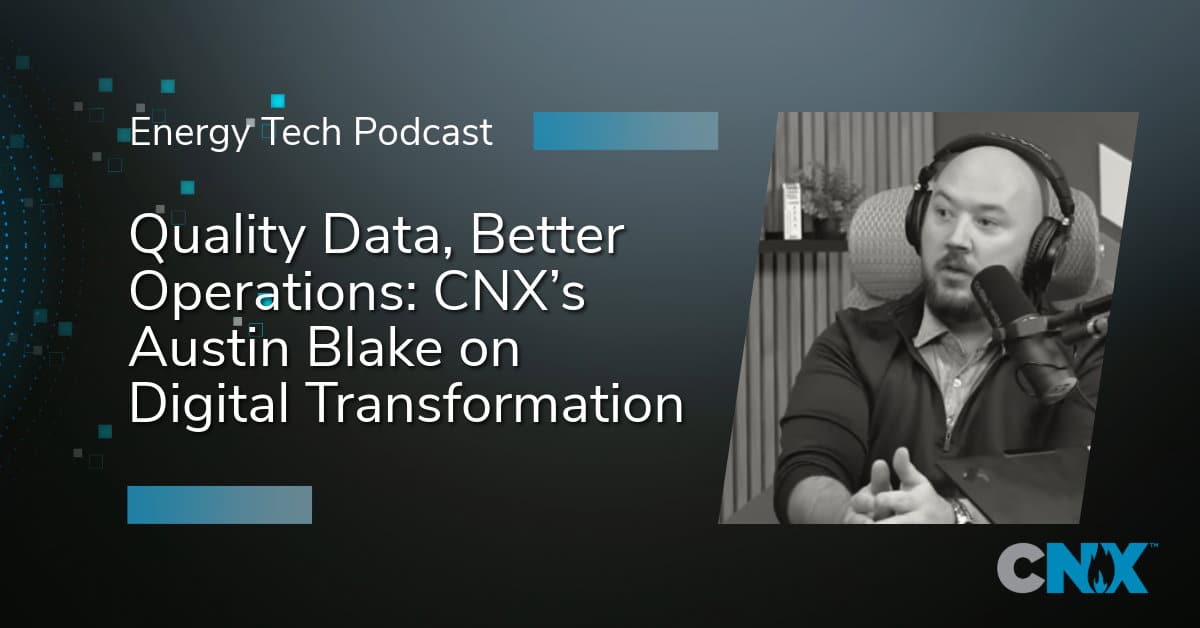
Quality Data, Better Operations: CNX’s Austin Blake on Digital Transformation
Quality Data, Better Operations: CNX’s Austin Blake on Digital Transformation
By Positive Energy Hub Staff
CNX’s approach to quality data is more than a back-office metric—it is the engine that drives operational efficiency, excellence in execution, and long-term value for shareholders.
Across CNX’s footprint, the same disciplined approach to data that improves uptime and lowers emissions parallels the company’s industry-leading Radical Transparency program.
In the EnergyTech Podcast episode below, “The ROI of Clean Data: Unlocking Value Across Drilling, Completions & Midstream,” CNX Director of Data Austin Blake shares how CNX is transforming its data foundation.
Watch and listen as Austin explains how clean, consistent operational data enables better, faster decision-making.
CNX is rebuilding its data foundation from the wellhead up—transitioning from siloed, spreadsheet-based systems and toward governed, cloud-based architecture designed for clean, consistent, machine-learning-ready data.
Continuous Improvement
Internally, CNX uses high-frequency data monitoring and advanced analytics to spot trends, refine operating practices, and identify opportunities to cut emissions and improve reliability across the asset base.
Externally, transparent, verifiable data is at the core of the company’s environmental stewardship, including Radical Transparency—providing policymakers, communities, and investors a clear, evidence-based view of how responsible natural gas development performs against science-based air quality and emissions benchmarks.
“Radical” in Radical Transparency does not refer to rhetoric; it refers to radically higher standards for data integrity and accountability.
By investing in rigorous data collection, modern digital infrastructure, and practical machine learning at the edge of operations, CNX is building a model where operational excellence, environmental performance, and shareholder value are all grounded in the same uncompromising foundation: quality data that anyone can see and test for themselves.
🎙️ Discover more EnergyTech Podcast episodes on the show’s YouTube channel.
Quality Data, Better Operations: CNX’s Austin Blake on Digital Transformation
By Positive Energy Hub Staff
CNX’s approach to quality data is more than a back-office metric—it is the engine that drives operational efficiency, excellence in execution, and long-term value for shareholders.
Across CNX’s footprint, the same disciplined approach to data that improves uptime and lowers emissions parallels the company’s industry-leading Radical Transparency program.
In the EnergyTech Podcast episode below, “The ROI of Clean Data: Unlocking Value Across Drilling, Completions & Midstream,” CNX Director of Data Austin Blake shares how CNX is transforming its data foundation.
Watch and listen as Austin explains how clean, consistent operational data enables better, faster decision-making.
CNX is rebuilding its data foundation from the wellhead up—transitioning from siloed, spreadsheet-based systems and toward governed, cloud-based architecture designed for clean, consistent, machine-learning-ready data.
Continuous Improvement
Internally, CNX uses high-frequency data monitoring and advanced analytics to spot trends, refine operating practices, and identify opportunities to cut emissions and improve reliability across the asset base.
Externally, transparent, verifiable data is at the core of the company’s environmental stewardship, including Radical Transparency—providing policymakers, communities, and investors a clear, evidence-based view of how responsible natural gas development performs against science-based air quality and emissions benchmarks.
“Radical” in Radical Transparency does not refer to rhetoric; it refers to radically higher standards for data integrity and accountability.
By investing in rigorous data collection, modern digital infrastructure, and practical machine learning at the edge of operations, CNX is building a model where operational excellence, environmental performance, and shareholder value are all grounded in the same uncompromising foundation: quality data that anyone can see and test for themselves.
🎙️ Discover more EnergyTech Podcast episodes on the show’s YouTube channel.
CNX Foundation and Partners Fund HVAC Upgrade, Ensuring the Show Goes on for Apollo-Ridge Students

By Positive Energy Hub Staff
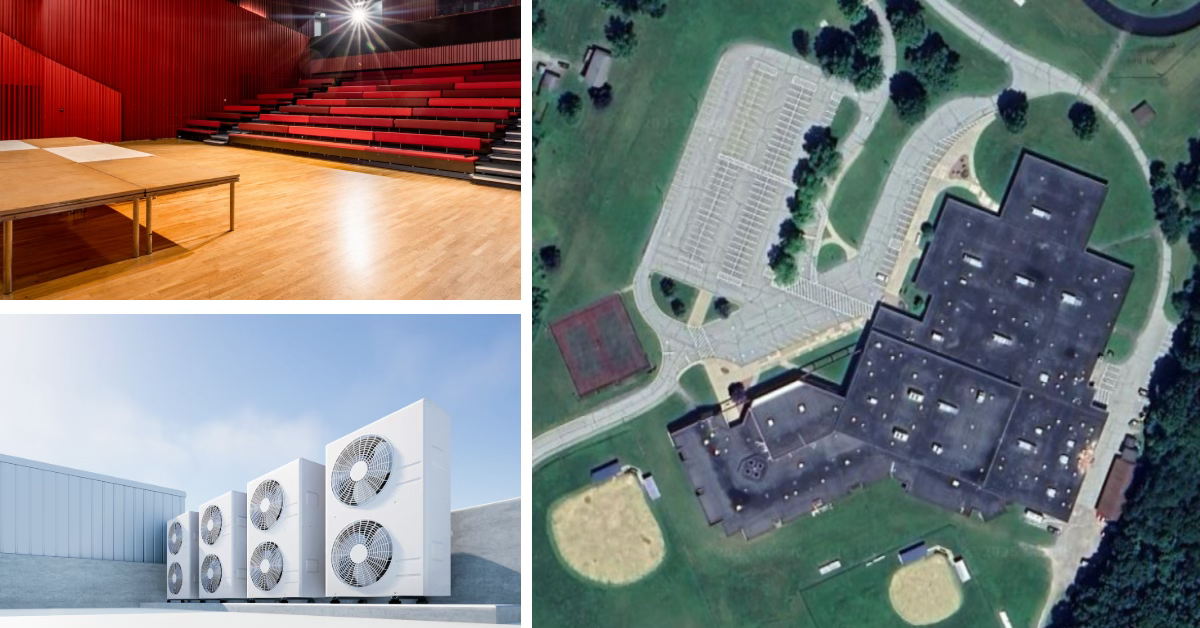
For the students and staff at Apollo-Ridge School District, the auditorium and band room are more than just classrooms—they’re the stage where memorable moments and the school’s creativity comes to life. Keeping these large, high-ceilinged spaces comfortable, however, has become increasingly difficult.
Apollo-Ridge’s existing HVAC system, showing its age, has been failing to maintain consistent temperatures, leading to student and staff discomfort, reduced classroom productivity, and time and resources lost managing preventable temperature issues.
“When our infrastructure struggles, it distracts from the incredible work our students are doing on stage and in the band room,” says Dr. Courtney Anderson, Superintendent of Apollo-Ridge School District. “We needed a solution that would ensure a safe, comfortable environment for our learning community, but the costs for such a specialized upgrade are significant.”
Recognizing this critical need, the CNX Foundation and a coalition of regional partners stepped up to bridge the gap. A clear example of CNX’s micro-TIL (Tangible, Impactful, Local) hyper-local support, the Foundation mobilized its network to fund the nearly half-million-dollar project, which is set to get underway and be completed in the summer of 2026.
The funding effort was a true community collaboration.

This year’s CNX Foundation Charity Golf Outing raised over $52,000, and the recent CNX Foundation Clay Shoot contributed another $60,000 toward the cause. These events were backed by generous sponsors like B&L, Deep Well Services, Evolution Well Services, M&A, Penn Mechanical, Precision Drilling, ROC and many others. The CNX Foundation is covering the remaining balance, ensuring that the school district can move forward without diverting funds from educational programs.
This project is being spearheaded by Huckestein Mechanical Services, a regional leader in high-efficiency HVAC design, to deliver a solution focused on one priority: students.
When Edward Tworek, Vice President of Service at Huckestein Mechanical Services, was asked to engage in the project, he didn’t hesitate.
“Projects like this are about more than installing new equipment,” Tworek said. “It’s about providing the best environment possible for our developing youth.”
The upgrade will replace the aging climate control infrastructure in the Auditorium and Band Room with modern, high-efficiency rooftop units designed to provide steady temperatures, improved ventilation, and cleaner indoor air.
Research supported by ASHRAE and other studies have linked adequate classroom ventilation and thermal comfort to measurable improvements in student performance, including higher standardized test scores and stronger engagement in the classroom.[i][ii]
- Energy Efficiency: The new rooftop units utilize advanced variable-speed technology, allowing them to ramp up or down based on real-time demand rather than operating at full capacity all day.
- Cost Savings: The district expects to see a meaningful reduction in monthly utility bills—savings that can be reinvested back into the classroom.
- Fuel Source: Leveraging clean-burning natural gas, the system ensures reliable heating even during the coldest Western PA winters.
“This isn’t just a replacement; it’s a modernization,” says Richard K. Wuenschell, Vice President of Projects at Huckestein Mechanical Services. “We are installing a system that improves air quality and comfort for the students while lowering the long-term operational costs for the district. It’s a win-win for the facility and taxpayers.”
For Dr. Anderson and the Apollo-Ridge community, the support goes beyond just new mechanical equipment.
“We are incredibly grateful for the support of the CNX Foundation and their partners,” Dr. Anderson added. “This investment solves a major infrastructure headache for us, but more importantly, it sends a message to our students that their community values them and wants them to succeed in a comfortable, modern environment.”
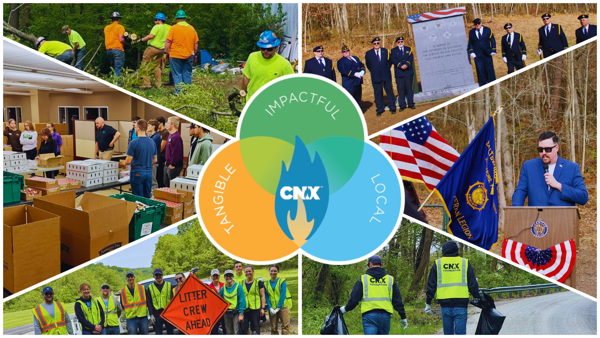
This project exemplifies CNX’s micro-TIL strategy in action. It is Tangible—resulting in physical, permanent equipment that students will use every day. It is Impactful—improving the learning environment and freeing up budget dollars. And above all, it is Local—focused on a specific need where CNX operates.
By the time the curtain rises in the renovated auditorium in 2026, the temperature will be just right—thanks to a community that puts Appalachia First.
[i] Chan, W. R., Heming, A., & Shannon, C. (2022). Managing air quality during the pandemic: How K-12 schools addressed air quality in the second year of COVID-19. Center for Green Schools & ASHRAE.
[ii] Sorensen, L., Hwang, M., & Radia, M. A. (2024). The effects of school building HVAC system conditions on student academic and behavioral outcomes. Annenberg Institute at Brown University.
You may also like…
CNX Foundation and Partners Fund HVAC Upgrade, Ensuring the Show Goes on for Apollo-Ridge Students
By Positive Energy Hub Staff
For the students and staff at Apollo-Ridge School District, the auditorium and band room are more than just classrooms—they’re the stage where memorable moments and the school’s creativity comes to life. Keeping these large, high-ceilinged spaces comfortable, however, has become increasingly difficult.
Apollo-Ridge’s existing HVAC system, showing its age, has been failing to maintain consistent temperatures, leading to student and staff discomfort, reduced classroom productivity, and time and resources lost managing preventable temperature issues.
“When our infrastructure struggles, it distracts from the incredible work our students are doing on stage and in the band room,” says Dr. Courtney Anderson, Superintendent of Apollo-Ridge School District. “We needed a solution that would ensure a safe, comfortable environment for our learning community, but the costs for such a specialized upgrade are significant.”
Recognizing this critical need, the CNX Foundation and a coalition of regional partners stepped up to bridge the gap. A clear example of CNX’s micro-TIL (Tangible, Impactful, Local) hyper-local support, the Foundation mobilized its network to fund the nearly half-million-dollar project, which is set to get underway and be completed in the summer of 2026.
The funding effort was a true community collaboration.
This year’s CNX Foundation Charity Golf Outing raised over $52,000, and the recent CNX Foundation Clay Shoot contributed another $60,000 toward the cause. These events were backed by generous sponsors like B&L, Deep Well Services, Evolution Well Services, M&A, Penn Mechanical, Precision Drilling, ROC and many others. The CNX Foundation is covering the remaining balance, ensuring that the school district can move forward without diverting funds from educational programs.
This project is being spearheaded by Huckestein Mechanical Services, a regional leader in high-efficiency HVAC design, to deliver a solution focused on one priority: students.
When Edward Tworek, Vice President of Service at Huckestein Mechanical Services, was asked to engage in the project, he didn’t hesitate.
“Projects like this are about more than installing new equipment,” Tworek said. “It’s about providing the best environment possible for our developing youth.”
The upgrade will replace the aging climate control infrastructure in the Auditorium and Band Room with modern, high-efficiency rooftop units designed to provide steady temperatures, improved ventilation, and cleaner indoor air.
Research supported by ASHRAE and other studies have linked adequate classroom ventilation and thermal comfort to measurable improvements in student performance, including higher standardized test scores and stronger engagement in the classroom.[i][ii]
- Energy Efficiency: The new rooftop units utilize advanced variable-speed technology, allowing them to ramp up or down based on real-time demand rather than operating at full capacity all day.
- Cost Savings: The district expects to see a meaningful reduction in monthly utility bills—savings that can be reinvested back into the classroom.
- Fuel Source: Leveraging clean-burning natural gas, the system ensures reliable heating even during the coldest Western PA winters.
“This isn’t just a replacement; it’s a modernization,” says Richard K. Wuenschell, Vice President of Projects at Huckestein Mechanical Services. “We are installing a system that improves air quality and comfort for the students while lowering the long-term operational costs for the district. It’s a win-win for the facility and taxpayers.”
For Dr. Anderson and the Apollo-Ridge community, the support goes beyond just new mechanical equipment.
“We are incredibly grateful for the support of the CNX Foundation and their partners,” Dr. Anderson added. “This investment solves a major infrastructure headache for us, but more importantly, it sends a message to our students that their community values them and wants them to succeed in a comfortable, modern environment.”
This project exemplifies CNX’s micro-TIL strategy in action. It is Tangible—resulting in physical, permanent equipment that students will use every day. It is Impactful—improving the learning environment and freeing up budget dollars. And above all, it is Local—focused on a specific need where CNX operates.
By the time the curtain rises in the renovated auditorium in 2026, the temperature will be just right—thanks to a community that puts Appalachia First.
[i] Chan, W. R., Heming, A., & Shannon, C. (2022). Managing air quality during the pandemic: How K-12 schools addressed air quality in the second year of COVID-19. Center for Green Schools & ASHRAE.
[ii] Sorensen, L., Hwang, M., & Radia, M. A. (2024). The effects of school building HVAC system conditions on student academic and behavioral outcomes. Annenberg Institute at Brown University.
You may also like…
CNX Foundation and Partners Fund HVAC Upgrade, Ensuring the Show Goes on for Apollo-Ridge Students
CNX Foundation and Partners Fund HVAC Upgrade, Ensuring the Show Goes on for Apollo-Ridge Students
By Positive Energy Hub Staff
For the students and staff at Apollo-Ridge School District, the auditorium and band room are more than just classrooms—they’re the stage where memorable moments and the school’s creativity comes to life. Keeping these large, high-ceilinged spaces comfortable, however, has become increasingly difficult.
Apollo-Ridge’s existing HVAC system, showing its age, has been failing to maintain consistent temperatures, leading to student and staff discomfort, reduced classroom productivity, and time and resources lost managing preventable temperature issues.
“When our infrastructure struggles, it distracts from the incredible work our students are doing on stage and in the band room,” says Dr. Courtney Anderson, Superintendent of Apollo-Ridge School District. “We needed a solution that would ensure a safe, comfortable environment for our learning community, but the costs for such a specialized upgrade are significant.”
Recognizing this critical need, the CNX Foundation and a coalition of regional partners stepped up to bridge the gap. A clear example of CNX’s micro-TIL (Tangible, Impactful, Local) hyper-local support, the Foundation mobilized its network to fund the nearly half-million-dollar project, which is set to get underway and be completed in the summer of 2026.
The funding effort was a true community collaboration.
This year’s CNX Foundation Charity Golf Outing raised over $52,000, and the recent CNX Foundation Clay Shoot contributed another $60,000 toward the cause. These events were backed by generous sponsors like B&L, Deep Well Services, Evolution Well Services, M&A, Penn Mechanical, Precision Drilling, ROC and many others. The CNX Foundation is covering the remaining balance, ensuring that the school district can move forward without diverting funds from educational programs.
This project is being spearheaded by Huckestein Mechanical Services, a regional leader in high-efficiency HVAC design, to deliver a solution focused on one priority: students.
When Edward Tworek, Vice President of Service at Huckestein Mechanical Services, was asked to engage in the project, he didn’t hesitate.
“Projects like this are about more than installing new equipment,” Tworek said. “It’s about providing the best environment possible for our developing youth.”
The upgrade will replace the aging climate control infrastructure in the Auditorium and Band Room with modern, high-efficiency rooftop units designed to provide steady temperatures, improved ventilation, and cleaner indoor air.
Research supported by ASHRAE and other studies have linked adequate classroom ventilation and thermal comfort to measurable improvements in student performance, including higher standardized test scores and stronger engagement in the classroom.[i][ii]
- Energy Efficiency: The new rooftop units utilize advanced variable-speed technology, allowing them to ramp up or down based on real-time demand rather than operating at full capacity all day.
- Cost Savings: The district expects to see a meaningful reduction in monthly utility bills—savings that can be reinvested back into the classroom.
- Fuel Source: Leveraging clean-burning natural gas, the system ensures reliable heating even during the coldest Western PA winters.
“This isn’t just a replacement; it’s a modernization,” says Richard K. Wuenschell, Vice President of Projects at Huckestein Mechanical Services. “We are installing a system that improves air quality and comfort for the students while lowering the long-term operational costs for the district. It’s a win-win for the facility and taxpayers.”
For Dr. Anderson and the Apollo-Ridge community, the support goes beyond just new mechanical equipment.
“We are incredibly grateful for the support of the CNX Foundation and their partners,” Dr. Anderson added. “This investment solves a major infrastructure headache for us, but more importantly, it sends a message to our students that their community values them and wants them to succeed in a comfortable, modern environment.”
This project exemplifies CNX’s micro-TIL strategy in action. It is Tangible—resulting in physical, permanent equipment that students will use every day. It is Impactful—improving the learning environment and freeing up budget dollars. And above all, it is Local—focused on a specific need where CNX operates.
By the time the curtain rises in the renovated auditorium in 2026, the temperature will be just right—thanks to a community that puts Appalachia First.
[i] Chan, W. R., Heming, A., & Shannon, C. (2022). Managing air quality during the pandemic: How K-12 schools addressed air quality in the second year of COVID-19. Center for Green Schools & ASHRAE.
[ii] Sorensen, L., Hwang, M., & Radia, M. A. (2024). The effects of school building HVAC system conditions on student academic and behavioral outcomes. Annenberg Institute at Brown University.
You may also like…
CNX’s Season of Giving: Meeting Our Communities Where They Need Us Most
By Positive Energy Hub Staff
This year’s CNX Impact—its season of giving—expands on CNX’s year-round commitment to hyper-local, direct support that makes a tangible difference in the lives of dozens of families across the region where CNX employees live and work.
Understanding True Community Need
The power of CNX’s approach lies in its specificity and responsiveness. Rather than broad charitable campaigns, CNX prioritizes micro-TIL (tangible, impactful, local) investments that address the immediate, pressing needs of our neighbors. For example, when Armstrong County’s Helping All Victims In Need (HAVIN), a domestic violence shelter, shared a critical request on social media in November, CNX responded promptly.
Recognizing the shelter’s need for essential health and sanitation supplies, CNX mobilized to deliver hand sanitizer, tissues, paper towels, and disinfectant wipes to HAVIN’s Kittanning facility. But the impact extends beyond supplies. Alongside donations, CNX employees have taken on personal commitments to support two families connected with the shelter—a mother with three children and another family of the same size—through the holiday season, ensuring they experience the warmth of community care during a vulnerable time.
Additionally, the Domestic Violence Support Service Program (DVSSP) in Washington County partnered with CNX to support one mother and six children with holiday gifts. Domestic violence affects far too many families across Appalachia, and CNX is standing beside survivors during a season when isolation and hardship can be magnified.
Micro-TIL Support at the Individual Level
While CNX’s seasonal initiatives draw attention during the holidays, the company’s commitment to hyper-local individual support operates year-round, including over the past several weeks. Through careful collaboration with local partners and case managers, CNX identifies and responds to urgent, specific needs facing its neighbors in crisis.
Consider a situation in Greensburg that CNX discovered in November. A working father faced homelessness while fighting to reunite with his daughters. Despite maintaining employment, he struggled with mounting rent debt, accumulating utility bills, and transportation challenges that threatened his ability to get to work. Recognizing the interconnected nature of his barriers to stability, CNX is coordinating a comprehensive support plan: assisting with food security, utility bills, and his rent arrears, while working with organizations to chart a pathway toward family reunification. This wasn’t a one-time gift—it was a structured intervention designed to create lasting change.
Similarly, a mother of two young children recently faced displacement when unexpected circumstances left her without housing. With only 60 days to secure a new apartment, she faced an impossible choice: use her entire paycheck for a security deposit and first month’s rent, or provide a Christmas for her children. CNX similarly stepped in with coordinated support: a down payment contribution to secure her housing, food assistance to address immediate food insecurity, and holiday support for her children. By addressing multiple, interconnected challenges simultaneously, CNX is helping provide a pathway toward stability.
These two interventions underscore the need for a micro-TIL approach: to meet people where they are, identify the specific obstacles between them and stability, and deploying resources strategically to break cycles of crisis.
Expanding Support Across the CNX Footprint
The scope of this year’s season of giving demonstrates the interconnected nature of CNX’s community presence. Across its operational footprint, CNX and its employees are channeling resources to organizations addressing homelessness, child poverty, and family crisis support.
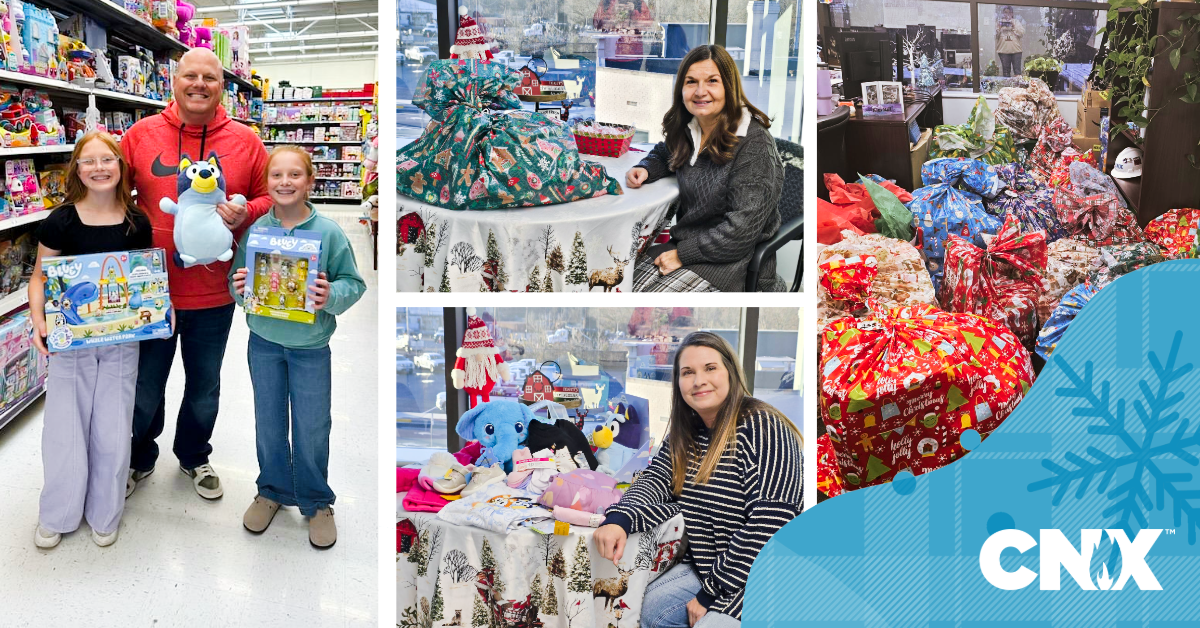
In Virginia, CNX employees are keeping a cherished holiday tradition alive by participating in the “Adopt a Star” program, shown below.
This year, the team came together to shop, donate time, and contribute funds to adopt 24 “Christmas Kids,” ensuring each child receives gifts and support for the holidays. It’s a tradition where the team consistently exceeds expectations, rallying together year after year to make the season brighter for local families.
In partnership with local organizations, CNX employees are ensuring that vulnerable youth have essentials as they navigate uncertain housing situations.
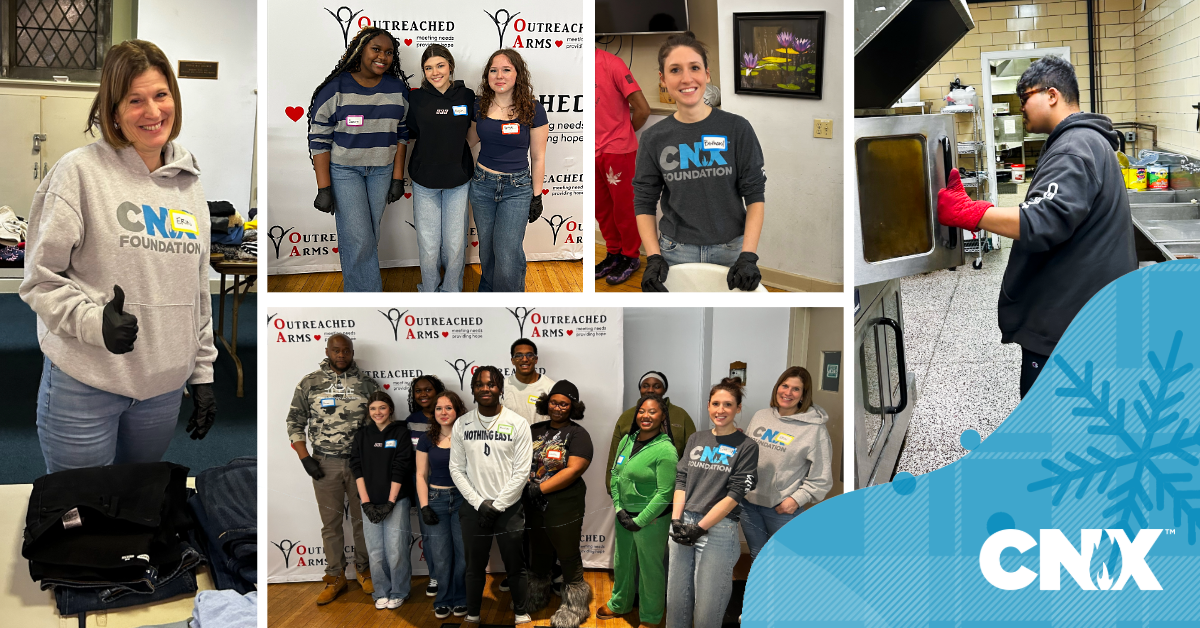
Outreached Arms received support just before Thanksgiving through backpack donations for children experiencing housing insecurity.
And more recently, shown below, students participating in this year’s Mentorship Academy program volunteered at Outreached Arms, assisting with meal preparation and service.
Armstrong Community Action serves families facing economic hardship across the county. CNX employees—alongside valued vendors like ROC and Pillar Innovation—adopted and provided gifts to 14 families representing 48 children this December.
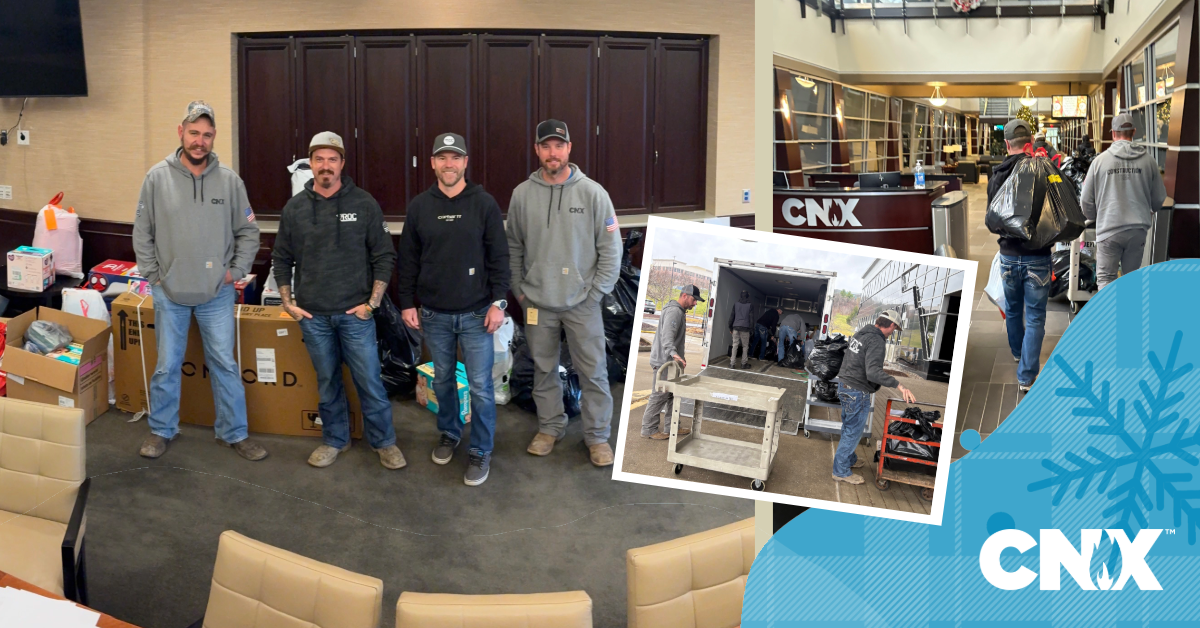
On December 4th, CNX employees visited Washington City Mission for a day of hands-on support. Beyond providing holiday decorations, team members provided gifts to 147 individuals currently relying on the mission’s services. This direct, in-person support recognizes that the holidays can highlight loneliness and hardship for our most vulnerable neighbors.
Complementing this effort, CNX is partnering with Westmoreland Community Action to adopt another 42 families, providing gifts to 113 children—demonstrating the multiplier effect when corporate commitment meets employee passion.
Washington Dams Cleanup Initiative
As part of CNX’s commitment to environmental stewardship, CNX employees participated in a cleanup effort along the roadways of Washington Dams in North Franklin Township, Washington County, PA.
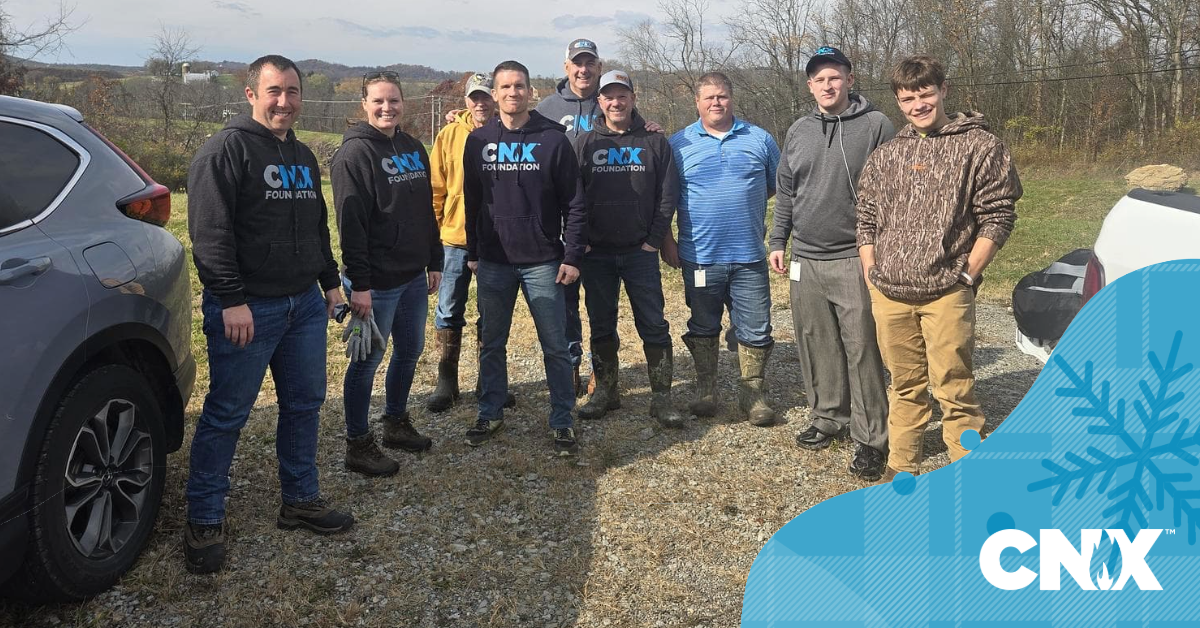
CNX volunteers collected 45 bags of garbage and 25 discarded tires, removing litter and waste that had accumulated throughout the area. The Washington Dams roadway cleanup shows how CNX’s seasonal giving initiatives extend beyond traditional charitable donations to include active participation in beautification and conservation projects that enhance the quality of life for residents across southwestern Pennsylvania.
Providing Comfort for the Community
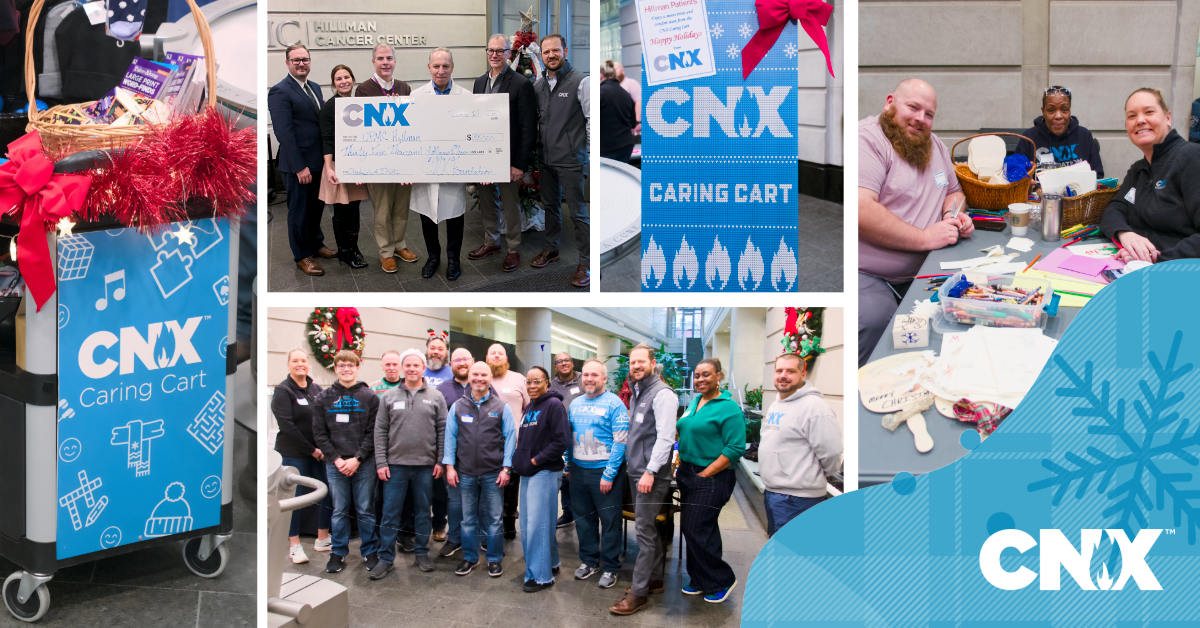
CNX recognizes that healing and wellness extend beyond medical treatment. On December 11th, the team returned to UPMC Hillman Shadyside to continue a cherished tradition: the “Caring Carts” distribution.
A cornerstone of the CNX Foundation’s partnership with UPMC Hillman since 2016, these carts are stocked with personal items designed to bring comfort and a moment of joy to patients undergoing treatment. Alongside these personal donations, CNX made a financial contribution to further support the vital work of the medical heroes who serve our region every day.
The following day, December 12th, a volunteer team headed to UPMC Hillman IRMC to provide lunch for the nursing staff—a tangible “thank you” for the tireless 24/7 care they provide to our community members year-round.
The Philosophy Behind the Action
CNX’s approach to giving reflects a deeper commitment: the belief that sustainable community strength comes from understanding and responding to hyperlocal needs. By partnering with established local organizations and empowering employees to give personally, CNX creates a multiplier effect that amplifies impact far beyond corporate donations alone.
CNX’s Season of Giving isn’t a one-time campaign—it’s a reflection of the company’s 160-year presence in Appalachia and the relationships that run deep in the communities it serves.
This November and December, across Appalachia and through partnerships with organizations on the frontlines of community need, CNX is demonstrating what it means to put Appalachia First—not in slogan alone, but in action, presence, and genuine care for the families who call our region home.
You may also like…
CNX’s Season of Giving: Meeting Our Communities Where They Need Us Most
CNX's Season of Giving: Meeting Our Communities Where They Need Us Most
By Positive Energy Hub Staff
This year’s CNX Impact—its season of giving—expands on CNX’s year-round commitment to hyper-local, direct support that makes a tangible difference in the lives of dozens of families across the region where CNX employees live and work.
Understanding True Community Need
The power of CNX’s approach lies in its specificity and responsiveness. Rather than broad charitable campaigns, CNX prioritizes micro-TIL (tangible, impactful, local) investments that address the immediate, pressing needs of our neighbors. For example, when Armstrong County’s Helping All Victims In Need (HAVIN), a domestic violence shelter, shared a critical request on social media in November, CNX responded promptly.
Recognizing the shelter’s need for essential health and sanitation supplies, CNX mobilized to deliver hand sanitizer, tissues, paper towels, and disinfectant wipes to HAVIN’s Kittanning facility. But the impact extends beyond supplies. Alongside donations, CNX employees have taken on personal commitments to support two families connected with the shelter—a mother with three children and another family of the same size—through the holiday season, ensuring they experience the warmth of community care during a vulnerable time.
Additionally, the Domestic Violence Support Service Program (DVSSP) in Washington County partnered with CNX to support one mother and six children with holiday gifts. Domestic violence affects far too many families across Appalachia, and CNX is standing beside survivors during a season when isolation and hardship can be magnified.
Micro-TIL Support at the Individual Level
While CNX’s seasonal initiatives draw attention during the holidays, the company’s commitment to hyper-local individual support operates year-round, including over the past several weeks. Through careful collaboration with local partners and case managers, CNX identifies and responds to urgent, specific needs facing its neighbors in crisis.
Consider a situation in Greensburg that CNX discovered in November. A working father faced homelessness while fighting to reunite with his daughters. Despite maintaining employment, he struggled with mounting rent debt, accumulating utility bills, and transportation challenges that threatened his ability to get to work. Recognizing the interconnected nature of his barriers to stability, CNX is coordinating a comprehensive support plan: assisting with food security, utility bills, and his rent arrears, while working with organizations to chart a pathway toward family reunification. This wasn’t a one-time gift—it was a structured intervention designed to create lasting change.
Similarly, a mother of two young children recently faced displacement when unexpected circumstances left her without housing. With only 60 days to secure a new apartment, she faced an impossible choice: use her entire paycheck for a security deposit and first month’s rent, or provide a Christmas for her children. CNX similarly stepped in with coordinated support: a down payment contribution to secure her housing, food assistance to address immediate food insecurity, and holiday support for her children. By addressing multiple, interconnected challenges simultaneously, CNX is helping provide a pathway toward stability.
These two interventions underscore the need for a micro-TIL approach: to meet people where they are, identify the specific obstacles between them and stability, and deploying resources strategically to break cycles of crisis.
Expanding Support Across the CNX Footprint
The scope of this year’s season of giving demonstrates the interconnected nature of CNX’s community presence. Across its operational footprint, CNX and its employees are channeling resources to organizations addressing homelessness, child poverty, and family crisis support.
In Virginia, CNX employees are keeping a cherished holiday tradition alive by participating in the “Adopt a Star” program, shown below.
This year, the team came together to shop, donate time, and contribute funds to adopt 24 “Christmas Kids,” ensuring each child receives gifts and support for the holidays. It’s a tradition where the team consistently exceeds expectations, rallying together year after year to make the season brighter for local families.
In partnership with local organizations, CNX employees are ensuring that vulnerable youth have essentials as they navigate uncertain housing situations.
Outreached Arms received support just before Thanksgiving through backpack donations for children experiencing housing insecurity.
And more recently, shown below, students participating in this year’s Mentorship Academy program volunteered at Outreached Arms, assisting with meal preparation and service.
Armstrong Community Action serves families facing economic hardship across the county. CNX employees—alongside valued vendors like ROC and Pillar Innovation—adopted and provided gifts to 14 families representing 48 children this December.
On December 4th, CNX employees visited Washington City Mission for a day of hands-on support. Beyond providing holiday decorations, team members provided gifts to 147 individuals currently relying on the mission’s services. This direct, in-person support recognizes that the holidays can highlight loneliness and hardship for our most vulnerable neighbors.
Complementing this effort, CNX is partnering with Westmoreland Community Action to adopt another 42 families, providing gifts to 113 children—demonstrating the multiplier effect when corporate commitment meets employee passion.
Washington Dams Cleanup Initiative
As part of CNX’s commitment to environmental stewardship, CNX employees participated in a cleanup effort along the roadways of Washington Dams in North Franklin Township, Washington County, PA.
CNX volunteers collected 45 bags of garbage and 25 discarded tires, removing litter and waste that had accumulated throughout the area. The Washington Dams roadway cleanup shows how CNX’s seasonal giving initiatives extend beyond traditional charitable donations to include active participation in beautification and conservation projects that enhance the quality of life for residents across southwestern Pennsylvania.
Providing Comfort for the Community
CNX recognizes that healing and wellness extend beyond medical treatment. On December 11th, the team returned to UPMC Hillman Shadyside to continue a cherished tradition: the “Caring Carts” distribution.
A cornerstone of the CNX Foundation’s partnership with UPMC Hillman since 2016, these carts are stocked with personal items designed to bring comfort and a moment of joy to patients undergoing treatment. Alongside these personal donations, CNX made a financial contribution to further support the vital work of the medical heroes who serve our region every day.
The following day, December 12th, a volunteer team headed to UPMC Hillman IRMC to provide lunch for the nursing staff—a tangible “thank you” for the tireless 24/7 care they provide to our community members year-round.
The Philosophy Behind the Action
CNX’s approach to giving reflects a deeper commitment: the belief that sustainable community strength comes from understanding and responding to hyperlocal needs. By partnering with established local organizations and empowering employees to give personally, CNX creates a multiplier effect that amplifies impact far beyond corporate donations alone.
CNX’s Season of Giving isn’t a one-time campaign—it’s a reflection of the company’s 160-year presence in Appalachia and the relationships that run deep in the communities it serves.
This November and December, across Appalachia and through partnerships with organizations on the frontlines of community need, CNX is demonstrating what it means to put Appalachia First—not in slogan alone, but in action, presence, and genuine care for the families who call our region home.
You may also like…
CNX’s Season of Giving: Meeting Our Communities Where They Need Us Most
By Positive Energy Hub Staff
This year’s CNX Impact—its season of giving—expands on CNX’s year-round commitment to hyper-local, direct support that makes a tangible difference in the lives of dozens of families across the region where CNX employees live and work.
Understanding True Community Need
The power of CNX’s approach lies in its specificity and responsiveness. Rather than broad charitable campaigns, CNX prioritizes micro-TIL (tangible, impactful, local) investments that address the immediate, pressing needs of our neighbors. For example, when Armstrong County’s Helping All Victims In Need (HAVIN), a domestic violence shelter, shared a critical request on social media in November, CNX responded promptly.
Recognizing the shelter’s need for essential health and sanitation supplies, CNX mobilized to deliver hand sanitizer, tissues, paper towels, and disinfectant wipes to HAVIN’s Kittanning facility. But the impact extends beyond supplies. Alongside donations, CNX employees have taken on personal commitments to support two families connected with the shelter—a mother with three children and another family of the same size—through the holiday season, ensuring they experience the warmth of community care during a vulnerable time.
Additionally, the Domestic Violence Support Service Program (DVSSP) in Washington County partnered with CNX to support one mother and six children with holiday gifts. Domestic violence affects far too many families across Appalachia, and CNX is standing beside survivors during a season when isolation and hardship can be magnified.
Micro-TIL Support at the Individual Level
While CNX’s seasonal initiatives draw attention during the holidays, the company’s commitment to hyper-local individual support operates year-round, including over the past several weeks. Through careful collaboration with local partners and case managers, CNX identifies and responds to urgent, specific needs facing its neighbors in crisis.
Consider a situation in Greensburg that CNX discovered in November. A working father faced homelessness while fighting to reunite with his daughters. Despite maintaining employment, he struggled with mounting rent debt, accumulating utility bills, and transportation challenges that threatened his ability to get to work. Recognizing the interconnected nature of his barriers to stability, CNX is coordinating a comprehensive support plan: assisting with food security, utility bills, and his rent arrears, while working with organizations to chart a pathway toward family reunification. This wasn’t a one-time gift—it was a structured intervention designed to create lasting change.
Similarly, a mother of two young children recently faced displacement when unexpected circumstances left her without housing. With only 60 days to secure a new apartment, she faced an impossible choice: use her entire paycheck for a security deposit and first month’s rent, or provide a Christmas for her children. CNX similarly stepped in with coordinated support: a down payment contribution to secure her housing, food assistance to address immediate food insecurity, and holiday support for her children. By addressing multiple, interconnected challenges simultaneously, CNX is helping provide a pathway toward stability.
These two interventions underscore the need for a micro-TIL approach: to meet people where they are, identify the specific obstacles between them and stability, and deploying resources strategically to break cycles of crisis.
Expanding Support Across the CNX Footprint
The scope of this year’s season of giving demonstrates the interconnected nature of CNX’s community presence. Across its operational footprint, CNX and its employees are channeling resources to organizations addressing homelessness, child poverty, and family crisis support.
In Virginia, CNX employees are keeping a cherished holiday tradition alive by participating in the “Adopt a Star” program, shown below.
This year, the team came together to shop, donate time, and contribute funds to adopt 24 “Christmas Kids,” ensuring each child receives gifts and support for the holidays. It’s a tradition where the team consistently exceeds expectations, rallying together year after year to make the season brighter for local families.
In partnership with local organizations, CNX employees are ensuring that vulnerable youth have essentials as they navigate uncertain housing situations.
Outreached Arms received support just before Thanksgiving through backpack donations for children experiencing housing insecurity.
And more recently, shown below, students participating in this year’s Mentorship Academy program volunteered at Outreached Arms, assisting with meal preparation and service.
Armstrong Community Action serves families facing economic hardship across the county. CNX employees—alongside valued vendors like ROC and Pillar Innovation—adopted and provided gifts to 14 families representing 48 children this December.
On December 4th, CNX employees visited Washington City Mission for a day of hands-on support. Beyond providing holiday decorations, team members provided gifts to 147 individuals currently relying on the mission’s services. This direct, in-person support recognizes that the holidays can highlight loneliness and hardship for our most vulnerable neighbors.
Complementing this effort, CNX is partnering with Westmoreland Community Action to adopt another 42 families, providing gifts to 113 children—demonstrating the multiplier effect when corporate commitment meets employee passion.
Washington Dams Cleanup Initiative
As part of CNX’s commitment to environmental stewardship, CNX employees participated in a cleanup effort along the roadways of Washington Dams in North Franklin Township, Washington County, PA.
CNX volunteers collected 45 bags of garbage and 25 discarded tires, removing litter and waste that had accumulated throughout the area. The Washington Dams roadway cleanup shows how CNX’s seasonal giving initiatives extend beyond traditional charitable donations to include active participation in beautification and conservation projects that enhance the quality of life for residents across southwestern Pennsylvania.
Providing Comfort for the Community
CNX recognizes that healing and wellness extend beyond medical treatment. On December 11th, the team returned to UPMC Hillman Shadyside to continue a cherished tradition: the “Caring Carts” distribution.
A cornerstone of the CNX Foundation’s partnership with UPMC Hillman since 2016, these carts are stocked with personal items designed to bring comfort and a moment of joy to patients undergoing treatment. Alongside these personal donations, CNX made a financial contribution to further support the vital work of the medical heroes who serve our region every day.
The following day, December 12th, a volunteer team headed to UPMC Hillman IRMC to provide lunch for the nursing staff—a tangible “thank you” for the tireless 24/7 care they provide to our community members year-round.
The Philosophy Behind the Action
CNX’s approach to giving reflects a deeper commitment: the belief that sustainable community strength comes from understanding and responding to hyperlocal needs. By partnering with established local organizations and empowering employees to give personally, CNX creates a multiplier effect that amplifies impact far beyond corporate donations alone.
CNX’s Season of Giving isn’t a one-time campaign—it’s a reflection of the company’s 160-year presence in Appalachia and the relationships that run deep in the communities it serves.
This November and December, across Appalachia and through partnerships with organizations on the frontlines of community need, CNX is demonstrating what it means to put Appalachia First—not in slogan alone, but in action, presence, and genuine care for the families who call our region home.
You may also like…
CNX’s Season of Giving: Meeting Our Communities Where They Need Us Most
By Positive Energy Hub Staff
This year’s CNX Impact—its season of giving—expands on CNX’s year-round commitment to hyper-local, direct support that makes a tangible difference in the lives of dozens of families across the region where CNX employees live and work.
Understanding True Community Need
The power of CNX’s approach lies in its specificity and responsiveness. Rather than broad charitable campaigns, CNX prioritizes micro-TIL (tangible, impactful, local) investments that address the immediate, pressing needs of our neighbors. For example, when Armstrong County’s Helping All Victims In Need (HAVIN), a domestic violence shelter, shared a critical request on social media in November, CNX responded promptly.
Recognizing the shelter’s need for essential health and sanitation supplies, CNX mobilized to deliver hand sanitizer, tissues, paper towels, and disinfectant wipes to HAVIN’s Kittanning facility. But the impact extends beyond supplies. Alongside donations, CNX employees have taken on personal commitments to support two families connected with the shelter—a mother with three children and another family of the same size—through the holiday season, ensuring they experience the warmth of community care during a vulnerable time.
Additionally, the Domestic Violence Support Service Program (DVSSP) in Washington County partnered with CNX to support one mother and six children with holiday gifts. Domestic violence affects far too many families across Appalachia, and CNX is standing beside survivors during a season when isolation and hardship can be magnified.
Micro-TIL Support at the Individual Level
While CNX’s seasonal initiatives draw attention during the holidays, the company’s commitment to hyper-local individual support operates year-round, including over the past several weeks. Through careful collaboration with local partners and case managers, CNX identifies and responds to urgent, specific needs facing its neighbors in crisis.
Consider a situation in Greensburg that CNX discovered in November. A working father faced homelessness while fighting to reunite with his daughters. Despite maintaining employment, he struggled with mounting rent debt, accumulating utility bills, and transportation challenges that threatened his ability to get to work. Recognizing the interconnected nature of his barriers to stability, CNX is coordinating a comprehensive support plan: assisting with food security, utility bills, and his rent arrears, while working with organizations to chart a pathway toward family reunification. This wasn’t a one-time gift—it was a structured intervention designed to create lasting change.
Similarly, a mother of two young children recently faced displacement when unexpected circumstances left her without housing. With only 60 days to secure a new apartment, she faced an impossible choice: use her entire paycheck for a security deposit and first month’s rent, or provide a Christmas for her children. CNX similarly stepped in with coordinated support: a down payment contribution to secure her housing, food assistance to address immediate food insecurity, and holiday support for her children. By addressing multiple, interconnected challenges simultaneously, CNX is helping provide a pathway toward stability.
These two interventions underscore the need for a micro-TIL approach: to meet people where they are, identify the specific obstacles between them and stability, and deploying resources strategically to break cycles of crisis.
Expanding Support Across the CNX Footprint
The scope of this year’s season of giving demonstrates the interconnected nature of CNX’s community presence. Across its operational footprint, CNX and its employees are channeling resources to organizations addressing homelessness, child poverty, and family crisis support.
In Virginia, CNX employees are keeping a cherished holiday tradition alive by participating in the “Adopt a Star” program, shown below.
This year, the team came together to shop, donate time, and contribute funds to adopt 24 “Christmas Kids,” ensuring each child receives gifts and support for the holidays. It’s a tradition where the team consistently exceeds expectations, rallying together year after year to make the season brighter for local families.
In partnership with local organizations, CNX employees are ensuring that vulnerable youth have essentials as they navigate uncertain housing situations.
Outreached Arms received support just before Thanksgiving through backpack donations for children experiencing housing insecurity.
And more recently, shown below, students participating in this year’s Mentorship Academy program volunteered at Outreached Arms, assisting with meal preparation and service.
Armstrong Community Action serves families facing economic hardship across the county. CNX employees—alongside valued vendors like ROC and Pillar Innovation—adopted and provided gifts to 14 families representing 48 children this December.
On December 4th, CNX employees visited Washington City Mission for a day of hands-on support. Beyond providing holiday decorations, team members provided gifts to 147 individuals currently relying on the mission’s services. This direct, in-person support recognizes that the holidays can highlight loneliness and hardship for our most vulnerable neighbors.
Complementing this effort, CNX is partnering with Westmoreland Community Action to adopt another 42 families, providing gifts to 113 children—demonstrating the multiplier effect when corporate commitment meets employee passion.
Washington Dams Cleanup Initiative
As part of CNX’s commitment to environmental stewardship, CNX employees participated in a cleanup effort along the roadways of Washington Dams in North Franklin Township, Washington County, PA.
CNX volunteers collected 45 bags of garbage and 25 discarded tires, removing litter and waste that had accumulated throughout the area. The Washington Dams roadway cleanup shows how CNX’s seasonal giving initiatives extend beyond traditional charitable donations to include active participation in beautification and conservation projects that enhance the quality of life for residents across southwestern Pennsylvania.
Providing Comfort for the Community
CNX recognizes that healing and wellness extend beyond medical treatment. On December 11th, the team returned to UPMC Hillman Shadyside to continue a cherished tradition: the “Caring Carts” distribution.
A cornerstone of the CNX Foundation’s partnership with UPMC Hillman since 2016, these carts are stocked with personal items designed to bring comfort and a moment of joy to patients undergoing treatment. Alongside these personal donations, CNX made a financial contribution to further support the vital work of the medical heroes who serve our region every day.
The following day, December 12th, a volunteer team headed to UPMC Hillman IRMC to provide lunch for the nursing staff—a tangible “thank you” for the tireless 24/7 care they provide to our community members year-round.
The Philosophy Behind the Action
CNX’s approach to giving reflects a deeper commitment: the belief that sustainable community strength comes from understanding and responding to hyperlocal needs. By partnering with established local organizations and empowering employees to give personally, CNX creates a multiplier effect that amplifies impact far beyond corporate donations alone.
CNX’s Season of Giving isn’t a one-time campaign—it’s a reflection of the company’s 160-year presence in Appalachia and the relationships that run deep in the communities it serves.
This November and December, across Appalachia and through partnerships with organizations on the frontlines of community need, CNX is demonstrating what it means to put Appalachia First—not in slogan alone, but in action, presence, and genuine care for the families who call our region home.
You may also like…
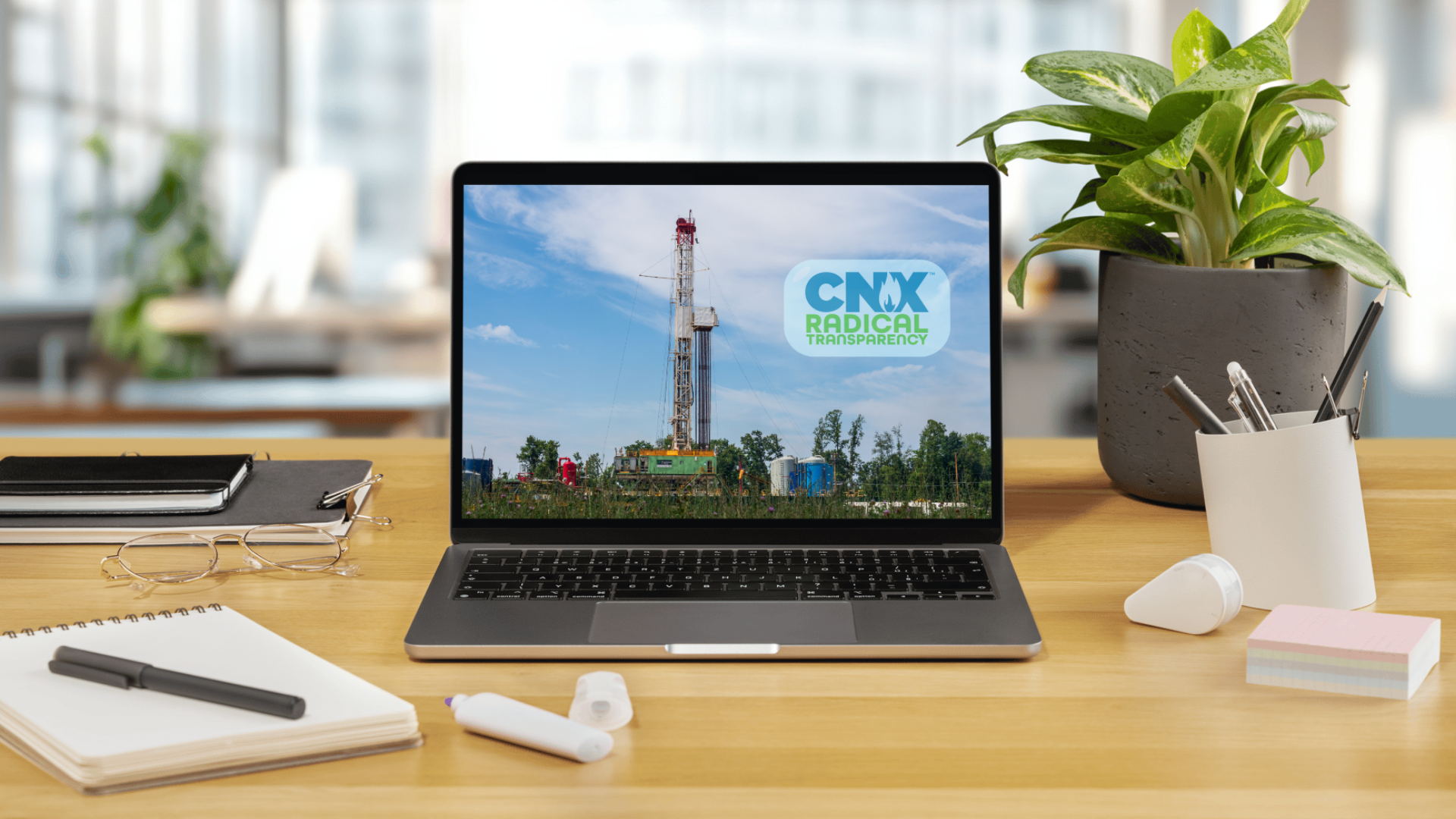
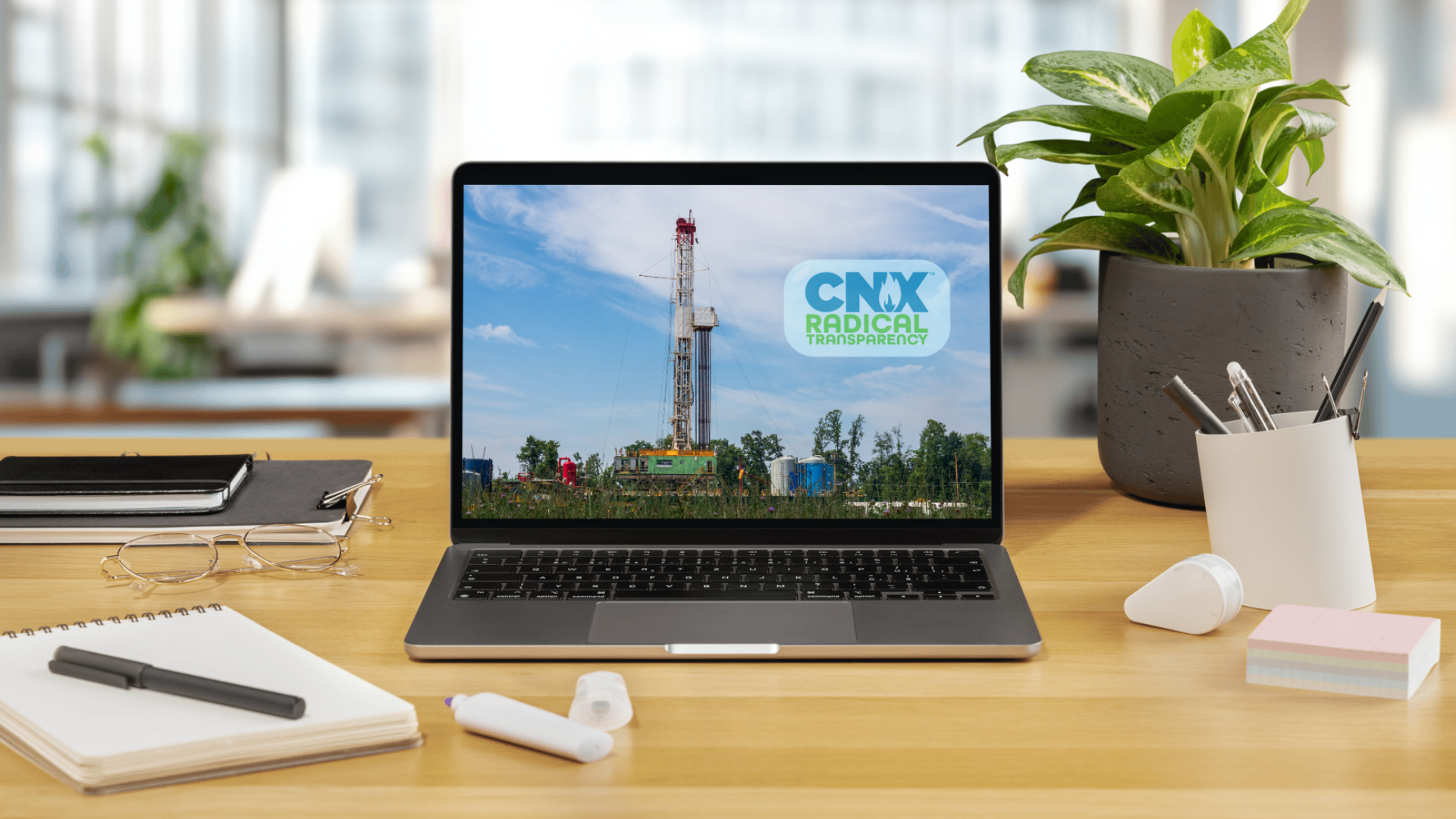
CNX’s Radical Transparency Data Calls Stricter Natural Gas Setbacks Into Question
CNX's Radical Transparency Data Calls Stricter Natural Gas Setbacks Into Question
By Positive Energy Hub Staff
CNX Resources has submitted a formal letter to the Pennsylvania Environmental Quality Board urging the board to consider two years of independently collected environmental data before endorsing proposed expansions to natural gas well setback distances.
In its letter to Environmental Quality Board Chair Jessica Shirley, CNX highlights findings from its Radical Transparency program—an unprecedented environmental monitoring initiative launched in November 2023 in collaboration with Governor Josh Shapiro and the Pennsylvania Department of Environmental Protection.
Nearly 800,000 Data Points Show No Health Impacts
Since its inception, the Radical Transparency program has collected nearly 800,000 data points from 18 monitoring sites across CNX’s operational footprint, including well pads and midstream facilities. The program represents the country’s most comprehensive real-time environmental monitoring effort focused on unconventional natural gas development.
The program monitors PM2.5 particulate matter and BTEX compounds (benzene, toluene, ethylbenzene, xylene)—pollutants associated with respiratory illness and cancer—using EPA-approved Federal Equivalent Methods. Each well pad site includes two PM2.5 monitors, four BTEX passive samplers, and meteorological equipment to track wind direction and other conditions.
Key findings from two years of monitoring include:
- No exceedances of EPA National Ambient Air Quality Standards for PM2.5
- BTEX levels consistently at background concentrations, never exceeding Agency for Toxic Substances and Disease Registry thresholds
- No evidence of emissions or contamination that would exacerbate asthma, cause cancer, or impact groundwater quality
Pennsylvania Already Has the Nation’s Strictest Setbacks
Pennsylvania currently enforces the strictest setback distances among the top five natural gas-producing states, requiring 500 feet from water wells and existing buildings, 300 feet from streams and wetlands, and 1,000 feet from public drinking water intakes.
“Radical Transparency data, compiled over two years and approaching one million points, does not support further expansion of these setbacks,” writes CNX. “Instead, it supports a data-driven regulatory approach that balances public health protection with responsible energy development.”
The letter was submitted as the Environmental Quality Board considers an amended rulemaking petition from environmental groups seeking setbacks of 3,281 feet from buildings and 5,280 feet from schools and hospitals—more than six times current requirements.
Facts Over Speculation
CNX urges policymakers to base regulations on actual measured data—not speculation or assumptions lacking scientific validation.
Expanding setbacks as proposed, “would eliminate responsible natural gas development opportunities and undermine Pennsylvania’s energy leadership, jeopardizing thousands of jobs and regional economic growth,” explains CNX.
All Radical Transparency data is publicly available at http://www.cnxradicaltransparency.com/ and simultaneously shared with DEP to ensure transparency and integrity. The program includes water quality testing within 2,500 feet of well bores and full disclosure of all chemical additives used in drilling and hydraulic fracturing.
“This program demonstrates that environmental protection and energy development can coexist, and it offers a replicable model for transparent, science-based oversight,” concludes CNX.
For more information about CNX’s Radical Transparency program, visit www.cnxradicaltransparency.com.
CNX’s Radical Transparency Data Calls Stricter Natural Gas Setbacks Into Question
By Positive Energy Hub Staff
CNX Resources has submitted a formal letter to the Pennsylvania Environmental Quality Board urging the board to consider two years of independently collected environmental data before endorsing proposed expansions to natural gas well setback distances.
In its letter to Environmental Quality Board Chair Jessica Shirley, CNX highlights findings from its Radical Transparency program—an unprecedented environmental monitoring initiative launched in November 2023 in collaboration with Governor Josh Shapiro and the Pennsylvania Department of Environmental Protection.
Nearly 800,000 Data Points Show No Health Impacts
Since its inception, the Radical Transparency program has collected nearly 800,000 data points from 18 monitoring sites across CNX’s operational footprint, including well pads and midstream facilities. The program represents the country’s most comprehensive real-time environmental monitoring effort focused on unconventional natural gas development.
The program monitors PM2.5 particulate matter and BTEX compounds (benzene, toluene, ethylbenzene, xylene)—pollutants associated with respiratory illness and cancer—using EPA-approved Federal Equivalent Methods. Each well pad site includes two PM2.5 monitors, four BTEX passive samplers, and meteorological equipment to track wind direction and other conditions.
Key findings from two years of monitoring include:
- No exceedances of EPA National Ambient Air Quality Standards for PM2.5
- BTEX levels consistently at background concentrations, never exceeding Agency for Toxic Substances and Disease Registry thresholds
- No evidence of emissions or contamination that would exacerbate asthma, cause cancer, or impact groundwater quality
Pennsylvania Already Has the Nation’s Strictest Setbacks
Pennsylvania currently enforces the strictest setback distances among the top five natural gas-producing states, requiring 500 feet from water wells and existing buildings, 300 feet from streams and wetlands, and 1,000 feet from public drinking water intakes.
“Radical Transparency data, compiled over two years and approaching one million points, does not support further expansion of these setbacks,” writes CNX. “Instead, it supports a data-driven regulatory approach that balances public health protection with responsible energy development.”
The letter was submitted as the Environmental Quality Board considers an amended rulemaking petition from environmental groups seeking setbacks of 3,281 feet from buildings and 5,280 feet from schools and hospitals—more than six times current requirements.
Facts Over Speculation
CNX urges policymakers to base regulations on actual measured data—not speculation or assumptions lacking scientific validation.
Expanding setbacks as proposed, “would eliminate responsible natural gas development opportunities and undermine Pennsylvania’s energy leadership, jeopardizing thousands of jobs and regional economic growth,” explains CNX.
All Radical Transparency data is publicly available at http://www.cnxradicaltransparency.com/ and simultaneously shared with DEP to ensure transparency and integrity. The program includes water quality testing within 2,500 feet of well bores and full disclosure of all chemical additives used in drilling and hydraulic fracturing.
“This program demonstrates that environmental protection and energy development can coexist, and it offers a replicable model for transparent, science-based oversight,” concludes CNX.
For more information about CNX’s Radical Transparency program, visit www.cnxradicaltransparency.com.
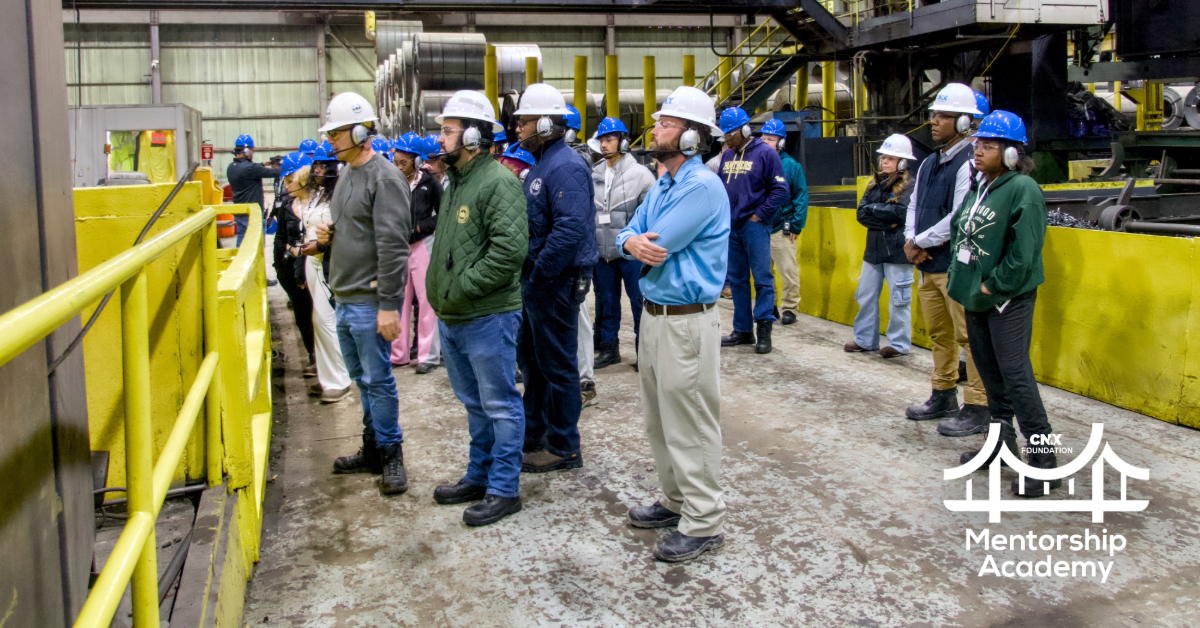
CNX Mentorship Academy Students Discover Career Opportunities at Dura-Bond Pipe
CNX Mentorship Academy Students Discover Career Opportunities at Dura-Bond Pipe
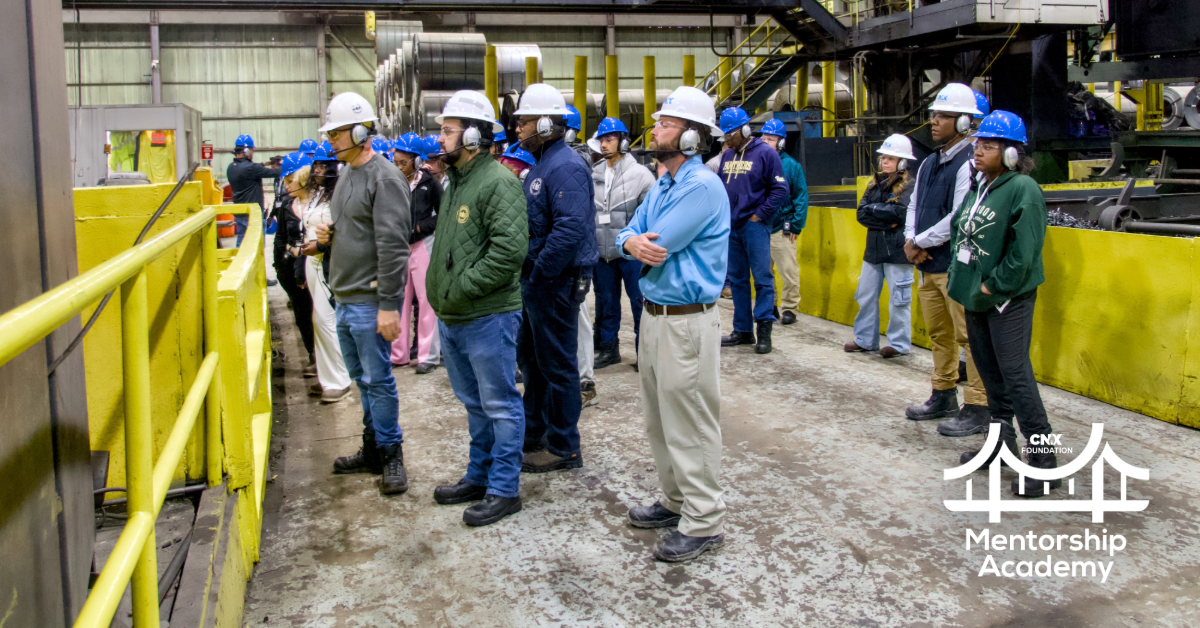
By Positive Energy Hub Staff
This fall, CNX Mentorship Academy students visited Dura-Bond Pipe’s McKeesport facility for demonstrations and hands-on exposure to the rewarding careers available in energy and manufacturing in southwest Pennsylvania.
The visit brought together industry leaders, elected officials, and mentors who shared a common vision: connecting Appalachia’s next generation with the good-paying, family-sustaining jobs that are the bedrock of our communities.
A Partnership Built on Shared Values
CNX is grateful to Dura-Bond Pipe for opening their doors and exemplifying the kind of partnership that has grown the Mentorship Academy to what it is today.
Additionally, CNX thanks the elected leaders who attended.
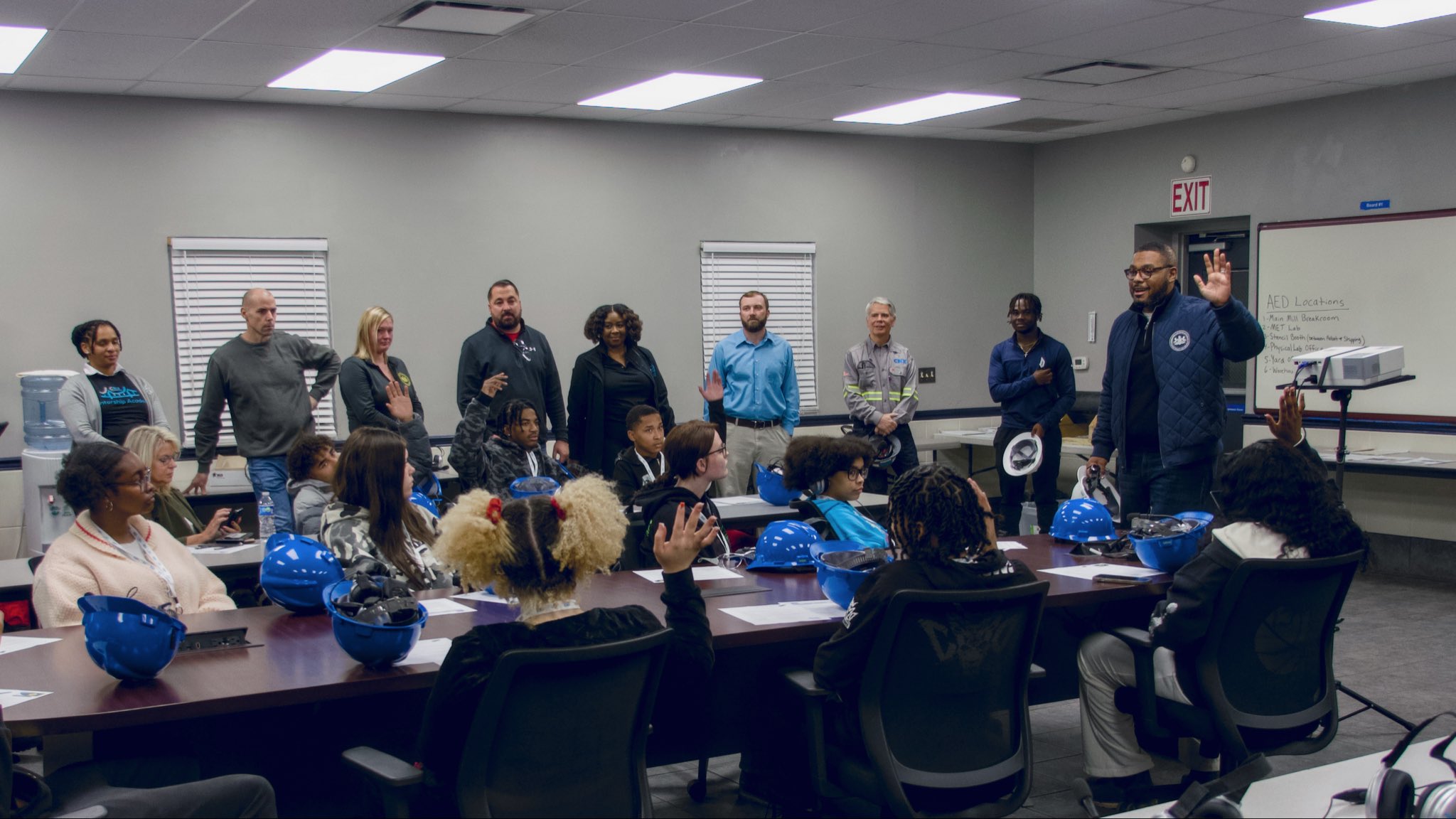
Lieutenant Governor Austin Davis on Twitter / X
In my home town of McKeesport, students are seeing new opportunities to expand their skills, get career advice, and connect with future employers. With targeted state investments, programs like these are growing in Pennsylvania, giving our students and young adults the chance… pic.twitter.com/tl0j0pPiRK— Lieutenant Governor Austin Davis (@LGAustinDavis) October 24, 2025

Lt. Governor Austin Davis, State Senator Nick Pisciottano, Representative Dan Goughnour, and Representative John Inglis brought not just their presence, but their advocacy and support for these vital career pathways.
When business leaders and public officials stand together, they send a powerful message to students: your future is here, and your community believes in you.
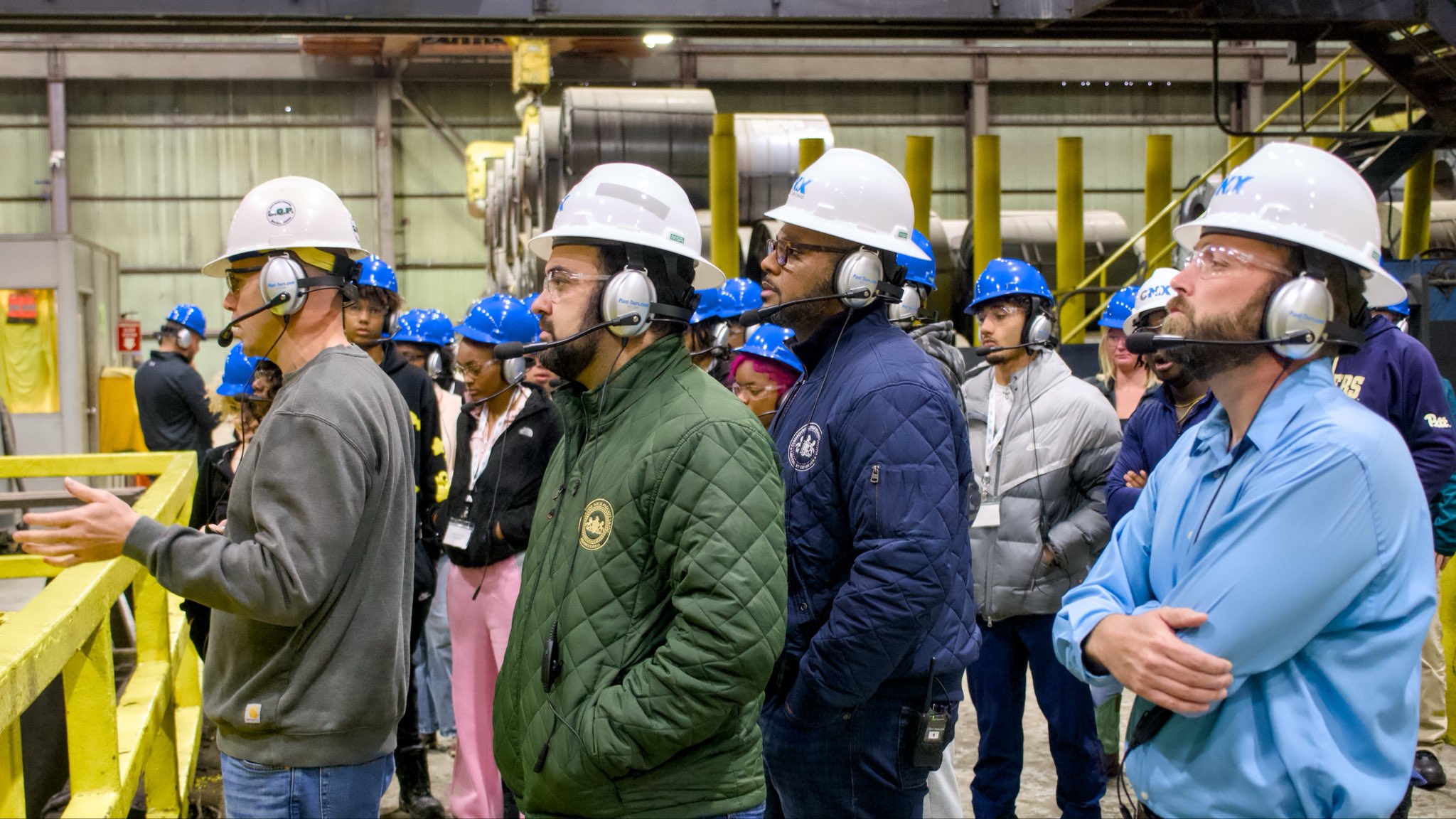
Senator Nick Pisciottano on Twitter / X
Last week I participated in @CNXTweets’s Mentorship Academy Day with @LGAustinDavis, @RepGoughnour & @RepInglis at Dura-Bond Pipe in McKeesport. The Academy exposes students to good energy & manufacturing careers in our region – most of which do not require a college degree. pic.twitter.com/FY6isiEbtN— Senator Nick Pisciottano (@SenPisciottano) October 28, 2025

Inspiration Through Real-World Experience
For many of students, this was their first opportunity to see a manufacturing facility in action—to meet the people doing the work, understand the skills required, and imagine themselves in these roles. That’s the power of the Mentorship Academy. It transforms abstract careers into concrete realities.
The students left Dura-Bond energized by what they’d learned and inspired by the prospects ahead. More importantly, they left knowing that their region is investing in them.
Investing in Our Future
Partnerships like this with Dura-Bond, combined with the commitment of elected officials like those who attended, are a reminder of why the Mentorship Academy matters so much. The Academy is not just introducing students to jobs—it’s building a pathway to prosperity that keeps talent, energy, and opportunity right here in Appalachia.
This is what Appalachia First looks like in action.
You may also like…


CNX Hosts Intro to Energy 2025
CNX Hosts Intro to Energy 2025
By Positive Energy Hub Staff
On October 20, CNX hosted its annual “Intro to Energy Day,” welcoming more than 150 students from over two dozen schools across Allegheny, Armstrong, Greene, Indiana, Washington, and Westmoreland counties.
Watch the short video below for a glimpse of the hands-on training and interactive demonstrations that students experienced throughout the event.
CNX extends heartfelt thanks to the dedicated partner companies who participated and continue to support the CNX Mentorship Academy—including AES Drilling Fluids, Albatross, AutoSep Technologies, Black Diamond, Chemstream, Deep Well Services, Diamond Technical Service (DTS), Evolution Well, Keystone Clearwater Services, M&A Resources, Main Contracting, Mustang Extreme Environmental Services, NexTier, OpSite, Phoenix Specialties, and ROC Service Company.
Their ongoing collaboration helps empower the next generation of energy leaders and strengthen workforce opportunities across our region.
You may also like…

CNX Hosts Intro to Energy 2025
By Positive Energy Hub Staff
On October 20, CNX hosted its annual “Intro to Energy Day,” welcoming more than 150 students from over two dozen schools across Allegheny, Armstrong, Greene, Indiana, Washington, and Westmoreland counties.
Watch the short video below for a glimpse of the hands-on training and interactive demonstrations that students experienced throughout the event.
CNX extends heartfelt thanks to the dedicated partner companies who participated and continue to support the CNX Mentorship Academy—including AES Drilling Fluids, Albatross, AutoSep Technologies, Black Diamond, Chemstream, Deep Well Services, Diamond Technical Service (DTS), Evolution Well, Keystone Clearwater Services, M&A Resources, Main Contracting, Mustang Extreme Environmental Services, NexTier, OpSite, Phoenix Specialties, and ROC Service Company.
Their ongoing collaboration helps empower the next generation of energy leaders and strengthen workforce opportunities across our region.
You may also like…
CNX Resources Delivers 23 Consecutive Quarters of Free Cash Flow Generation
CNX Resources Delivers 23 Consecutive Quarters of Free Cash Flow Generation

By Positive Energy Hub Staff
CNX Resources Corporation continued its streak of exceptional financial performance in the third quarter of 2025, generating $226 million in free cash flow and marking an impressive 23 consecutive quarters of positive free cash flow generation. The results underscore the strength of the company’s Sustainable Business Model, commitment to operational excellence, and its Appalachia First vision.
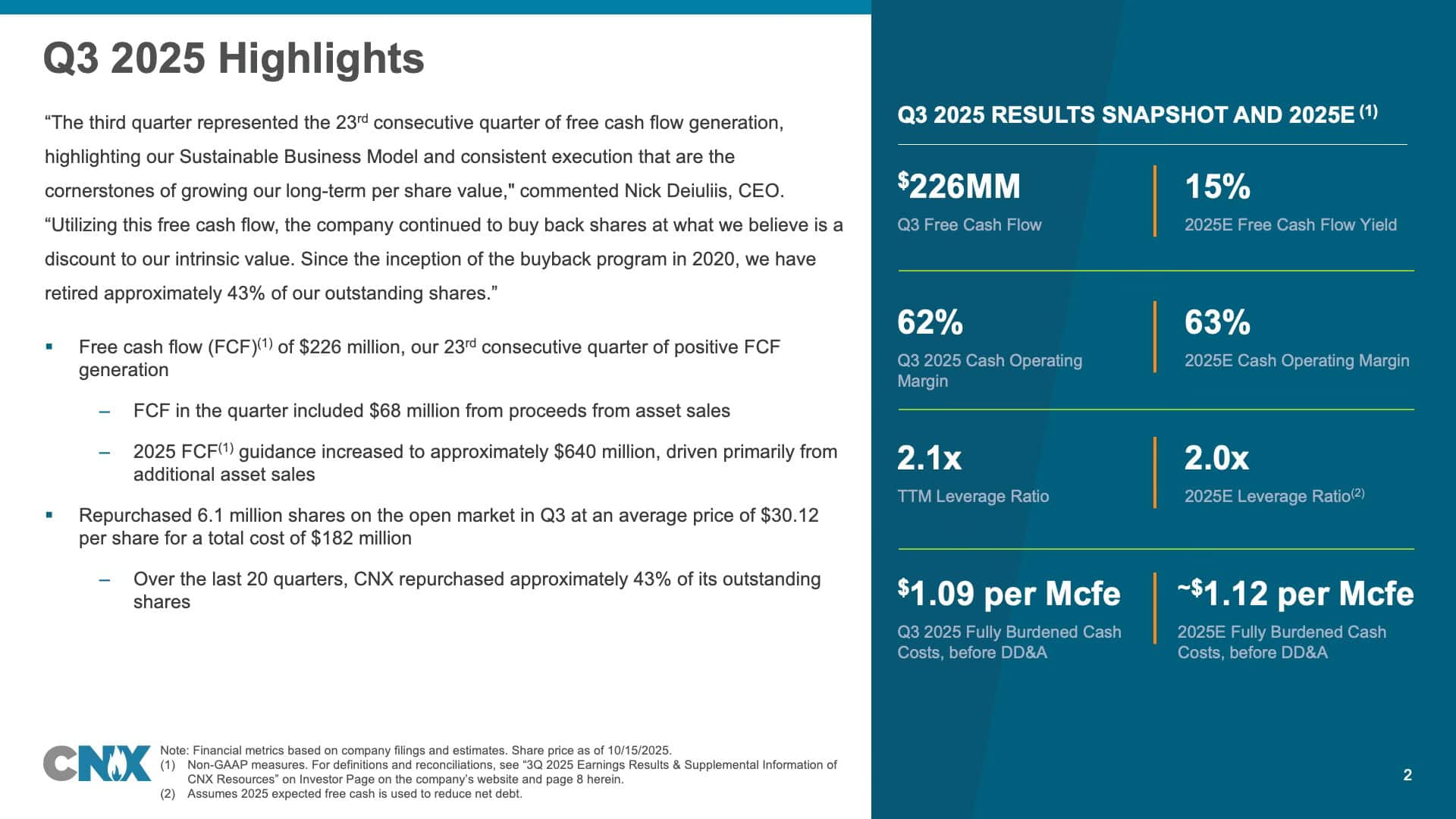
“The third quarter represented the 23rd consecutive quarter of free cash flow generation, highlighting our Sustainable Business Model and consistent execution that are the cornerstones of growing our long-term per share value,” said Nick Deiuliis, CNX Chief Executive Officer. Since launching its seven-year strategic plan in 2020, CNX has generated approximately $2.7 billion in cumulative free cash flow.
The company demonstrated disciplined capital allocation throughout the quarter, repurchasing 6.1 million shares at an average price of $30.12 per share for a total investment of $182 million. Since the inception of the buyback program in 2020, CNX has retired approximately 43% of its outstanding shares at an average price of $18.86 per share, representing a compound annual growth rate of approximately negative 11%.
CNX also executed strategic portfolio optimization during the quarter, divesting approximately 7,500 acres of Marcellus Shale rights located primarily in Monroe County, Ohio for net proceeds of $57 million, while agreeing to acquire Utica Shale rights across approximately 23,000 acres beneath its Apex Energy footprint for approximately $50 million.
The company raised its 2025 full-year free cash flow guidance to approximately $640 million, driven primarily by additional asset sales, and increased production volume guidance to 620-625 Bcfe. CNX also updated its expected 2025 free cash flow per share to $4.75, an increase of $0.68 per share from prior guidance.
On the environmental front, CNX continued advancing its industry-leading Radical Transparency program. With now 700,000 datapoints collected (and growing every hour), CNX has found no evidence of impacts from its gas development operations that would be harmful to human health or degrade local air quality, calling into question the need for expanded buffer zones in Pennsylvania, as some have proposed.
As 2025 draws to a close, CNX continues executing its Sustainable Business Model and delivering shareholder value throughout the commodity cycle.


East Street BBQ Company Gets a Taste of CNX’s Core Values
By Positive Energy Hub Staff
John Reilly, owner of East Street BBQ Company in Greensburg, PA, has always had a passion for BBQ. In 2024, that passion paid off when he won first place at The Mad Scientist BBQ contest. The top prize? A week studying under several pit masters in Houston, Texas. When he returned, he decided to turn his dream into reality and start his own BBQ company.
But John faced a significant challenge: in the BBQ world, pit masters are judged by their custom smokers, and acquiring one large enough to support a business is both difficult and expensive. He reached out to his friend Christopher Benamati, CNX Manager of Facilities Construction from Indiana, PA, hoping Chris could point him toward a local fabricator willing to take on the custom build at a reasonable price.
Chris’s response? He offered to build it himself.
Over the summer, Chris dedicated most of his weekends to the project, investing roughly 100 hours of hands-on fabrication. Working without automated equipment, he cut and welded everything by hand—encompassing multiple disciplines of metal fabrication and welding, including the East Street BBQ emblems. He built almost all the parts in-house, sourcing 100% American-made materials and collaborating with CNX partners throughout the process.
This wasn’t just a favor between friends—it was a demonstration of CNX’s core values in action. Chris’s decision to take full ownership of such a challenging project, donating his time, skill, and resources, exemplifies true responsibility. He didn’t just point John in a direction; he committed himself to building a solution and helping a local entrepreneur succeed. This embodies the CNX core values of Responsibility, Ownership, and Excellence, as well as the CNX micro-TIL commitment.The attention to detail and collaboration with CNX partners speak to the pursuit of excellence and showcase the CNX Appalachia First vision. The result isn’t just a smoker—it’s a testament to craftsmanship, community support, and pride in work that helps local businesses thrive.
Smoker Construction Timeline
By Christopher Benamati, Manager of Facilities Construction
Start of the Journey
The two main components of the smoker (the main cooking chamber or “barrel” and the smoke chamber or “firebox”) started their lives as scrap pieces from the MAM14 Utica conductor string. The conductor casing is 30″ in diameter and has a wall thickness of 3/8″. At 118 pounds per foot, these two pieces have a combined weight of over 1,400 lbs!

Keith Coleman, CNX Drilling Director, donated these two pieces, and then they were hauled off the location by James White Excavating. The material was later picked up and loaded at their shop in Spring Church, PA. JWE donated their time and equipment.
Fabrication Begins
Once the material arrived at my shop in Homer City, PA, I began with the basic layout of the main chamber. No CAD drawings here. A lot can be accomplished with very basic tools, such as soapstone, tape measures, painter’s tape, a compass, basic math, and simple geometry.
The steel plate and other structural steel were purchased at Kovalchick Corporation in Indiana, PA. We insisted on USA-melted and manufactured steel ONLY. This plate was originally manufactured at NUCOR. The angle and channel were manufactured at U.S. Steel, prior to it being sold to Nippon, a Japanese-based company.
Initial Cuts and Sandblasting
The door openings were partially cut out, and door reinforcement was tacked into place. Not cutting the doors out completely allowed for the reinforcement to be welded without distorting the doors. Later, the doors were cut free from the inside out using a grinder and a cutoff wheel. Straps were made using material cut from the smokebox, which had the same radius. Doing it this way saved the cost of having the straps rolled in a plate roll.
Once this process was complete, the main chamber and smokebox were sent to sandblasting to help ensure weld quality during later fabrication and to remove the bituminous coating used to protect the casing.
Sandblasting was performed at Wood Crest Point, located in Homer City, PA. Wood Crest Point has worked with CNX in the past and donated the material and labor for this process.
Smokebox Fabrication
Through some research, I found out that a lot of prior engineering has gone into the design of offset smokers. The ratio of smokebox volume to main chamber volume is critical. The smokebox calculates out to be roughly 30% of the main chamber volume.
The smokebox features a fully opening front door, providing ease of loading and cleaning. The pinwheel was plasma cut by hand, with the openings being ground smooth using a die grinder. Simple stops were created using angle iron, and the latch system is a simple cam design I created using angle and Grade 8 bolts that were heated and bent. The wooden handles were made from an old horse-drawn plow handle that was turned down on a hand lathe and shaped using a wood file.
The door hinges were the only metal parts not fabricated in-house. They were purchased from Mystic Smokers, a Georgia-based fabrication company. Mystic’s owner is a friend of John’s and produces these parts on a laser-guided plasma table.
The Moment of Truth
Joining the main chamber and the smoke chamber was a significant moment in the fabrication process. Up to this point, I was able to roll the chambers around by hand as I cut and welded. Once the two chambers were joined, the whole thing had to be moved by machine. It also meant that I would be welding out-of-position for a lot of the remaining welds.
Before this step, I had done extensive planning to minimize out-of-position welding as much as possible.
The end plate and smoke collector were two components I ensured were welded into place before attaching the two large chambers. Like the smokebox, the smoke collector is designed to occupy a specific volume within the main chamber. Its location is also critical to the internal rack location to draw the smoke directly over the food.
Custom Trailer
The original plan was to put the smoker on a box store utility trailer to save time on the build. After spending many hours hating the idea of a custom smoker on a box store trailer, I decided to build my own.
The idea for the trailer was to give it a “hotrod” vibe. I opted for a spring-under-axle design to keep the deck low to the ground, and the wrap-around fenders were slung low to the tires. The whole smoker was “frenched” into the frame. At the end of the build, we added the powder-coated rims and wide white tires.
This was not my first trailer build. When I got out of the Marines, I built trailers at a local trailer manufacturer while I went to school for Welding Engineering.
Trailer parts were purchased locally at New Alexandria Tractor Supply in New Alexandria, PA (the same place I worked building trailers during college). We went with an American-made, high-quality Dexter Axle. The owner gave us a significant discount on the material, wanting to contribute to a local upstart and understanding the challenges that come with that.
Smokestack Fabrication
The smokestack is another engineered component on the smoker. Pipe diameter is relative to the overall volume of the smoker. For a 275-gallon smoker, an 8″ smokestack is recommended.
A lot of time and “weld shop engineering” went into the smokestack, from the rebar lever-operated cap to the hinge and securing hardware systems. It was also an opportunity to switch from the GMAW welding process used throughout most of the build to the GTAW process (better known as “TIG”) to join stainless to carbon material.
Keith Orkis of Orkis Ironworks donated the stainless material for the smokestack. Orkis Ironworks is a CNX partner and builds small fabrications for the Facilities Construction team. This piece of stainless pipe was leftover from an autoclave project at the old Heinz plant in Pittsburgh.
Smoker Doors
The smoker doors required more weld shop engineering. After the door reinforcement and rolling handles were welded, the doors were finally cut free, allowing them to open. With each door weighing over 100 pounds, counterweights were added to allow the doors to open easily.
The target was to find a position where counterweights would allow the doors to open easily, but not flop open when bouncing down the road. Using a simple crane scale, we achieved a position where the “felt weight” is roughly 25% of the actual weight.
The weights were originally culvert covers from the CNX Aikens well pad that I cut in half. James White Excavating removed them during a clean-up project and donated them to the build.
Custom Touches
To give the smoker an additional level of customization, East Street BBQ emblems were plasma cut by hand and added to the smokebox door and the main chamber door counterweights.
Final Product
After roughly 100 fabrication hours, final trailer painting, and the application of linseed oil to the bare metal components, we finally had a smoker that was ready for business!
EAST STREET BBQ CO.
The idea for East Street BBQ Company began when I was a young child. My father would take my brother and I on Sundays to get Chef Mitchell’s BBQ chicken and ribs. I became fascinated with the art of bbq.

Many thanks to CNX and all the CNX partners who contributed to the project. Without your help, this project would not have been such a success!
Sincerely,
Chris Benamati
East Street BBQ Company Gets a Taste of CNX’s Core Values
East Street BBQ Company Gets a Taste of CNX’s Core Values
By Positive Energy Hub Staff
John Reilly, owner of East Street BBQ Company in Greensburg, PA, has always had a passion for BBQ. In 2024, that passion paid off when he won first place at The Mad Scientist BBQ contest. The top prize? A week studying under several pit masters in Houston, Texas. When he returned, he decided to turn his dream into reality and start his own BBQ company.
But John faced a significant challenge: in the BBQ world, pit masters are judged by their custom smokers, and acquiring one large enough to support a business is both difficult and expensive. He reached out to his friend Christopher Benamati, CNX Manager of Facilities Construction from Indiana, PA, hoping Chris could point him toward a local fabricator willing to take on the custom build at a reasonable price.
Chris’s response? He offered to build it himself.
Over the summer, Chris dedicated most of his weekends to the project, investing roughly 100 hours of hands-on fabrication. Working without automated equipment, he cut and welded everything by hand—encompassing multiple disciplines of metal fabrication and welding, including the East Street BBQ emblems. He built almost all the parts in-house, sourcing 100% American-made materials and collaborating with CNX partners throughout the process.
This wasn’t just a favor between friends—it was a demonstration of CNX’s core values in action. Chris’s decision to take full ownership of such a challenging project, donating his time, skill, and resources, exemplifies true responsibility. He didn’t just point John in a direction; he committed himself to building a solution and helping a local entrepreneur succeed. This embodies the CNX core values of Responsibility, Ownership, and Excellence, as well as the CNX micro-TIL commitment.The attention to detail and collaboration with CNX partners speak to the pursuit of excellence and showcase the CNX Appalachia First vision. The result isn’t just a smoker—it’s a testament to craftsmanship, community support, and pride in work that helps local businesses thrive.
Smoker Construction Timeline
By Christopher Benamati, Manager of Facilities Construction
Start of the Journey
The two main components of the smoker (the main cooking chamber or “barrel” and the smoke chamber or “firebox”) started their lives as scrap pieces from the MAM14 Utica conductor string. The conductor casing is 30″ in diameter and has a wall thickness of 3/8″. At 118 pounds per foot, these two pieces have a combined weight of over 1,400 lbs!
Keith Coleman, CNX Drilling Director, donated these two pieces, and then they were hauled off the location by James White Excavating. The material was later picked up and loaded at their shop in Spring Church, PA. JWE donated their time and equipment.
Fabrication Begins
Once the material arrived at my shop in Homer City, PA, I began with the basic layout of the main chamber. No CAD drawings here. A lot can be accomplished with very basic tools, such as soapstone, tape measures, painter’s tape, a compass, basic math, and simple geometry.
The steel plate and other structural steel were purchased at Kovalchick Corporation in Indiana, PA. We insisted on USA-melted and manufactured steel ONLY. This plate was originally manufactured at NUCOR. The angle and channel were manufactured at U.S. Steel, prior to it being sold to Nippon, a Japanese-based company.
Initial Cuts and Sandblasting
The door openings were partially cut out, and door reinforcement was tacked into place. Not cutting the doors out completely allowed for the reinforcement to be welded without distorting the doors. Later, the doors were cut free from the inside out using a grinder and a cutoff wheel. Straps were made using material cut from the smokebox, which had the same radius. Doing it this way saved the cost of having the straps rolled in a plate roll.
Once this process was complete, the main chamber and smokebox were sent to sandblasting to help ensure weld quality during later fabrication and to remove the bituminous coating used to protect the casing.
Sandblasting was performed at Wood Crest Point, located in Homer City, PA. Wood Crest Point has worked with CNX in the past and donated the material and labor for this process.
Smokebox Fabrication
Through some research, I found out that a lot of prior engineering has gone into the design of offset smokers. The ratio of smokebox volume to main chamber volume is critical. The smokebox calculates out to be roughly 30% of the main chamber volume.
The smokebox features a fully opening front door, providing ease of loading and cleaning. The pinwheel was plasma cut by hand, with the openings being ground smooth using a die grinder. Simple stops were created using angle iron, and the latch system is a simple cam design I created using angle and Grade 8 bolts that were heated and bent. The wooden handles were made from an old horse-drawn plow handle that was turned down on a hand lathe and shaped using a wood file.
The door hinges were the only metal parts not fabricated in-house. They were purchased from Mystic Smokers, a Georgia-based fabrication company. Mystic’s owner is a friend of John’s and produces these parts on a laser-guided plasma table.
The Moment of Truth
Joining the main chamber and the smoke chamber was a significant moment in the fabrication process. Up to this point, I was able to roll the chambers around by hand as I cut and welded. Once the two chambers were joined, the whole thing had to be moved by machine. It also meant that I would be welding out-of-position for a lot of the remaining welds.
Before this step, I had done extensive planning to minimize out-of-position welding as much as possible.
The end plate and smoke collector were two components I ensured were welded into place before attaching the two large chambers. Like the smokebox, the smoke collector is designed to occupy a specific volume within the main chamber. Its location is also critical to the internal rack location to draw the smoke directly over the food.
Custom Trailer
The original plan was to put the smoker on a box store utility trailer to save time on the build. After spending many hours hating the idea of a custom smoker on a box store trailer, I decided to build my own.
The idea for the trailer was to give it a “hotrod” vibe. I opted for a spring-under-axle design to keep the deck low to the ground, and the wrap-around fenders were slung low to the tires. The whole smoker was “frenched” into the frame. At the end of the build, we added the powder-coated rims and wide white tires.
This was not my first trailer build. When I got out of the Marines, I built trailers at a local trailer manufacturer while I went to school for Welding Engineering.
Trailer parts were purchased locally at New Alexandria Tractor Supply in New Alexandria, PA (the same place I worked building trailers during college). We went with an American-made, high-quality Dexter Axle. The owner gave us a significant discount on the material, wanting to contribute to a local upstart and understanding the challenges that come with that.
Smokestack Fabrication
The smokestack is another engineered component on the smoker. Pipe diameter is relative to the overall volume of the smoker. For a 275-gallon smoker, an 8″ smokestack is recommended.
A lot of time and “weld shop engineering” went into the smokestack, from the rebar lever-operated cap to the hinge and securing hardware systems. It was also an opportunity to switch from the GMAW welding process used throughout most of the build to the GTAW process (better known as “TIG”) to join stainless to carbon material.
Keith Orkis of Orkis Ironworks donated the stainless material for the smokestack. Orkis Ironworks is a CNX partner and builds small fabrications for the Facilities Construction team. This piece of stainless pipe was leftover from an autoclave project at the old Heinz plant in Pittsburgh.
Smoker Doors
The smoker doors required more weld shop engineering. After the door reinforcement and rolling handles were welded, the doors were finally cut free, allowing them to open. With each door weighing over 100 pounds, counterweights were added to allow the doors to open easily.
The target was to find a position where counterweights would allow the doors to open easily, but not flop open when bouncing down the road. Using a simple crane scale, we achieved a position where the “felt weight” is roughly 25% of the actual weight.
The weights were originally culvert covers from the CNX Aikens well pad that I cut in half. James White Excavating removed them during a clean-up project and donated them to the build.
Custom Touches
To give the smoker an additional level of customization, East Street BBQ emblems were plasma cut by hand and added to the smokebox door and the main chamber door counterweights.
Final Product
After roughly 100 fabrication hours, final trailer painting, and the application of linseed oil to the bare metal components, we finally had a smoker that was ready for business!
EAST STREET BBQ CO.
The idea for East Street BBQ Company began when I was a young child. My father would take my brother and I on Sundays to get Chef Mitchell’s BBQ chicken and ribs. I became fascinated with the art of bbq.
Many thanks to CNX and all the CNX partners who contributed to the project. Without your help, this project would not have been such a success!
Sincerely,
Chris Benamati

CNX Welcomes Armstrong County Leaders to MAM16
CNX Welcomes Armstrong County Leaders to MAM16
By Positive Energy Hub Staff
CNX was pleased to welcome Armstrong County officials to its MAM16 well pad for an up-close look at the Company’s commitment to safe, transparent natural gas development in this pivotal region for CNX’s future growth.
The visit offered valuable opportunities for open discussion and a chance to reaffirm the strong partnerships that help move local communities—and the entire Appalachian region—forward.
At CNX, collaboration with local leaders and stakeholders is core to its mission. By working together and prioritizing transparent practices, CNX is building a stronger foundation for responsible energy development and continued prosperity in Armstrong County and beyond.
Check out the video below for highlights from the tour. #AppalachiaFirst
You may also like…
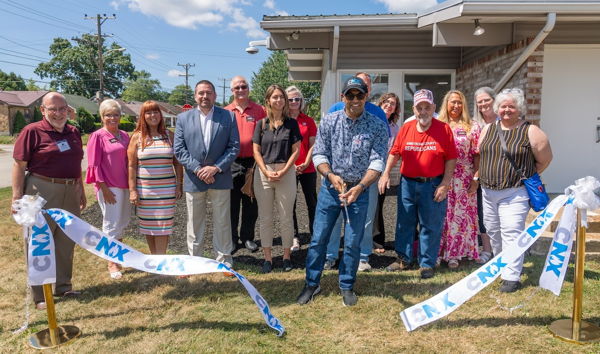
CNX Welcomes Armstrong County Leaders to MAM16
By Positive Energy Hub Staff
CNX was pleased to welcome Armstrong County officials to its MAM16 well pad for an up-close look at the Company’s commitment to safe, transparent natural gas development in this pivotal region for CNX’s future growth.
The visit offered valuable opportunities for open discussion and a chance to reaffirm the strong partnerships that help move local communities—and the entire Appalachian region—forward.
At CNX, collaboration with local leaders and stakeholders is core to its mission. By working together and prioritizing transparent practices, CNX is building a stronger foundation for responsible energy development and continued prosperity in Armstrong County and beyond.
Check out the video below for highlights from the tour. #AppalachiaFirst
You may also like…
CNX Welcomes Armstrong County Leaders to MAM16
By Positive Energy Hub Staff
CNX was pleased to welcome Armstrong County officials to its MAM16 well pad for an up-close look at the Company’s commitment to safe, transparent natural gas development in this pivotal region for CNX’s future growth.
The visit offered valuable opportunities for open discussion and a chance to reaffirm the strong partnerships that help move local communities—and the entire Appalachian region—forward.
At CNX, collaboration with local leaders and stakeholders is core to its mission. By working together and prioritizing transparent practices, CNX is building a stronger foundation for responsible energy development and continued prosperity in Armstrong County and beyond.
Check out the video below for highlights from the tour. #AppalachiaFirst
You may also like…

Radical Transparency: Shale Insight 2025 Update
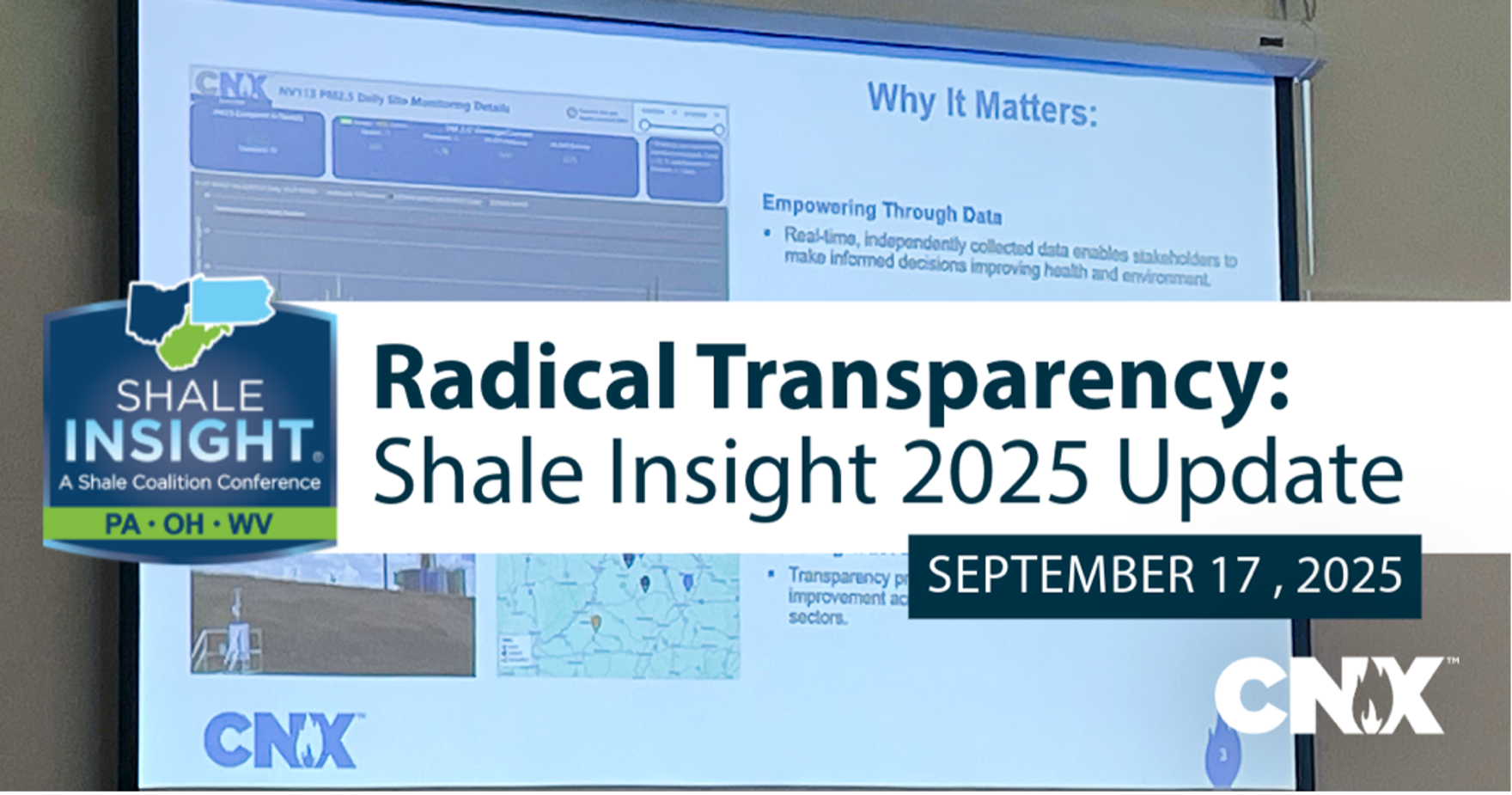
By Positive Energy Hub Staff
Carrie Crumpton, Vice President of Environmental Strategy, presented on behalf of CNX at the 2025 Shale Insight Conference. Carrie provided an overview and update on CNX’s Radical Transparency initiative during the “Clearing the Air: An Update to Public-Private Air Quality Monitoring Commitments within the Appalachian Basin” session. The following is a summary of Carrie’s remarks.
Good afternoon and thank you for the introduction.
Radical Transparency is changing the way environmental data is shared and understood in shale development. CNX first launched this initiative in November 2023, driven by a straightforward purpose: provide real-time, site-specific air quality data from our operations. Rather than relying on inference and statistical models, we chose to deliver objective measurements—data that communities, policymakers, and researchers can trust.
Why Radical Transparency Matters
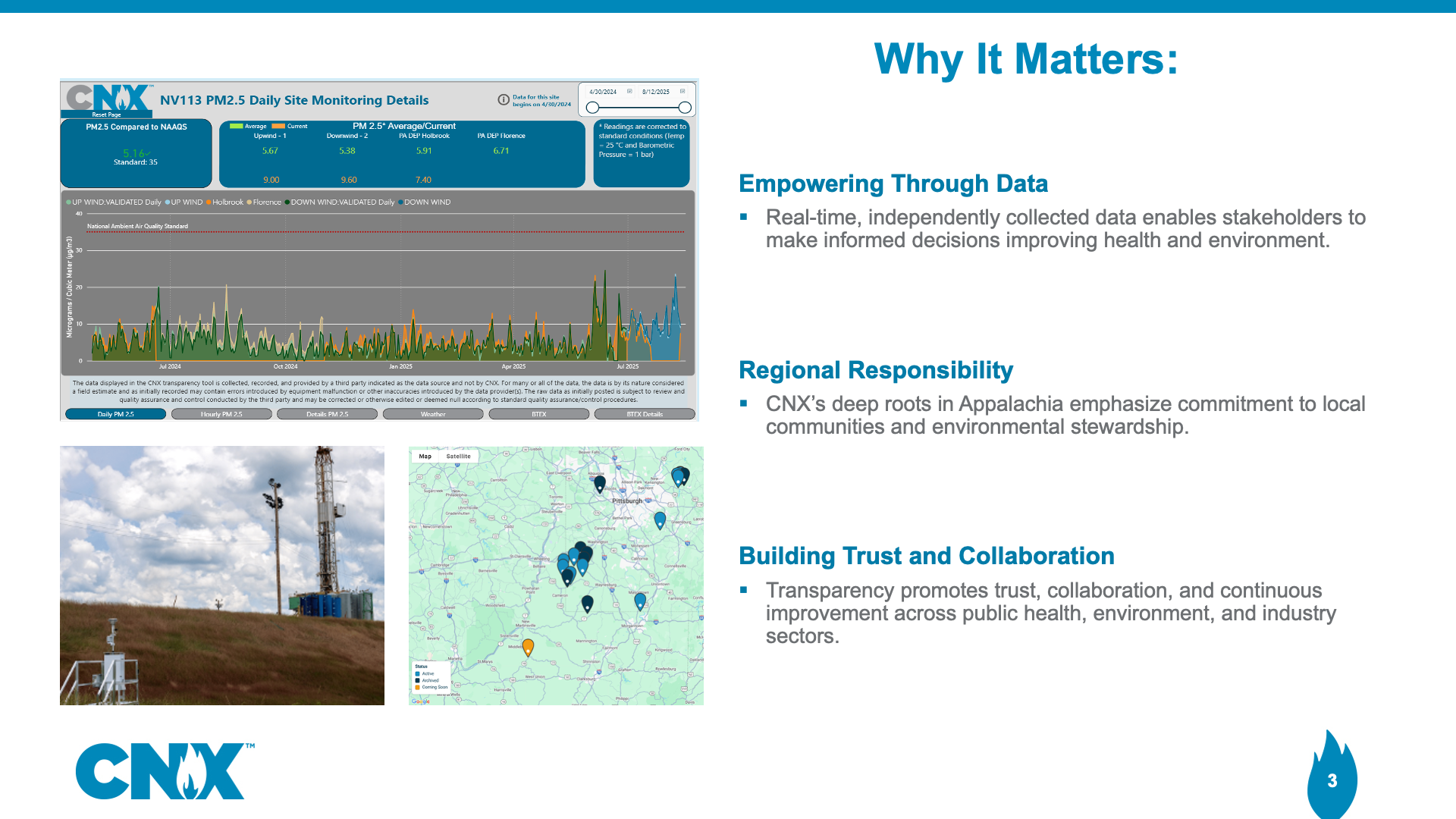
Facts are crucial for public health, environmental protection, and they are best captured directly at the source.
CNX has deep roots in Appalachia. We’ve been part of the Region since the mid-1800s. And our responsibility to the communities where we live and work is something we take seriously.
Radical Transparency is our approach to advancing sound research around natural gas development. Instead of relying on retrospective studies and statistical associations, we offer real-time, independently collected data—publicly available and easy to use. It can be used by residents, by industry for actionable insights, by the scientific and medical community, and by government/agencies for public policy purposes. We encourage it. Pennsylvania DEP and Governor Shapiro saw its potential and joined CNX as key partners.
A defining feature of the program is that DEP receives raw air quality data simultaneously with CNX. This ensures data integrity from both technical and public perception standpoints, strengthening the first-of-its-kind public-private collaboration.
Program Components
Radical Transparency is the most comprehensive program of its kind anywhere in the country. The program includes:
- Air quality monitoring
- Additive disclosure
- Water quality monitoring
- Radiation protection
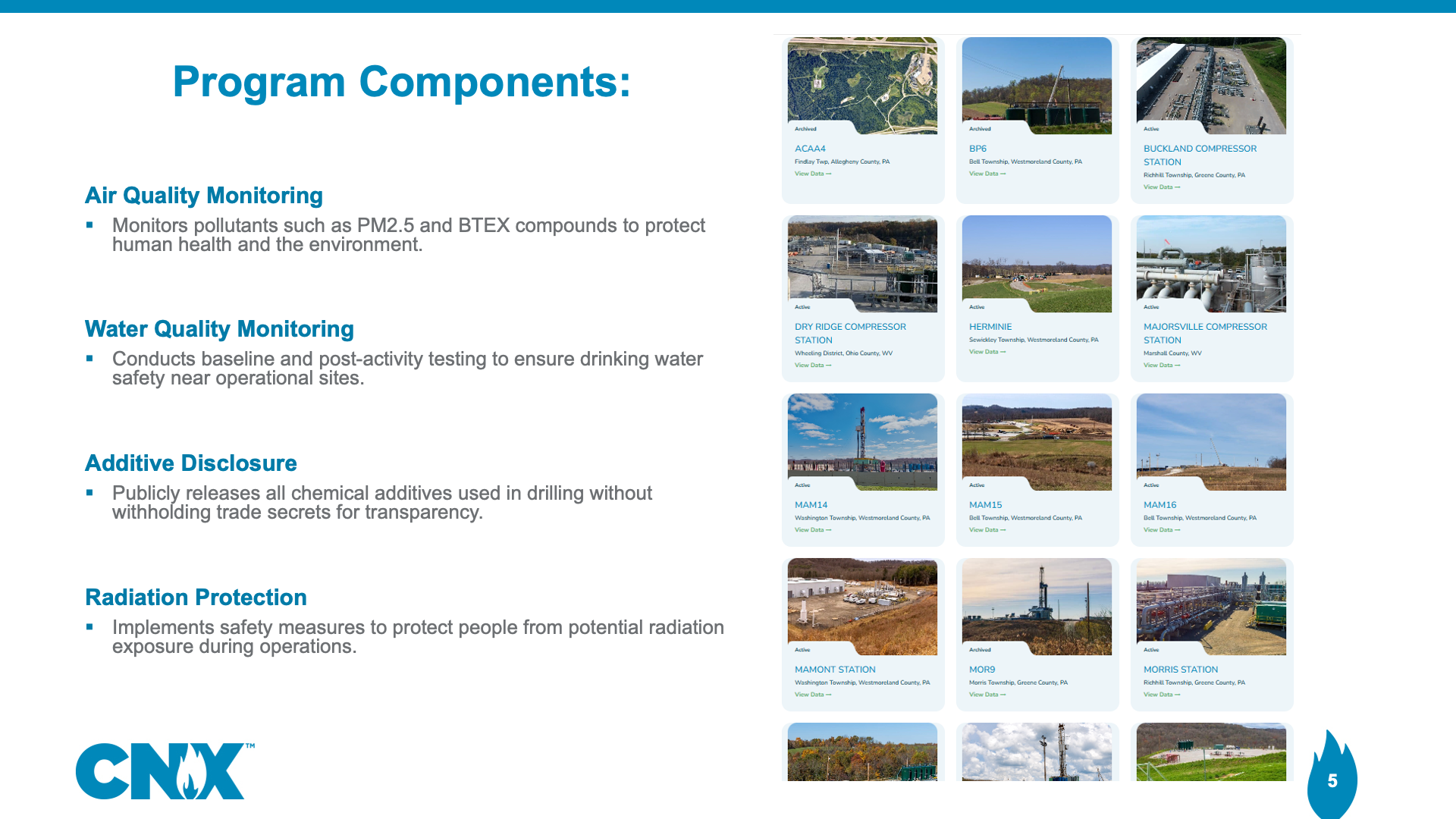
For today’s update, I’ll focus on the air and water quality portions. These components are designed to monitor the emissions and impacts most likely to affect human health and environmental integrity.
For air quality, we focus on:
Radical Transparency monitoring follows CNX’s activity plan. Where we operate, so too does Radical Transparency, covering the development process of site construction, drilling, completions, and start of flowing production where our activities are most intense and the most logical application for continuous, and targeted monitoring.
To avoid any subjectivity in the site selection process, we continuously monitor all major midstream locations, and then every new major production facility from the beginning of the construction phase through six months of the production phase.
This approach ensures that we prospectively monitor 100% of our locations with development phases that have the highest intensity of emissions related activity.
There is no “cherry-picking”—monitoring simply follows our operational schedule.
For water quality, CNX has expanded monitoring of private drinking water within 2,500 feet of a well bore by conducting four quarterly samples before and after drilling, exceeding regulatory and industry standards.
Best practices include:
- Baseline testing for pH, conductivity, total dissolved solids, methane, chloride, and heavy metals before work starts.
- Multiple layers of steel casing and cement barriers provide well integrity and prevent fluid migration.
- Avoiding sensitive aquifers using geologic modeling in drilling plans.
- Monitoring for at least a year after activity to detect any delayed impacts.
- Advance disclosure of all chemical additives anticipated for use, a first-of-its-kind commitment to full transparency.
How We Monitor
Since launching the program, we’ve conducted monitoring at 18 sites across our operational footprint. These include major midstream locations and new production facilities, monitored from the start of construction through six months of production.
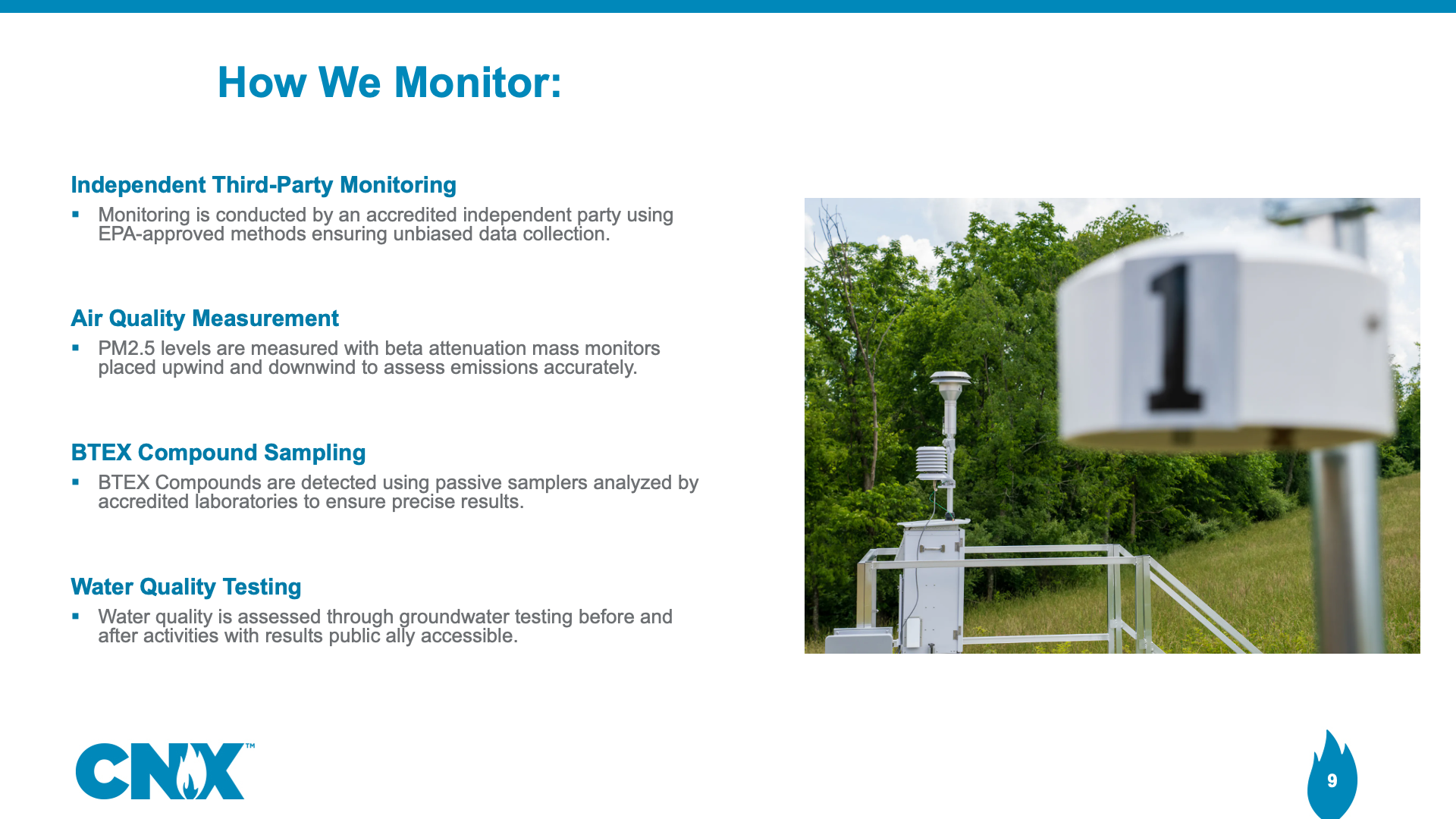
Monitoring is conducted by an independent, accredited third party, using EPA-approved methods and a defined quality system. Some of the findings from these efforts will be shared this afternoon.
For PM2.5, each site gets two real-time beta attenuation mass monitors—one downwind for emissions and one upwind for background levels. The difference reveals the site’s incremental contribution.
BTEX measurements come from passive, time-integrated samplers arranged in four quadrants around each site, following EPA Method 325. Samples are analyzed by an accredited lab using Method 325B.
Water monitoring features pre- and post-activity groundwater tests, with results released publicly, subject to landowner consent. This includes testing for common indicators of contamination and comparison against health-based standards.
Data Transparency
Data flows to a secure cloud platform for reporting and visualization and is posted to a public dashboard on the CNX website, alongside nearby DEP monitor readings and health standards.
- PM2.5 is compared to the National Ambient Air Quality Standard (NAAQS).
- BTEX to the Agency for Toxic Substances and Disease Registry (ATSDR) inhalation Minimum Risk Levels.
- Water results to EPA drinking water standards and other health-based benchmarks.
Ensuring integrity, air quality data is made available at the same time to the DEP by the third-party collector. To date, about 700,000 data points have been collected, with those growing rapidly as monitoring continues around the clock.
Internally, CNX uses this data to spot trends, refine operations, and reduce emissions. Externally, the Pennsylvania DEP uses Radical Transparency to launch greenfield site monitoring, which will continue through the site’s full development—providing independent validation of the program’s value and reliability. Background air quality monitoring at this location began earlier this year.
Key Findings
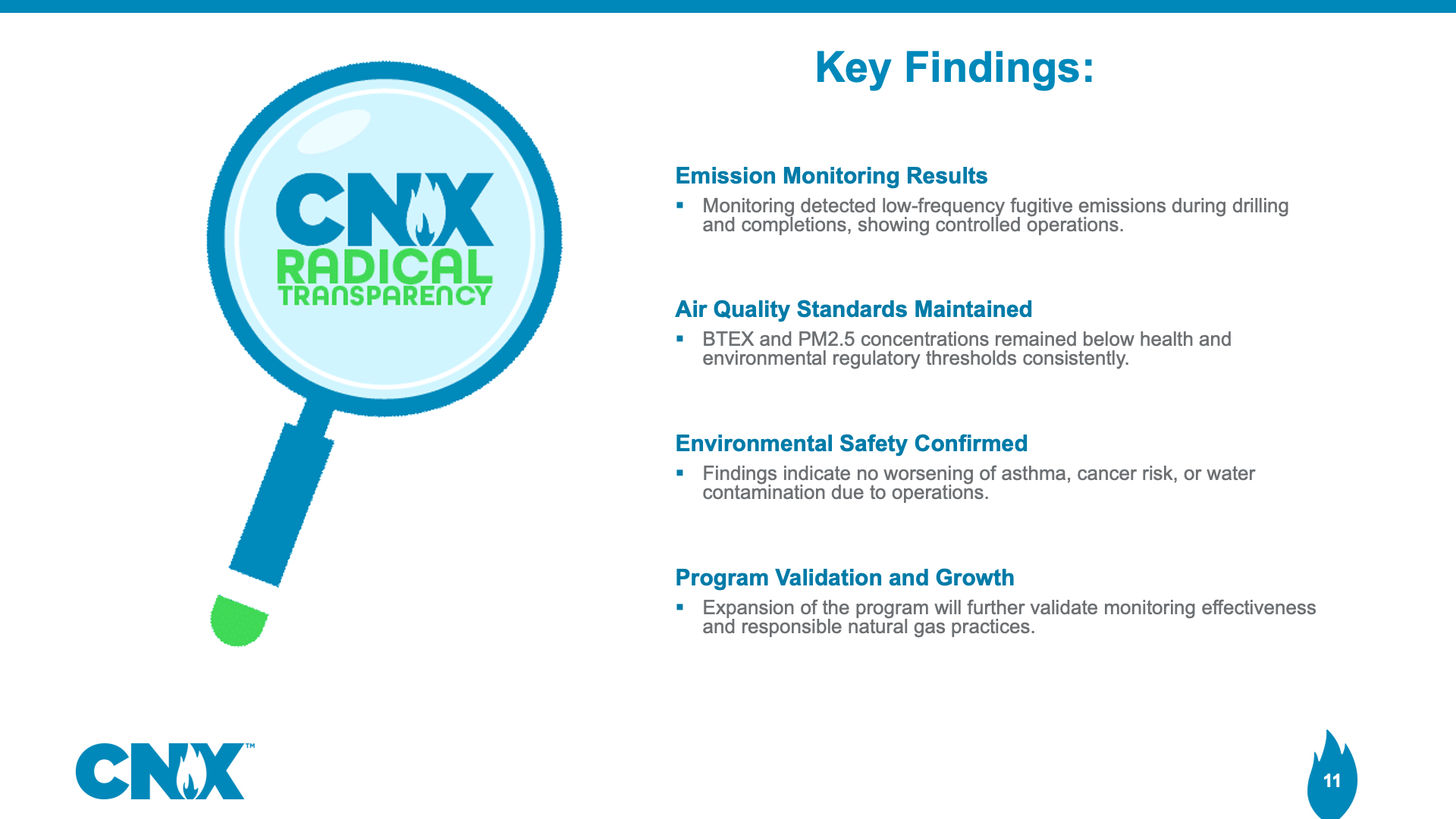
From the past almost two years, Radical Transparency has revealed:
- Low-frequency fugitive emissions during drilling and completions
- BTEX at background levels, never exceeding ATSDR thresholds
- No PM2.5 exceedances under EPA standards
In short, we’ve found no evidence of impacts that would exacerbate asthma, cause cancer, degrade local air quality, or contaminate drinking water. And as we expand the program, we expect these findings to be reinforced.
Data also informs the debate on setbacks in natural gas operations. Every new data point helps clarify what is truly needed—facts replacing fear. As we approach collecting nearly a million data points, the evidence does not support additional setback expansions.
Moving Forward
CNX encourages others in the industry to follow our lead, adopt similar approaches, and commends those expanding their own data transparency, including those here with me today. More data means deeper insights and stronger conclusions.
We’re also calling on the scientific community to engage with this data. Real-time measurements offer a superior foundation for analysis, and universities have a role to play in reconciling these findings with existing statistical records.
From a policy perspective, we now can base future regulations on actual measured data—not speculation or assumptions lacking scientific validation.
Combined efforts will help build a comprehensive, real-time environmental monitoring platform that supports public health, informs policy, and drives continuous improvement across the industry.
Radical Transparency has improved CNX, cut emissions, and lowered risk. Most importantly, it helps us protect the communities and environment where we operate.
Through this collaboration with the Commonwealth, we’re proving every day that natural gas development and environmental protection can and do co-exist.
We’re proud of what we’ve built—and we’re just getting started.
You may also like…
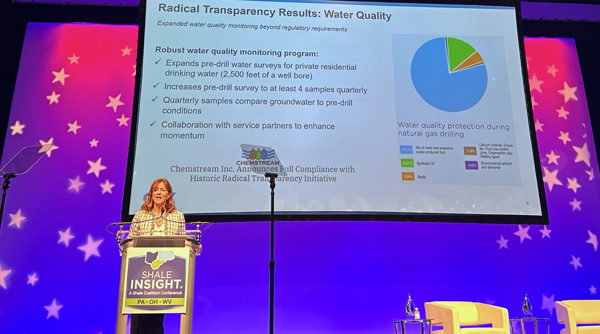


What They’re Saying
By Positive Energy Hub staff
Learn more about Appalachia First 2.0 ⬇️
“The PA State Building Trades fully support all efforts to bring and sustain jobs to Pennsylvania. The opportunity we have in Western PA is rooted in our strong history of energy development. Capturing and utilizing wasted fuel sources such as coal mine methane checks all of the boxes, creating jobs, producing more energy, driving emissions reductions while helping to attract end users to the region. We will be there to provide the current and future workforce to build and support these investments and will stand side by side with CNX to help deliver these opportunities.”
-Robert S. Bair, President
PA State Building Trades
“The Building Trades and CNX have collaborated closely together for years, culminating with this unique opportunity the region has to lead the US in waste methane capture starting right here in western PA. We’re excited about CNX’s commitment to the building trades on both the capture work as well as the downstream opportunities to utilize the captured and repurposed methane emissions to create new manufacturing jobs. This could be a gamechanger for the building trades and we’re proud to stand shoulder to shoulder with CNX not only on the jobs and economic opportunity that methane capture and beneficial use represents, but on the broader effort to make this region a better place for all of us – together.”
-Greg Bernarding, Executive Business Manager
Pittsburgh Regional Building Trades Council
“There’s something powerful happening when a kid from our region, who grew up just down the road, walks into a job site ready to work — not just with skills, but with pride and purpose. The CNX Mentorship Academy is changing lives, and we see it every day. As a proud premier hiring partner we see these young people stepping into real careers, and in turn, they’re strengthening our companies, our communities, and our future. This is what investing in our own looks like — moving Appalachia forward and we’re all better for it.”
-Jerome Bettis, CEO
M&A Resources
“The regional building trades and CNX are in lock step in our efforts to catalyze waste gas capture and beneficial use in the region. Ultra-low emissions, locally sourced remediated mine gas can be a gamechanger for uses such as feedstock for sustainable aviation fuel at the Pittsburgh airport and many others. The Steamfitters and the wider building trades unions are proud to partner with CNX to bring this technology to bear in the region, which will help clean up the environment and create a new industry and new good-paying jobs for our members in western PA. We appreciate CNX’s strong commitment to the building trades and look forward to continuing to partner with them to bring this vision to reality.”
-Kenny Broadbent, Business Manager
Steamfitters Local 449
“Capturing and repurposing waste emissions from our industrial past is an economic and environmental winner that can help propel us into a new energy and manufacturing future. Nick and CNX have made a strong commitment to western PA labor as they catalyze this important work in the region, and we’re proud to partner with them to continue to advance this vital industry. But this isn’t just about one project or one issue, it’s a commitment to working together across the board leveraging our unique strengths to help us reach our full potential. We’re proud to stand side by side with CNX as we work together to make this region a better place for everyone.”
-Darrin Kelly, President
Allegheny County Labor Council
“The working relationship between the Pittsburgh Building Trades and CNX was effortless. Nick, Brian, and the rest of their team’s knowledge of the process and the amount of great things that will come from it for all of Western Pennsylvania and beyond was remarkable. The number of jobs created is one thing, but the benefits to the environment and the region are limitless.”
-Tom McIntyre, Business Manager
IBEW Local 5
“Passport Academy’s collaboration with CNX has been fantastic for our students. With financial support through the RK Mellon Foundation, we recently had a study done through the RAND Institute where they helped us identify workforce recommendations to strengthen our career-readiness curriculum. At the time the study was done, we had not even considered jobs in the region that exposed our students to careers in gas & oil. Since that day, with the help and support of the CNX Mentorship Academy, we have had many students who have various experiences learning more about the gas and oil industry and how integral these jobs are to our region. Our collaboration has not only helped the school in developing partners to engage with our students but has created integral career-ready opportunities for future students to learn about jobs and gain employment while staying in our region.”
-Joe Oliphant, Principal/CEO
Passport Academy Charter School
“CNX’s bold step forward in capturing the full economic, environmental, and community potential of our region’s energy assets is exactly the kind of collaborative, future-focused approach that we are proud to champion at the Allegheny Conference on Community Development. By working in partnership with industry and labor, CNX is creating family-sustaining jobs, advancing climate-smart energy solutions like remediated mine gas capture, and preparing the next generation through workforce initiatives. Together, we are proving that western Pennsylvania can lead the nation in energy development while strengthening our economy and community for decades to come.”
-Matt Smith, Chief Growth Officer
Allegheny Conference on Community Development
“Boilermakers build, repair, and power the backbone of American industry. We are proud to stand together with CNX and put our skills to work capturing and repurposing waste emissions, which will create good union jobs, strengthen manufacturing, and secure our energy future in Western PA.”
-Shawn Steffee, Inspector/Business Agent
Boilermakers Local 154
“Real, verifiable data is critical to demonstrating that natural gas development is conducted responsibly and in full compliance with rigorous environmental and operational standards. Through transparent, science-based information, we ensure the communities in which we operate – not to mention the employees who work tirelessly each day in the industry – have confidence in the industry’s commitment to safety and environmental stewardship.”
-Jim Welty, President
Marcellus Shale Coalition
“The CNX micro-TIL program has been instrumental in supporting residents across Westmoreland County throughout the disaster recovery process. In addition, their partnerships with the Department of Public and Human Services agencies have strengthened our ability to extend support further into the community. Their generosity has brought vital relief, and we are deeply grateful for their unwavering commitment and support.”
-Michele Whiting-Zona, Disaster Recovery Specialist
Westmoreland County Department of Public Safety
“Westmoreland Community Action has found the partnership and support from CNX to be an amazing breath of fresh air. In a time when so many of our funders have limits on purpose for funds, CNX’s direct support to meet individual’s daily and practical needs has been a tremendous help countless times. The official, formal term for the interventions that we conduct with support from CNX is Social Determinants of Health, but, for the individuals and families who receive the support, it means survival and a lifeline.”
-Mandy Welty Zalich, CEO
Westmoreland County Action

Signing Day 2025
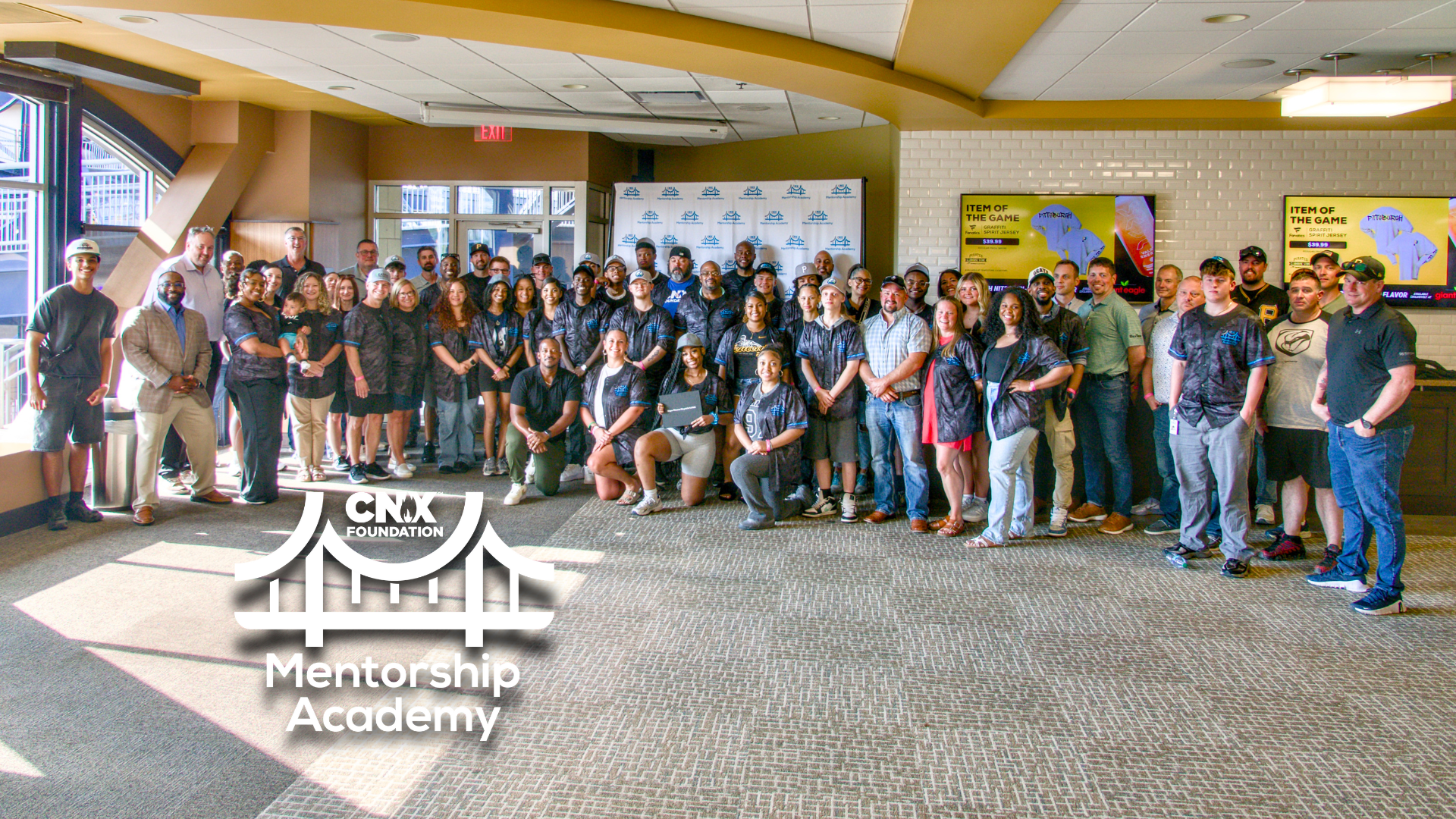
By Positive Energy Hub Staff
On August 22, 2025, CNX celebrated Signing Day 2025—an inspiring culmination of many hours of dedication, skill-building, and personal growth by 25 Mentorship Academy students. These exceptional young individuals, uplifted by mentors, CNX team members, and community supporters, are now launching into the next phase of their careers by accepting internships with CNX and Academy partners.
Signing Day represents far more than a ceremony; it is a true reflection of the Appalachia First vision. By opening doors to family-sustaining careers and introducing students to real opportunities within the region’s energy sector, local talent is positioned to participate in and directly benefit from innovation happening throughout Appalachia. This commitment strengthens bonds within local communities and creates tangible, lasting impact for generations.
CNX is grateful to every partner, mentor, and supporter who made this achievement possible—building a brighter future for the region. Enjoy the short video above, and relive the energy and excitement that defined this special day.
You may also like…
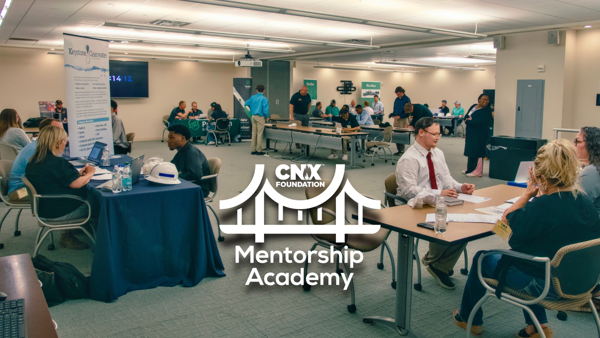


CNX To Expand Innovative Natural Gas Development in Penn Township and Across Westmoreland County

By Positive Energy Hub staff
Following a favorable ruling by the Pennsylvania Environmental Hearing Board (EHB) regarding previously issued permits for a site in Penn Township, Westmoreland County, CNX is moving forward with plans for enhanced natural gas development in the area following its recent acquisition of APEX Energy’s local assets. New resource development in Penn Township will showcase CNX’s signature approach to transparent, sustainable operations and community engagement.
Overcoming Environmental NGO Delay Tactics
Development at the Drakulic site has faced unnecessary hurdles, with its drilling permits caught in a prolonged appeal process driven by an activist group that seeks an outright ban on all development. In a significant blow to the activists, the Pennsylvania Environmental Hearing Board recently upheld the Department of Environmental Protection’s (PADEP) permit issuance, dismissing the attacks on the propriety of PADEP’s permit review and approvals as well as the proposed operations.
This latest episode underscores what has become an all-too-familiar playbook employed by environmental NGOs where valid permits issued by PADEP are challenged on dubious grounds, squandering taxpayer dollars and obstructing development and progress in local communities while forcing industry repeatedly to expend significant resources to defend such claims.

Alan Shepard, CNX’s President and Chief Financial Officer, noting the Company’s intention to align the Penn Township site with CNX’s broader operational standards, expressed enthusiasm about the area’s potential. “We’re committed to working with the Penn Township community to tailor our operations to their needs,” Shepard said. He also emphasized that while opponents are likely to file new appeals, such challenges often lack any legal or factual grounding. Mr. Shepard continued, “The system designed to protect the public and ensure safe and compliant development is being manipulated by activist groups intent on the sole and improper purpose of delaying and impeding progress. It is long past time to put a stop to this process.”
A Model for Sustainable Development and Community-Centered Operations
CNX is committed to building state-of-the-art well pads across Westmoreland County that meet and exceed Pennsylvania’s environmental regulations, local ordinances, and federal standards. The company’s operations stand out for their focus on innovation, sustainability, and transparency. CNX tailors its operations specifically to local characteristics, reducing freshwater use, reusing produced water where feasible, and upgrading infrastructure to decrease truck traffic. The company also customizes solutions around issues such as light and noise to ensure responsiveness to each locality where it operates.
Radical Transparency in Action
Through its Radical Transparency program, launched in collaboration with Governor Josh Shapiro and PADEP, CNX provides real-time environmental data from its active well pads and compressor stations. Monitoring air and water quality, along with detailed chemical disclosures, the initiative has shared over 700,000 data points since its start, accessible here. The program currently covers 18 sites, with plans to expand the effort across all future operations.
Groundbreaking Intensive Pad Study
As part of the efforts between the Shapiro Administration and CNX, PADEP has begun conducting the most intensive independent study of unconventional gas wells in the nation. CNX is providing state regulators with continuous access to one of its well pad sites in Washington County, PA allowing for in-depth independent monitoring of the air emissions before, during, and after development of the new wells.
Looking Ahead
As CNX expands its footprint across Westmoreland County, it remains dedicated to responsible energy development with its unique brand of environmental stewardship and community collaboration. For more details on CNX’s operations, sustainability efforts, and community engagement, visit www.CNX.com.
You may also like…


CNX To Expand Innovative Natural Gas Development in Penn Township and Across Westmoreland County
CNX To Expand Innovative Natural Gas Development in Penn Township and Across Westmoreland County
By Positive Energy Hub staff
Following a favorable ruling by the Pennsylvania Environmental Hearing Board (EHB) regarding previously issued permits for a site in Penn Township, Westmoreland County, CNX is moving forward with plans for enhanced natural gas development in the area following its recent acquisition of APEX Energy’s local assets. New resource development in Penn Township will showcase CNX’s signature approach to transparent, sustainable operations and community engagement.
Overcoming Environmental NGO Delay Tactics
Development at the Drakulic site has faced unnecessary hurdles, with its drilling permits caught in a prolonged appeal process driven by an activist group that seeks an outright ban on all development. In a significant blow to the activists, the Pennsylvania Environmental Hearing Board recently upheld the Department of Environmental Protection’s (PADEP) permit issuance, dismissing the attacks on the propriety of PADEP’s permit review and approvals as well as the proposed operations.
This latest episode underscores what has become an all-too-familiar playbook employed by environmental NGOs where valid permits issued by PADEP are challenged on dubious grounds, squandering taxpayer dollars and obstructing development and progress in local communities while forcing industry repeatedly to expend significant resources to defend such claims.
Alan Shepard, CNX’s President and Chief Financial Officer, noting the Company’s intention to align the Penn Township site with CNX’s broader operational standards, expressed enthusiasm about the area’s potential. “We’re committed to working with the Penn Township community to tailor our operations to their needs,” Shepard said. He also emphasized that while opponents are likely to file new appeals, such challenges often lack any legal or factual grounding. Mr. Shepard continued, “The system designed to protect the public and ensure safe and compliant development is being manipulated by activist groups intent on the sole and improper purpose of delaying and impeding progress. It is long past time to put a stop to this process.”
A Model for Sustainable Development and Community-Centered Operations
CNX is committed to building state-of-the-art well pads across Westmoreland County that meet and exceed Pennsylvania’s environmental regulations, local ordinances, and federal standards. The company’s operations stand out for their focus on innovation, sustainability, and transparency. CNX tailors its operations specifically to local characteristics, reducing freshwater use, reusing produced water where feasible, and upgrading infrastructure to decrease truck traffic. The company also customizes solutions around issues such as light and noise to ensure responsiveness to each locality where it operates.
Radical Transparency in Action
Through its Radical Transparency program, launched in collaboration with Governor Josh Shapiro and PADEP, CNX provides real-time environmental data from its active well pads and compressor stations. Monitoring air and water quality, along with detailed chemical disclosures, the initiative has shared over 700,000 data points since its start, accessible here. The program currently covers 18 sites, with plans to expand the effort across all future operations.
Groundbreaking Intensive Pad Study
As part of the efforts between the Shapiro Administration and CNX, PADEP has begun conducting the most intensive independent study of unconventional gas wells in the nation. CNX is providing state regulators with continuous access to one of its well pad sites in Washington County, PA allowing for in-depth independent monitoring of the air emissions before, during, and after development of the new wells.
Looking Ahead
As CNX expands its footprint across Westmoreland County, it remains dedicated to responsible energy development with its unique brand of environmental stewardship and community collaboration. For more details on CNX’s operations, sustainability efforts, and community engagement, visit www.CNX.com.
You may also like…

Commitment to Transparency: A Deep Dive into CNX’s Water Quality Program at NV110

By Carrie Crumpton, CNX Vice President of Environmental Strategy
In November 2023, CNX announced its historic Radical Transparency™ (RT) public-private collaboration with Governor Josh Shapiro and the Pennsylvania Department of Environmental Protection (DEP) from the NV110 pad in East Finley Township, Washington County.
Since then, the Radical Transparency program and website has taken shape with over 700,000 data points collected to date. Water quality testing is a complex topic and we have received some questions about these activities in general and for the NV110 pad specifically. In this Context Corner we take a deep dive into water quality testing at NV110 and how it relates to the Radical Transparency program.
It’s important to understand why we do water testing. Pennsylvania law does not require that a natural gas driller perform water testing, rather it presumes that an unconventional well operator is responsible if a water supply within 2,500 feet of an unconventional well becomes contaminated within 12 months of drilling or fracking. To preserve the ability to rebut this presumption, the operator must conduct a pre-drill water survey using an independent DEP-accredited lab and provide the results to both the owner of the water supply and the DEP.
The DEP does not have a required list of which water quality parameters (referred to as “analytes”) that must be analyzed—only that testing must occur before drilling or alteration of the well and that test results must be shared. The DEP provides a “recommended” list of analytes most relevant to gas development activity, and CNX tests for those parameters, in addition to other parameters not required but helpful to well owners. We provide this voluntary service to collaborate with our communities and ensure we are addressing issues others may ignore. Additionally, neither the law nor DEP requires that an operator test water to suitable drinking water standards. For an example of a pre-drill test report from NV110, please see the following two links for an actual anonymized NV110 test report, and the same well’s anonymized post-drill report.
Pre-drill.pdf
PDF – 1012 Kb
Post-drill.pdf
PDF – 1.9 Mb
There is much to understand about our water quality monitoring program, including why it is done, how it has evolved, and what it means for communities. Pre-drill testing provides a baseline of water quality before any operational activity has occurred, establishing a benchmark to determine if gas development activity has negatively impacted water quality.
This allows us to detect any changes and ensure our operations aren’t impacting residential water sources. For more information about the program’s rationale, refer to this post from March 2024: FAQ’s Water Testing, which introduced some of these concepts.

When did CNX’s water testing program change—and why?
Our water quality monitoring program significantly evolved in late 2023 with the launch of CNX’s Radical Transparency program—a first-of-its-kind public-private collaboration with Pennsylvania Governor Josh Shapiro. This program introduced real-time, open-source data sharing for air and water quality, chemical disclosures, and enhanced monitoring.
The timeline below illustrates some of the iterative changes that were in process while developing the RT program on NV110 and expanding our multi-quarter baseline water quality monitoring program at the MAM14 pad, a greenfield site where we could conduct quarterly water testing prior to any activity.

Why did CNX expand the program to include multiple quarters?
Water quality isn’t static—it changes with the seasons, rainfall, and land use. By sampling across multiple quarters, we capture a more complete baseline. This proactive approach helps us understand natural variability and strengthens our data integrity. Additional samples provide more data, providing a comprehensive picture of water supply conditions. Of course, water quality from private water wells varies significantly by area. Water-bearing zones can contain naturally occurring contaminants, bacteria, and naturally occurring methane, and these conditions can change throughout the year. Normal fluctuations occur in water supplies due to changing seasons and a variety of other factors, including the construction and maintenance of the water wells themselves. Additional samples help capture that information and provide insight into factors impacting water quality.
Why isn’t NV110 water quality data available on the Radical Transparency website, even though I opted in to disclose my results?
The NV110 pad’s water quality data isn’t posted because the pre-drill testing occurred before the program was established. At that time, CNX didn’t request landowner permission to publicly share the data. While some may have opted in to disclose post-drill results, the water monitoring portion of the Radical Transparency initiative was designed to launch in areas without prior drilling, allowing for consistent pre- and post-drill comparisons across multiple quarters.
For sites like NV110, where drilling had already occurred, we lack the same multiple quarter baseline data that is for comparison purposes that accounts for seasonal fluctuations as described above.
The first pad with complete water quality monitoring data under the new RT program is MAM14, which you can view here. Even though the NV110 water test results are not disclosed on the RT website, the results from the pre-drill testing that was performed was provided to both well owners and the DEP, as was our standard practice before the RT program was established. For NV110, we also performed post-drill testing and provided those results to the well owners. In one case, we performed both pre-drill and post-drill testing on a well outside of the 2,500-foot zone of presumption as a courtesy to that well owner at their request.
Why did CNX switch vendors for post-drill water testing on NV110?
As stated above, pre-drill testing on NV110 was completed by January 2022. When we established the RT program in 2023, we needed an efficient means to present water testing data on our RT website. Given the number of analytes for which we test and the number of unique tests for each well under the RT water testing program, the volume of water test results data was an order of magnitude larger than our previous testing program. We needed the ability to receive the data electronically via an API feed ensuring data integrity from the testing labs through publication rather than introducing the possibility of human error in transcribing the data into the RT website. Through competitive bidding, we selected a partner who met all of our water testing standards and could provide data through an API-style feed directly to our platform—maintaining data integrity from the independent testing lab, to the vendor, and then to CNX. This approach avoids human data errors. Reflecting the process where well owners are provided with results directly from the water testing company, CNX does not have the ability to edit or change the results embodied in the electronic data, eliminating transcription errors. The independent laboratories that perform the water testing and provide the results are selected by the water testing vendor (not CNX) and are certified by the states where we operate. This aligns with how we manage our air quality monitoring with Clean Air Engineering. Learn more here.
How does CNX decide what water quality parameters to test for, and why were the parameters for NV110 different from those used in the Radical Transparency program—for example, why was arsenic tested pre-drill but not post-drill?
In 2021, the DEP revised its technical guidance document that operators can reference for the recommended list of test analytes.
PA DEP OG recommendations 8000-FS-DEP4300.pdf
PDF – 385 Kb
We utilized that guidance for the NV110 pre-drill testing and further analyzed for parameters well beyond the minimum list outlined in the guidance. We tested for parameters that establish a baseline to identify whether future operations have had any impact on water quality, and we selected other meaningful analytes like sulfate, conductivity, hardness, and coliform bacteria to help both CNX and landowners to identify both nuisance and health-related concerns that can be found in mining or agricultural regions.
Our testing parameters for water quality have evolved as the DEP and industry have evolved. As stated above, the DEP revised its “Recommended Oil and Gas Predrill Parameters” over time to distinguish between recommended and minimum analytes for which to test. In one revision, dated July 2021, analytes such as arsenic and zinc were not designated as minimum recommendations, although they were included in some of CNX’s earlier pre-drill testing efforts.
Historically, CNX utilized a truncated post-drill list focused on key indicator analytes, which included the DEP’s minimum requirements and applied that post drill analysis to residential drinking water sources within 1,500 feet of the unconventional well. However, difficulty in managing multiple parameter lists and radius requirements for pre- and post-drill analyses led CNX to adopt a standardized pre- and post-drill analyte list informed by recommendations from multiple states, and expanded our post-drill radius to 2,500 feet.
This standardization, informed by Spring/Summer activities in 2024, reduced confusion across jurisdictions and enabled more direct comparisons to the four-quarter baseline analyses now conducted at new sites. As a result, when reviewing pre- and post-drill data for legacy wells like NV110, differences in parameter sets are due to the age of the pre-drill sampling and the iterative development of CNX’s post-drill program. This is why arsenic appears in pre-drill but not post-drill tests. The changes that came with the establishment of the RT program reflect CNX’s ongoing commitment to improving analytics and thorough environmental assessments at new well sites as we learn more and receive questions from communities.
Why doesn’t CNX test for and report more analytes?
We test for indicator analytes, not necessarily for every possible analyte or chemical in a groundwater sample. These are substances that, if elevated, suggest something may be wrong. For example, a spike in conductivity might indicate higher mineral content, prompting further examination of sodium, calcium, or total dissolved solids for a potential source of any increased mineral content.
Indicator parameters are an effective way to monitor water quality, allowing early detection and guiding further investigation if needed.
With this program, we’re not analyzing water samples to determine compliance with any set of required limits that are imposed on a public drinking water supplier. Instead, our focus is on education, transparency, and community awareness. That means we select analytes and methods that are widely accepted for screening, research, and environmental impact. To be clear, CNX’s water testing program is designed to diagnose an impact from gas development activity, not to determine water potability.
For example, while EPA Method 200.8 is often required for formal drinking water compliance (like the analysis you would see conducted by a public drinking water authority) due to its ultra-low detection limits, CNX may use EPA Method 6010 or similar methods that are applied under the Resource Conservation and Recovery Act (RCRA) and widely used to analyze for trace metals in aqueous samples. The method now utilized (specifically EPA Method 6010D) is part of the SW-846 compendium, EPA’s official set of methods for waste testing, and is recognized under 40 CFR Part 136. This set of methods govern test procedures for the analysis of pollutants in water. These methods are designed to be utilized to analyze environmental samples, including waste and groundwater, and are well-suited to our goal of identifying potential contamination from nearby gas development activities.
By aligning with these methods, we are able to detect indicator parameters that may suggest the need for further investigation and provide reliable screening data that can help residents see what’s in their water pre- and post-gas development activity.
Ultimately, our method selection reflects our commitment to Radical Transparency—giving communities the tools and information they need to make informed decisions about their water.
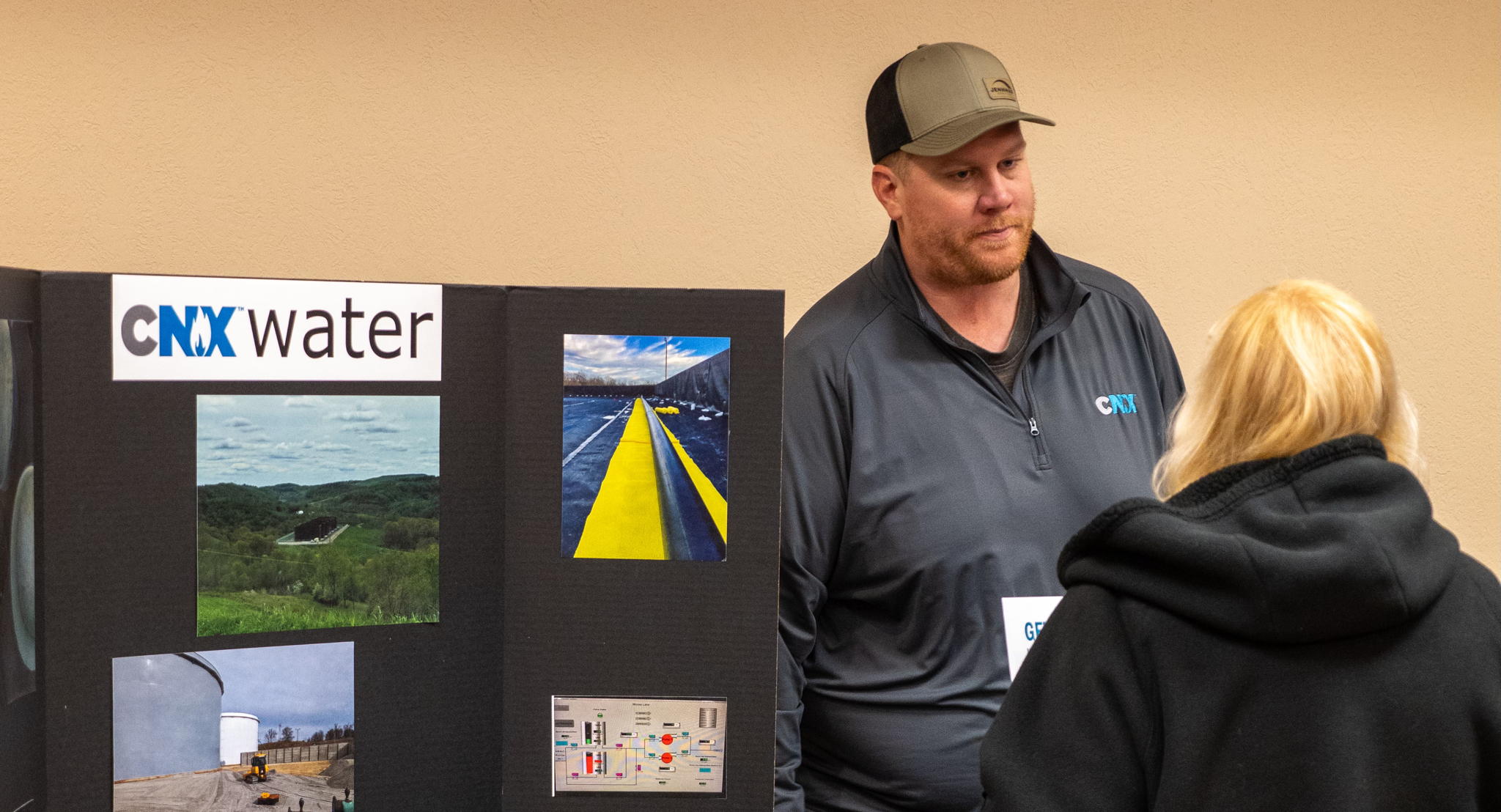

To summarize: all of this testing is not intended to determine potability. It is intended to detect whether there has been any impact on water wells from nearby gas drilling, and if so, to direct additional, more detailed investigation and, potentially, remediation, if warranted.
Certain testing methods listed in my results can be used to detect hundreds of different analytes – why don’t you provide all those results?
As discussed above, CNX provides its third-party environmental consultants a specific list of analytes for which to test. While an instrument like an Inductively Coupled Plasma – Optical Emission Spectroscopy (ICP/OES) or an ICP – Mass Spectroscopy unit, ICP-MS, can detect for nearly every element on the periodic table, that doesn’t mean each run or analysis captures the entire scope of an ICP’s capabilities. Each analyte needs its own calibration curve, quality control checks, and other validations. Just because the instrument has the capability to “see” an element, does not mean that the unit has been calibrated or set up to run for every element. Different analytes utilize different sensitivities or have different interferences that must be accounted for depending on the analyte. This adds cost and complexity. As part of its water testing program, CNX requests specific information to be provided, and certified laboratories prepare instruments and calibrations to provide reliable results for those analytes specified. Instead, a helpful analogy is an x-ray machine. An x-ray can scan the whole body, but a doctor does not order a full body x-ray to diagnose the cause of foot pain. Rather, she orders an x-ray of the lower leg and foot.
Why doesn’t CNX test for everything DEP tests for using their SAC codes?
SAC Code stands for Standard Analysis Code and is part of the standardized system for identifying and/or requesting specific laboratory analysis at the DEP’s laboratory. CNX has limited experience with SAC codes, which only comes from cooperation with the DEP when conducting environmental investigations. SAC codes are internal Department identifiers that identify to the DEP’s lab in Harrisburg what analyses need to be run on an accompanying sample. These codes allow for accurate and efficient processing within their own laboratory and can also be utilized when there are specific testing requirements for permit compliance. However, pre- and post-drill programs are not permit requirements. Parameter lists provided to independent third-party labs from CNX for example perform the same function as the DEP’s internal organization (SAC) on their internal lab submission forms.
Why do my results reference EPA’s Safe Drinking Water standards if CNX doesn’t utilize drinking water test methods?
CNX is not a water purveyor and is not required to utilize drinking water test methods for its pre- or post-drill sampling. The methods that CNX utilizes for baseline analyses are validated methods recognized by regulatory agencies and yield a concentration result. Some metals are toxic at certain concentrations and by comparing the results we provide to the federally recognized safe drinking water standards (which define Maximum Contaminant Levels (MCLs)), you can assess whether the water may pose a health risk. While we aren’t certifying potable drinking water, we are providing homeowners/water purveyors with valuable information about their drinking water source to help them inform their decision to take corrective actions where needed. It’s important to remember we also provide this reference information with the pre-drill data – because regardless of gas activity, Pennsylvania well water can contain a number of constituents that may exceed the EPA’s safe drinking water standards. This is another example of CNX building community trust through transparency.

Conclusion
We hope this post offers insight and detail into CNX’s water quality program and Radical Transparency. CNX is deeply committed to helping residents understand the quality of their drinking water. As highlighted in a recent Context Corner article, our passion stems from years of observations: poor water well construction, lack of private water well construction standards in many states, and historically high levels of coliform and E. coli bacteria in private wells—serious human health issues that have a blind eye turned on them by local environmental groups.
While CNX doesn’t attempt to determine if water is safe to drink or certify water as safe to drink, we provide comparative data so homeowners and water purveyors can assess potential risks. Our goal is to empower communities with information—not just about potential drilling impacts, but about overall water health. We call on environmental groups who purport to care about these same goals to join in the responsibility to address these health concerns. Our communities deserve better and CNX is intent on filling the void left by enviromental groups and others who are simply ignoring such a serious matter.
Latest Context Corner:


Importance of Data Analysis and Advanced Monitoring Technologies for Continuous Improvement in Methane Emissions

By Hayley Scott, Senior Vice President, Compliance and Reporting
The philosophy of our Radical Transparency effort embraces direct, no-nonsense dialogue with stakeholders regarding our operational experiences.
Lesson Learned: Rapid Response and Root Cause Analysis
When we recently learned some valuable lessons after detecting an unintentional methane release from a water storage vessel at our Mamont compressor station, we wanted to highlight them. These are teachable, learning moments for CNX in our ongoing methane journey (during which we have decreased our methane intensity by 77% and 60% over the last five years in our production and our gathering and boosting segments, respectively).
By transparently sharing our experiences, we aim to provide a “public service announcement” to industry peers and inform our community members of the seriousness with which we address these emissions.
Applying our core value of “Excellence” to our methane intensity program is strongly correlated with fostering a culture and mindset that results in outstanding HSE (Health, Safety, and Environment) performance. Low methane intensity likely translates to low safety and environmental risk. We treat any unintentional releases in the same manner as a safety or an environmental incident, working diligently to investigate and determine root causes so we can implement improvements to prevent recurrence. While our values dictate our expectation of zero safety and environmental incidents in our operations, we view these exceptions to our high standards as important opportunities to improve and advance the state of the art at CNX and across the industry.
Through advanced technologies that we deploy during periodic aerial surveys, we recently detected a methane emission event in our Mamont field in Westmoreland County, PA operating area – highlighting the critical role of proactive monitoring in providing information that we can act on quickly.
We immediately deployed our drones and other detection devices to pinpoint a cause for the emission source. Working with our dedicated operational personnel, we determined that after the completion of routine compressor maintenance, a valve had not been returned to its proper setting by the service provider performing the maintenance.

Leveraging Data and Technology for Methane Management
Our analysis identified a clear signature of related operational data that correlated with the duration of the emissions event. The data provided valuable insights into the timing and nature of the event, allowing us to better understand the circumstances that led to the incident. Armed with this knowledge, we implemented a new control that sends this data to our Real Time Operations Center and triggers a critical alarm if measurements fall outside expected parameters. Along with specific protocols that we have implemented when service work is performed to reduce the potential of unintentional releases, this alarm will significantly reduce the duration of any event that may occur.
Key lessons learned include:
- The importance of leveraging in-house operational data for real-time analysis and emission event detection.
- The value of advanced monitoring technology.
- The reaffirmation that excellence in methane intensity equates to excellence in HSE.
- The necessity of ensuring that third-party service providers are fully aligned with the company’s HSE culture.
We remain committed to improving our processes, preventing future emissions events, continuously enhancing our methane intensity program. For questions or concerns, please contact our environmental compliance team at Radicaltransparency@cnx.com.
Latest Context Corner:


CNX Welcomes Westmoreland County Leaders to MAM16
CNX Welcomes Westmoreland County Leaders to MAM16
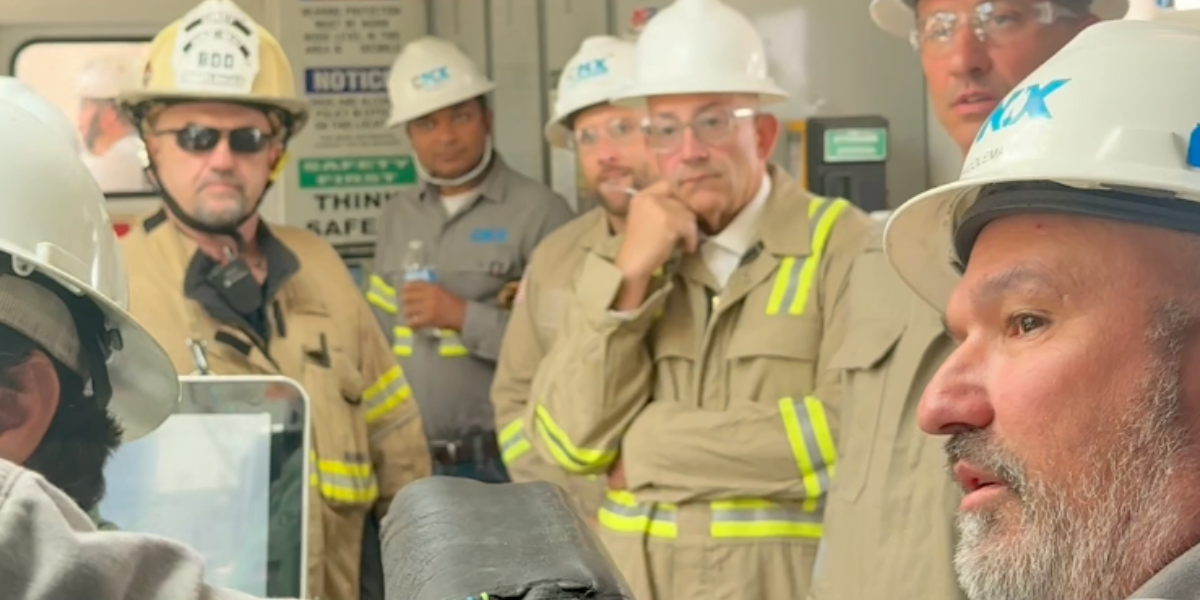
By Positive Energy Hub Staff
This summer, CNX welcomed Westmoreland County Commissioners, County Public Safety officials, and Hempfield Township Chairman R. Doug Weimer to CNX’s MAM16 well pad. The visit marked another step in CNX’s ongoing partnership with Westmoreland County.
During the tour, guests learned more about CNX’s commitment to safety, responsible operations, and efficient, transparent natural gas production. Discussions highlighted optimism for southwestern Pennsylvania’s future, powered by the region’s prolific shale reserves.
CNX’s partnerships with local officials and communities are central to its Appalachia First mission: building trust, supporting local jobs and economies, and fueling America’s energy future. Highlights from the visit can be viewed in the video below.
You may also like…

CNX Welcomes Westmoreland County Leaders to MAM16
By Positive Energy Hub Staff
This summer, CNX welcomed Westmoreland County Commissioners, County Public Safety officials, and Hempfield Township Chairman R. Doug Weimer to CNX’s MAM16 well pad. The visit marked another step in CNX’s ongoing partnership with Westmoreland County.
During the tour, guests learned more about CNX’s commitment to safety, responsible operations, and efficient, transparent natural gas production. Discussions highlighted optimism for southwestern Pennsylvania’s future, powered by the region’s prolific shale reserves.
CNX’s partnerships with local officials and communities are central to its Appalachia First mission: building trust, supporting local jobs and economies, and fueling America’s energy future. Highlights from the visit can be viewed in the video below.
You may also like…
CNX Resources: Championing Transparency in the Face of Hypocrisy
By Positive Energy Hub Staff
The program was launched in November 2023 in collaboration with Pennsylvania Governor Josh Shapiro and the state’s Department of Environmental Protection (DEP). The initiative is a groundbreaking commitment to sharing real-time air and water quality monitoring across natural gas operations—providing communities with unprecedented access to data.
Yet, despite its innovative approach, the Environmental Health Project (EHP) has unfairly criticized CNX’s efforts in its April 2025 report, “Pennsylvania’s Shale Gas Boom: What the Shapiro Administration Can Do to Better Protect Public Health.”
At the same time, the environmental group Environmental Health Sciences, through its Environmental Health News website, applauded a similar air monitoring initiative: the Eyes on Air program led by the Beaver County Marcellus Awareness Community (BCMAC). This endorsement was made in its March 2025 article titled, “A new tool for communities near Shell’s plastics plant in Pennsylvania provides air quality insights.”
This stark contrast in environmental organization rhetoric reveals a troubling hypocrisy, particularly when both monitoring programs share the same goal: empowering communities with data to safeguard public health, and data to drive informed public policy.
CNX’s Radical Transparency: A Model for Accountability
CNX Resources’ Radical Transparency program is a pioneering effort to strengthen ties between industry and community.
Through the program’s ongoing expansion, CNX has collected over 600,000 data points (and counting) across nearly two years, and maintained compliance with the 98th percentile 24-hour concentration published in the EPA National Ambient Air Quality Standards. CNX also publicly discloses chemicals used in drilling.
The real-time data is presented by location on CNX’s website, complementing frequent site updates detailing other environmental information.
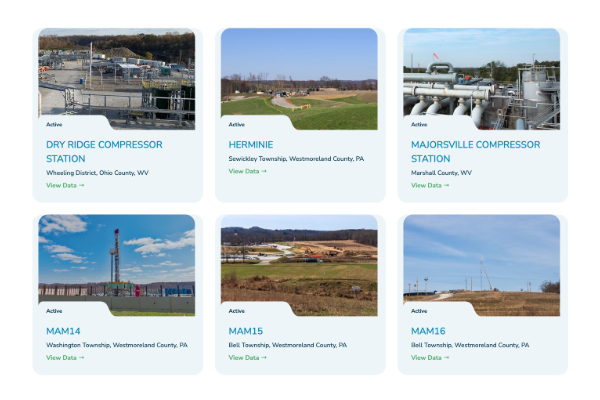
Governor Josh Shapiro has lauded the initiative, highlighting that, “CNX is leading the industry in showing how we can reduce pollution and ensure the health and safety of our communities while still maintaining Pennsylvania’s central role in the nation’s energy economy.”
CNX’s commitment to transparency aligns directly with public health priorities. By making data accessible, CNX empowers residents to see and understand the environmental impacts of natural gas operations.
The program’s rigorous methodology, aligned with state and federal standards and performed by a third party, ensures scientific credibility. Further, the project isn’t a marketing gimmick, but the new normal for CNX as it’s been integrated into the company’s sustainable business model.
Most recently, this spring PA DEP and CNX announced the next step in Radical Transparency: “DEP will begin conducting the most intensive independent study of unconventional gas wells in the nation. CNX will provide DEP with continuous access to one of its well pad sites in Washington County, allowing for in-depth independent monitoring of the air emissions before, during, and after development of the new wells.”

Criticizing CNX, Praising BCMAC
Despite CNX’s efforts, EHP’s April 2025 report dismisses Radical Transparency as inadequate, lacking accountability, arguing “the CNX setbacks are a marginal increase over current requirements,” suggests the data is “cherry-picked,” and calls CNX’s conclusions speculative.
EHP claims the program’s data collection fall short of addressing the broader health risks of fracking. “We have no evidence that shale gas development can be done without harm to human health,” writes EHP. However, that evidence is exactly why Radical Transparency was launched and why the program continues in earnest.
However, just one month earlier, an Environmental Health News (EHN) article enthusiastically endorsed the Eyes on Air program, a community-led air monitoring effort by BCMAC near Shell’s ethane cracker plant in Beaver County.
The article praises Eyes on Air for providing “real-time, hyper-local air quality information” from five new air monitors, enabling residents to track particulate matter and volatile organic compounds.
The hypocrisy is glaring. Both Radical Transparency and Eyes on Air aim to provide communities with accessible, real-time environmental data to address health concerns. Both involve air quality monitoring to detect pollutants like volatile organic compounds. Both are designed to empower residents with information to protect themselves. Yet, one environmental organization vilifies CNX’s industry-led initiative while the other organization celebrates BCMAC’s effort, despite their shared objectives.
This double standard undermines the environmental community’s credibility and suggests a bias against industry-led solutions, even when they align with public health goals.
Industry as a Partner, Not an Enemy
EHP’s criticism also ignores the broader context of Pennsylvania’s energy landscape. The state’s natural gas industry, centered in the Marcellus and Utica shales, supports thousands of jobs and provides significant economic benefits, including billions in taxes, fees, and royalty payments.
Moreover, in EHP’s discussion of whether natural gas is “clean energy,” it alleges “greenwashing tactics the oil and gas industry employs to ensure continued public favorability for its polluting products.” To the contrary, that public favorability comes from the public’s recognition that, 1) natural gas has played a principal factor in reducing power sector carbon dioxide emissions by 40% the past 20 years, and 2) natural gas is vital to fuel increased electricity demand and support the addition of intermittent “clean” generation sources to the grid.
CNX’s Radical Transparency program demonstrates that industry can be a partner in addressing community concerns and questions on environmental impacts. By voluntarily exceeding regulatory standards and sharing data publicly, CNX is setting a new standard for responsible resource development. EHP’s dismissal of these efforts as insufficient, while EHN praises a similar initiative, sends a confusing message to communities and policymakers alike.
A Call for Consistency and Collaboration
Rather than disparaging CNX’s efforts, EHP should embrace them as part of a broader strategy to protect Pennsylvania’s residents.
By working together—industry, community groups, and environmental advocates—Pennsylvania can continue to be both an energy and environmental leader. That leadership translates into affordable energy bills and improved air quality. It’s time for environmental organizations to support all efforts that advance both transparency and public health, regardless of who spearheads them, and stop the hypocrisy.
You may also like…


CNX Delivers 22nd Consecutive Quarter of Free Cash Flow in Q2 2025
CNX Delivers 22nd Consecutive Quarter of Free Cash Flow in Q2 2025
By Positive Energy Hub Staff
Generating $188 million in FCF for the quarter, CNX reinforced its reputation for disciplined capital allocation and a resilient, low-cost business model. Since the start of CNX’s 7-year plan in 2020, its differentiated business model has resulted in cumulative FCF of approximately $2.5 billion.

In line with its commitment to shareholder value, CNX repurchased 3.7 million shares for $114 million at an average price of $31.24 per share. This activity brought the total shares retired since 2020 to approximately 40% of outstanding shares—a record achieved through $1.6 billion in buybacks at an average price of $18.01 per share.
Operationally, CNX made significant strides with efficiency improvements in its drilling program. The company completed drilling three deep Utica wells with lateral lengths averaging about 11,100 feet at an average pace of 36 days per well—a 46% reduction in drilling days from 2023. Fully burdened cash costs decreased to $1.05 per Mcfe, reflecting a continued focus on cost leadership. As a result of strong production, annual production guidance was raised to 615–620 Bcfe.
The quarter also saw advances in CNX’s environmental initiatives. The company generated approximately $19 million from environmental attribute sales, capturing and selling 4.4 Bcf of Remediated Mine Gas (RMG). CNX is positioned to benefit further as federal programs recognize the value of capturing and utilizing RMG, potentially generating $30 million annually, with some expected contribution starting in 2026.
CNX also released its updated 2024 Corporate Sustainability Report. Moreover, the company is now updating Environmental, Social, and Governance (ESG) related topics on its website continuously, and its ESG Performance Scorecard data on a quarterly basis. One example of ongoing updates is CNX’s recently launched website page disclosing every Notice of Violation (NOV) the company receives.
Additionally, as part of the Radical Transparency efforts between Pennsylvania Governor Shapiro’s Administration and CNX, the Shapiro Administration launched a first-in-the-nation comprehensive air monitoring study.
Looking ahead, CNX reaffirmed its 2025 FCF guidance at approximately $575 million and expects FCF per share to increase to $4.07, supported by ongoing share reductions and its operational outlook. The company’s focus remains fixed on safe execution, value creation for shareholders, and transparent stakeholder engagement to support continued long-term growth.


Uneven Oversight: Addressing Regulatory Disparities

By Carrie Crumpton, CNX Vice President of Environmental Strategy
Misappropriated regulatory attention often leads to excessive scrutiny of some industries, while others with similar environmental impacts go largely unsupervised. It’s like a sports referee only watching one team for fouls and ignoring the other team. This imbalance can result from political influence, public perception, outdated regulatory frameworks, agency coordination failures, and other economic priorities.
For example, the energy sector often faces stringent regulations due to its high visibility and unwarranted public perception—shaped by incidents, media portrayal, and limited understanding of industry safety and technological advancements. Meanwhile, sectors such as agriculture and heavy highway construction, which contribute significantly to environmental degradation through practices like deforestation, water pollution, and waste generation, may receive less regulatory oversight and attention. This disparity weakens environmental protection efforts and creates an uneven playing field, where some industries bear a disproportionate share of compliance costs while others operate with relative impunity. A more balanced regulatory approach is needed to hold all industries accountable for their environmental footprints.
While vital to modern society and economic growth, agriculture and heavy highway construction both also have significant environmental impacts. Agriculture contributes to deforestation, soil degradation, and water pollution from fertilizers and pesticides. Highway construction disrupts local ecosystems and hydrology, causes soil erosion, alters water runoff patterns, and increases air and water pollution from construction activities and vehicle emissions. These impacts highlight the need for more sustainable practices and balanced regulatory oversight.
A common misconception is that industries such as agriculture, heavy highway construction, and transportation require less regulation than natural gas due to their perceived lower or more diffuse impacts. Balanced, comprehensive regulatory oversight across all sectors is essential for effective environmental protection.
This disparity is rarely highlighted.
The oil and gas industry is often unfairly depicted as a monolith, overlooking efforts and advancements by many operators to reduce their environmental footprint. Such portrayals obscure the industry’s contributions to cleaner energy solutions and its ongoing commitment to environmental improvement.
Technological advancements have led to substantial reductions in the industry’s overall environmental footprint and pollution potential, while also improving overall efficiency. These gains are often overshadowed by generalized critiques that ignore differences among operators. A small number of irresponsible producers can skew public and regulatory perception, while responsible ones are overlooked. This lack of nuance undermines the industry’s progress and its role in the transition to cleaner energy sources. This happens through:
- Negative Framing: Some media outlets emphasize the environmental and health risks associated with natural gas, such as methane leaks and isolated water contamination claims, without equally discussing the role natural gas has played in reducing carbon emissions compared to other energy sources.
- Selective Reporting: Reports focus on accidents and spills related to natural gas extraction and transportation, creating a perception that these incidents are more common than they actually are.
- Activist Influence: Coverage influenced by environmental activists portrays natural gas as entirely harmful, often ignoring the inherent benefits of this energy source and the advancements in technology and regulations that mitigate its impact.
- Alarmist Tone: Some articles adopt an alarmist tone, highlighting worst-case scenarios and potential disasters related to natural gas infrastructure.
Highlighting regulatory oversight disparities amid biased media coverage is challenging. However, CNX is committed to transparent data sharing to advocate for an industry vital to both economic and environmental sustainability.

Visit https://www.cnx.com/sustainability-radical-transparency/environment/compliance-process-and-violations/ to see which of these are from a natural gas facility, and which photos/locations received an Erosion & Sedimentation violation. Do you think your perception of natural gas activity influenced your opinion of what constitutes a violation? Do you think there is potential for misplaced regulatory (or media) attention?
Latest Context Corner:

Anew Climate and CNX Extend Exclusive Agreement to Advance Remediated Mine Gas as a Climate Solution

HOUSTON, TX / July 16, 2025 / Anew Climate, LLC (“Anew”), a global provider of climate solutions, today announced the extension of its exclusive agreement with CNX Resources Corporation (“CNX”) to market Remediated Mine Gas (RMG), a powerful ultra-low carbon intensity energy source derived from captured waste methane.
RMG is produced by capturing and upgrading waste gases from active and abandoned mines (“mine gas”). While federal regulations require mine gas (mainly methane, a greenhouse gas over 25 times more potent than CO2) to be released from mines for safety reasons, there are no regulations in place to mitigate its impact. This results in the release of untreated methane and other gases directly into the atmosphere, causing long-term environmental and emission impacts, as mine gas must be vented for decades after mining stops.
CNX is focused on advancing lower-emission energy solutions in the Appalachian region and has developed a proprietary system that captures otherwise harmful mine gas and converts it into a low-carbon energy resource. This process involves upgrading the gas to pipeline-quality methane and injecting it into common carrier pipelines as RMG. The RMG can then be used for power generation, manufacturing, data center operations, and the production of alternative fuels. According to a comprehensive lifecycle analysis by Argonne National Laboratory, RMG’s carbon intensity profile is comparable to that of manure-based renewable natural gas (RNG), making it a valuable tool for reducing emissions in hard-to-abate sectors, such as data centers, power generation, chemical manufacturing, and fuels. Through this exclusive agreement, which commenced in 2022, Anew markets RMG on behalf of CNX and advises CNX on emerging monetization opportunities for RMG environmental attributes.
“RMG represents one of the most impactful and scalable decarbonization tools available today,” said Randy Lack, President at Anew Climate. “We are proud to continue our collaboration with CNX, which supports the next generation of methane capture projects and will continue to drive adoption of RMG across sectors.”
RMG is currently recognized under several state Renewable Portfolio Standards (RPS), including Pennsylvania, Ohio, Colorado, and Illinois. In 2024, Argonne National Laboratory, a U.S. Department of Energy subsidiary, integrated RMG into the federal GREET model, enabling RMG to qualify for the Inflation Reduction Act’s Section 45V and 45Z tax credit programs, further supporting the environmental benefits linked to RMG.
“We believe RMG represents a unique opportunity to scale methane abatement while producing reliable, low-carbon energy,” said Alan Shepard, CNX President and Chief Financial Officer. “We value our exclusive collaboration with Anew, as together we’ve demonstrated the commercial value of this resource. This contract extension ensures continued investment in the capture and deployment of RMG across new projects that will reduce environmental impacts for decades to come.”
With over three years of success in bringing RMG to market, Anew and CNX have established this low-carbon intensity gas as a trusted, high-impact decarbonization solution. This extension of their exclusive agreement will allow continued project development and ensure that RMG continues to create long-term value, delivering measurable environmental benefits across multiple markets.

What is micro-TIL?

By CNX Community Relations Team
At CNX Resources, community investment isn’t just a corporate responsibility—it’s a core part of our identity. Building on our Appalachia First vision, our innovative micro-TIL approach is redefining what it means to give back as we continue to ensure our efforts are tangible, impactful, and local.
Understanding micro-TIL
Micro-TIL stands for micro Tangible, Impactful, Local. This distinctive philanthropic strategy is CNX’s way of making sure that every dollar and every hour invested goes directly to the families and organizations who need it most—right in our own backyard.
- Tangible: Investments are concrete and measurable, resulting in real improvements for individuals and communities.
- Impactful: Every initiative is chosen for its ability to make a meaningful, lasting difference.
- Local: CNX’s efforts are focused on the communities where the company operates, ensuring that support stays close to home.

How micro-TIL Works
Unlike traditional philanthropy, which often disperses resources across broad regions or large organizations, micro-TIL is hyper-localized. This means:
- Direct Support: Funds and resources are delivered straight to individuals, families, and small entities with the greatest need. This includes unique areas such as school lunch debt relief, support for veterans, and alleviating certain debt related to essential needs.
- Community-Driven: Local leaders, organizations, and residents help identify where investment will have the most significant effect.
- Agility: Micro-TIL allows CNX to respond quickly to emerging needs, adapting support as circumstances change. Just one example of that agility is our team and partners quickly stepping up to assist clean-up efforts when severe storms hit western Pennsylvania this past April.

The Virtuous Circle of Local Investment
By prioritizing micro-level, targeted giving, micro-TIL creates a virtuous circle of investment:
- Empowering Communities: Immediate needs are met, strengthening the social and economic fabric of the region.
- Workforce Development: Alongside CNX Foundation’s flagship Mentorship Academy, investments in education and training help cultivate a best-in-class local workforce. For example, our 2025 CNX Foundation Charity Golf Outing raised over $52,000 to support Apollo-Ridge School District’s HVAC needs. We’re confident children who are comfortable in school are better able to focus, participate, and ultimately succeed academically.
- Long-Term Value: As communities thrive, CNX and the broader industry benefit from a stronger, more resilient region.

Why micro-TIL Matters
Micro-TIL isn’t just about charity—it’s about partnership. By working hand-in-hand with our neighbors, CNX ensures that every investment delivers maximum value, both for our communities and for the company’s long-term success.
- Focused Impact: Resources don’t get lost in bureaucracy—they go where they’re needed most.
- Sustainable Growth: Local investments pay dividends for years to come, building a foundation for ongoing prosperity.
- Shared Success: When our communities succeed, so does CNX.
Micro-TIL is more than a philanthropic program—it’s a promise. At CNX, we are committed to making a tangible, impactful, and local difference, every single day. By investing in the people and places that have defined us for over 160 years, we’re powering a brighter future for everyone.
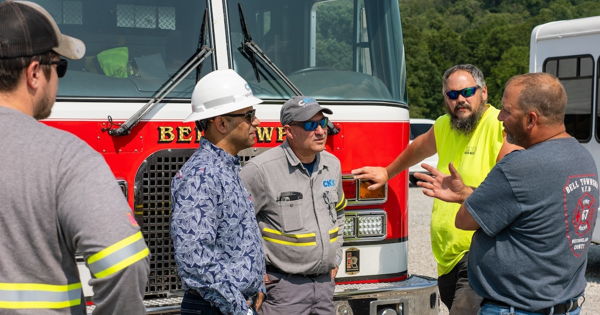

Beyond the BBQ: How Everyday Summer Activities Impact Our Air

By Carrie Crumpton, CNX Vice President of Environmental Strategy
Memorial Day weekend marked the unofficial start of summer, prompting many of us to gather to honor those who lost their lives serving in the United States Armed Forces. These observances—memorial services, concerts, and parades—often conclude with an all-American tradition: firing up the grill and enjoying time with family and friends. This tradition extended to CNX’s dedicated weekend shift workers, who were on duty over the holiday at our MAM16 well pad and celebrated together by firing up a BBQ charcoal grill on site during two separate shifts.
While the charcoal grill was cooking up delicious food, air monitors on the site captured its impact on PM2.5concentrations. The hourly PM2.5 graph for MAM16, available on the Radical Transparency website, shows spikes in PM2.5 concentration on May 26, 2025, that directly align with the charcoal grill’s use.
The investigation into these spikes led the CNX team to realize that the charcoal grill was the source and prompted discussion about what other typical summer activities we enjoy could lead to increases in PM2.5. While Context Corner articles have often been used to answer questions about the Radical Transparency Program, this time I have a question for you.
Have you ever used a charcoal grill, or made s’mores over a wood fire?
If so, you’ve seen the smoke rising from the coals or logs. While it adds flavor, that smoke also releases PM2.5and other pollutants into the air we breathe. At MAM16, we observed that even one small charcoal grill used to cook hot dogs for a crew can cause a noticeable increase in PM2.5. Now, imagine how many grills were fired up across the country over Memorial Day weekend, and how many more will be used this Independence Day weekend and throughout the summer.

Ironically, in the U.S., cooking over charcoal is now a leisurely weekend activity—an enjoyable tradition tied to barbecues and social gatherings. However, in many parts of the world, open-fire cooking remains a daily necessity driven by energy poverty.
This contrast highlights a stark global disparity: where Americans grill for fun, millions elsewhere must cook with wood, dung, or charcoal indoors, often without proper ventilation.
These traditional methods release harmful smoke and pollutants, contributing to respiratory illnesses, eye damage, and other health issues. We should pause to recognize the advantages of living in a country with abundant, clean, and cost-effective oil and gas.
The global health benefits of replacing open fires with basic propane stoves or grills would be staggering. Scientific data clearly show that increased use of oil and gas products correlates with lower mortality rates from air pollution.1
The U.S. is one of the largest consumers of energy per capita, and its energy mix is heavily weighted toward the use of oil and natural gas. Yet, the negative impacts to human health related to environmental risks, including air pollution experienced by U.S. citizens, are among the lowest in the world.2
As we contemplate the data on emissions from everyday summer activities compared to the relatively low impacts from our natural gas production pads, we are struck by one of the more misleading claims we hear from some groups and individuals: that natural gas production significantly harms human health through air pollution. Those opposing natural gas production and use often ignore the tradeoffs involved if their goal is to truly enhance human well-being.
We have the data—so what more can it tell us, beyond even the effects of natural gas development? We are actively monitoring and expect to see air quality impacts from charcoal grilling, regional fireworks, and, more recently, drifting smoke from Canadian wildfires. We are even watching for potential impacts of the Saharan Air Layer—the mass of dry, dusty air from the Sahara Desert that moves over the tropical Atlantic each year.
Look for more on these summer observations as we continue to review our monitoring efforts.
1 WHO Global Health Observatory data repository and EIA.
2 Based on data provided by EIA (World Energy Balances 2022) and IHME (Global Burden of Disease 2019).
Latest Context Corner:

Energy Internship Day

The Energy Internship reflects CNX’s commitment to hiring locally, and to introducing young people from its communities to career opportunities that the energy sector in their backyard offers.
Through mock interviews, hands-on learning, and networking, students explored countless career paths. Internship Day is about more than jobs; it’s about empowering the next generation and putting Appalachia First.
Watch below to revisit an inspiring day of growth and the early steps in what will be awesome career journeys.
Thank you to all Mentorship Academy partners for helping CNX deliver on its promise to hire locally and build a stronger community, including:
You may also like…

Energy Internship Day
The Energy Internship reflects CNX’s commitment to hiring locally, and to introducing young people from its communities to career opportunities that the energy sector in their backyard offers.
Through mock interviews, hands-on learning, and networking, students explored countless career paths. Internship Day is about more than jobs; it’s about empowering the next generation and putting Appalachia First.
Watch below to revisit an inspiring day of growth and the early steps in what will be awesome career journeys.
Thank you to all Mentorship Academy partners for helping CNX deliver on its promise to hire locally and build a stronger community, including:
You may also like…


Tracking Canadian Wildfire Smoke: Air Quality Impacts in Appalachia

By Carrie Crumpton, CNX Vice President of Environmental Strategy
CNX is actively tracking the impacts of Canadian wildfire smoke on air quality as reflected in our monitored data. Large wildfires are currently burning across several Canadian provinces, including British Columbia, Alberta, and Manitoba. Because wildfire smoke can travel large distances and is a prominent source of PM2.5, these wildfires in Canada can substantially impact air quality hundreds of miles away, including in Appalachia. We observed this in 2023, and it is occurring again now.

Here are a few articles about the impacts on Southwestern Pennsylvania thus far:
How the Wildfires are Impacting Radical Transparency Data
On the Radical Transparency website, the PM2.5 concentrations from our on-site monitors are compared to PM2.5 concentrations from regional PA DEP monitors. Due to the Canadian wildfires, data from both our monitors and the PA DEP monitors show elevated hourly and daily PM2.5 concentrations.

Although the PM 2.5 monitors are showing elevated readings, the contribution from our sites has not increased.
The contribution measurement uses the wind direction to determine an upwind and downwind concentration, representative of the conditions before and after the site, respectively. The upwind concentration is subtracted from the downwind concentration, resulting in the PM 2.5 level attributable to site activities.
Throughout the Radical Transparency program, contributions from our sites have remained low and continue to do so. For more information about contributions measured as part of the Radical Transparency Program, please see Clean Air Engineering’s recent presentation at the 2025 Air and Waste Management Association Air Quality Measurement Conference.
Recent rain has led to a decrease in PM2.5 concentrations. However, as weather patterns shift and wildfire activity changes, we may see elevated PM2.5 concentrations over the next few days. If you are interested in seeing this reflected in our data, please visit our Radical Transparency website.
Latest Context Corner:


Ordinary Exceptions

By Jim Locke, CNX Director Air Quality of Regulatory Reporting
After 20 months of monitoring, we are still experiencing new things in the Radical Transparency program and learning from those experiences. While the experience has provided an abundance of positive news, we are learning that, on occasion, we will encounter an event that none of us would have considered causing concern. A neighbor’s wood burner, a farmer working the field, and even small insects swarming to do what comes naturally, have all presented our teams with occasional head-scratchers as they pushed our investigation beyond our operations to find the source of high readings. This past week, another first was encountered that created our first exceedance of the National Ambient Air Quality Standard (NAAQS) for a daily average of particles with a mean diameter smaller than 2.5 micrometers (PM2.5).
On the afternoon of June 4, an indication of an elevated PM2.5 concentration was detected at the upwind monitor (BAM1) on the NV113 well pad.

The high reading lasted just over an hour, but the hourly average concentration was high enough to raise the PM2.5 24-hr daily average concentration to 48.2 micrograms per cubic meter (μg/m3), which exceeded the NAAQS of 35 μg/m3. An investigation was launched immediately to determine the source of the concentration.

The BAM1 monitor is situated to the southwest of the well pad and the wind was blowing from the southwest. Clearly, the dust was not being generated on the well pad. From discussions with the Lease Operator, we learned of work being performed on the pipeline right of way at that time. The construction team explained the work consisted of the routine task of spreading grass seed and covering it with a mulch layer of shredded straw, using a straw blower that is commonly used by landscapers on projects where large areas of ground must be covered, such as new home construction and other commercial grading projects. This work is necessary to meet the requirements of the ESCGP permit for the pipeline and is performed by any entity that receives a similar permit for their project regardless of industry.

As the crew reached a point that was upwind of the BAM1 monitor, the wind carried the particles to the monitor, causing the concentration to become elevated. As they moved past the monitor, the readings subsided. We can only presume that the concentrations were high when the crew was working in areas away from the monitor. What we know is that our standard job procedures, followed by the employees performing the work, kept them upwind of the blown straw and safely away from the areas of high concentration. Also, the BAM2 monitor that is situated on the opposite corner of the pad, downwind from BAM1, recorded no impact from the event as it maintained readings that were at or near the background concentration. From the monitoring data, coupled with support from the operations and construction teams, we were able to conclude that the particles generated by the activity quickly dispersed and settled to the ground, creating a localized event that had no impact beyond the boundary of our well pad.
As we have progressed with this project, one constant has been that the learning opportunities never cease. Even ordinary activities can present exceptions. In this instance, a regulatory-driven, off-pad construction event that was not even associated with our on-pad development or production activities provided something new to consider. Regardless, with nearly 600,000 data points, having only one exception—while not as perfect as we would hope—is a pretty good record.
You may also like…


Committed to Transparency: CNX Launches NOV Disclosure Page
This new voluntary disclosure further illustrates CNX’s commitment to openness and accountability as the company continues to set new standards for environmental reporting.
Radical Transparency in Action
This latest move is part of CNX’s broader shift away from static annual sustainability reports. Instead, the company is now updating its ESG Performance Scorecard quarterly, providing ongoing data releases on critical environmental, social, and governance topics—including NOVs and any penalties paid—across its entire operating footprint. This dynamic approach empowers stakeholders to track progress and hold the company accountable in real-time.
CNX’s Radical Transparency program is providing unprecedented access to environmental data and operational disclosures. Complementing the program is now the public NOV disclosure page detailing every violation notice received from federal, state, and local agencies.
Radical Transparency data was recently presented at the 2025 AWMA Air Quality Measurement Conference.

A Culture of Compliance and Proactive Stewardship

At the heart of CNX’s operations is a robust Environmental Management System overseen by the company’s Operational Excellence and Environmental Strategy teams. These skilled environmental compliance experts are dedicated to ensuring that CNX not only meets but often exceeds regulatory requirements, swiftly remediates any issues, and continuously seeks operational improvements. Every employee is required to immediately report any actual or potential environmental violations, reinforcing a culture of responsibility and ownership.
Inspection Data: Facts Over Optics
Transparency is not just about reporting violations—it’s about context. Between 2022 and 2023, CNX sites were inspected 969 times by the PA DEP Office of Oil and Gas Management—an average of nearly 1.5 inspections per day, every day of the year. Of these inspections:
- 943 (97%) resulted in no findings.
- 24 inspections were triggered by CNX self-reporting events.
- Only two events were discovered by DEP inspectors.
In total, just 26 NOVs were issued during this period—24 of which were self-reported by CNX, underscoring the company’s proactive approach to compliance.
As discussed in the article, “Challenging Environmental NGO/Media Optics with Facts and Data,” it’s important to note that the public count of violations often appears inflated due to regulatory processes: a single incident can result in multiple code section citations and repeated inspection entries, even for the same event.
CNX works closely with regulators to resolve these issues quickly and efficiently, rarely appealing violations in order to avoid unnecessary strain on agency resources and taxpayer dollars.
Looking Ahead
By continuously updating its ESG Performance Scorecard and now providing public access to all NOVs, CNX is catalyzing a new era of responsible and transparent operations. The company’s approach demonstrates that energy development and environmental stewardship can—and must—go hand in hand.
To explore CNX’s NOV disclosures, ESG Performance Scorecard, and learn more about the company’s Radical Transparency program, visit https://www.cnx.com/sustainability-radical-transparency.
Snapshot: How CNX Leads with Radical Transparency
- Dedicated NOV Disclosure Page: Every Notice of Violation received is now publicly available.
- Quarterly ESG Updates: Real-time data on environmental performance, including NOVs and penalties, across all operations.
- Proactive Compliance: Over 90% of NOVs in 2022–2023 were self-reported by CNX.
- Robust Environmental Management: Expert teams oversee compliance, incident response, and continuous improvement.
- Community Commitment: CNX’s employees live and work in the region, reinforcing the company’s dedication to local well-being and environmental health.
You may also like…


Radical Transparency Independent Analysis Highlighted at 2025 AWMA
By Dr. Doug Goetz, Program Manager at CleanAir Engineering
Starting in October 2023, CNX’s Radical Transparency Air Quality monitoring program has collected more than 10 years’ worth of continuous monitoring data from their natural gas development and midstream sites within the Appalachian Basin. The scale of monitoring rivals the air quality programs of large cities and has provided unique public access to data that can be used to unravel public health concerns associated with shale gas operations. The map below shows the location of the 18 sites monitoring air quality as part of the CNX’s Radical Transparency effort.

The focus of the monitoring is to measure the concentration of the air pollutants known as PM2.5 and BTEX at the fenceline of the site or as close to 500 feet from the center of the site as Appalachian topography allows. PM2.5, or particulate matter less than 2.5 µm in diameter, is considered a criteria air pollutant and regulated by the U.S. Environmental Protection Agency (EPA) with National Ambient Air Quality Standards (NAAQS). BTEX, the acronym for the volatile organic chemicals benzene, toluene, ethylbenzene, and xylene, are defined as hazardous air pollutants (HAPs) under the U.S. 1990 Clean Air Act Amendments. These pollutants were chosen because of their known health risks and because they are proxies for emissions sources thought to be common to shale gas development.
Fenceline monitoring can serve as an indicator of the air pollution concentrations that nearby communities could be exposed to, and those measured concentrations can be compared to established standards to inform on likely health risks. Upwind and downwind continuous monitoring, like what is being conducted at the Radical Transparency sites, combined with real-time wind observations, can be used to estimate the concentration enhancement of pollution downwind of the site. In other words, the large dataset aggregated from the 18 total monitoring locations can be analyzed and used to inform the scientific, health, and policy communities about the air quality impacts downwind of natural gas operations.
In April 2025, I presented a preliminary analysis of the aggregated monitoring results at the Air and Waste Management Association (AWMA) Air Quality Monitoring Conference hosted in Denver, CO. The conference brings together air quality scientists, health risk experts, and state, local, and federal environmental agency personnel. My oral presentation was part of the Air Toxics – Oil and Natural Gas session and was accompanied by similar talks about fenceline air quality monitoring in other U.S. shale gas plays. The presentation was well received by the community, and many in the audience were excited to see results from the Appalachian Basin.

For the presentation, my CleanAir colleagues and I adapted two methods for analysis from examples found in scientific literature. First, we developed a simple algorithm to conduct a real-time wind-resolved estimation of the enhancement concentration (∆C) of PM2.5 based on upwind and downwind measurements. In plainer terms, the developed method allows us to estimate which monitor observes air entering the site (i.e. background concentration) and which monitor observes the air leaving the site (i.e. background concentration + site emissions). In turn, this forms the basis for calculating hourly ∆C concentrations.

The second analysis method was to estimate the ∆C observed at public monitoring locations to provide context for how the fenceline ∆C measured as part of the Radical Transparency monitoring program compares to other locations in Pennsylvania. These comparisons included a near-highway location and a rural background station. The method needs some fine-tuning but draws from publications like my peer-reviewed work in 2017 that characterized local background concentrations of methane and air pollutants in the Appalachian basin.
The results from the aggregated data analysis show several key takeaways:
- BTEX concentrations at all facilities were observed to be near regional background concentrations and below established non-cancer inhalation minimum risk levels for acute and chronic exposure based on the U.S. ATSDR toxicological guides.
- Toluene-to-benzene concentration ratios can be used to evaluate emission sources at each site.
- A case study from the Morris compressor station shows that mobile sources like cars and trucks are likely a primary source of emissions at the facility.
- No exceedances of the PM2.5 NAAQS (24-hour average of 35 µg/m3) were observed at any of the 18 monitoring locations
- Wind-resolved PM2.5 ∆C analysis indicates that there are emission events from all phases of the monitored natural gas activity, but these events are low in frequency. Additionally, activities like drilling and completions show the highest frequency of emission events, but the activities are short-lived (i.e. <6 months>
Please take a look at the presentation slides for more detailed results:
GOETZ_AWMA_Measurements_2025_V1_Verbose.pdf
PDF – 2.9 Mb

Opportunities like the AWMA Air Quality Measurements Conference are invaluable as a tool to discuss ideas and results amongst technical experts. The conference presentation also serves as a good preview of what is to come. We at CleanAir look forward to continued access to the ongoing monitoring data and are excited to further develop our analysis methods. Stay tuned for news about the submission of this research to a peer-reviewed journal in the coming months.
You may also like…


CNX Honors 2024-25 Mentorship Academy Graduates
By Positive Energy Hub Staff
Concluding its fourth year, the Mentorship Academy continues to serve high school juniors and seniors from underserved rural and urban communities in western Pennsylvania.
The Academy, founded in 2021 by CNX Resources CEO Nick Deiuliis, introduces students to well-compensated, family-sustaining career paths that do not require a four-year college degree.
The 2024-2025 class saw impressive growth, increasing by 44% from the previous year, with 122 students enrolled. Participating students engaged in hands-on activities, site visits with partner companies, received personal and professional coaching from mentors, and gained exposure to career opportunities in energy, manufacturing, healthcare, building trades, and more.

#MentorshipAcademy
The Mentorship Academy is an initiative of CNX Foundation and part of CNX’s commitment to investing in its local community. Designed for high school students…

The Academy is made possible by an expanding network of regional partners, including major employers, organized labor groups, and community-focused nonprofits.
Throughout the year, students participated in events like “Intro to Energy Day,” where they explored emerging fields such as artificial intelligence in natural gas development, as well as gained practical skills like resume writing, interview preparation, and professional networking.
CNX is grateful to the many partners, mentors, and volunteers that facilitate the Academy’s Tangible, Impactful, and Local approach to workforce development.
Watch a brief recap below.
You may also like…


Real-Time Data, Real Results

The following is a summary of CNX’s Chuck Hardoby’s remarks from the 2025 Penn State Climate Solutions Symposium. Hardoby, CNX’s VP and Controller of Regulatory Reporting, discussed CNX’s Radical Transparency initiative as part of the symposium’s “What Are the Health and Climate Costs and Benefits of Natural Gas Production?” session.
I’m here today to talk about the CNX Resources Radical Transparency program. The program is designed to inform the communities surrounding our operations with objective facts about health risks related to natural gas development. It’s our contribution to improve upon the ever-expanding body of epidemiological research being conducted in this area.
For background, CNX is one of the leading natural gas producers in the nation. Our operations are centered around the prolific Marcellus and Utica shales that lie within the Appalachian region, an area the company has called home since the mid-1800s.
We launched Radical Transparency in 2023. The idea was simple: provide real-time, on-site data through a transparently controlled process. Doing so would provide the superior platform to determine whether there are, in fact, any adverse health-causing emissions coming from our operations—better than the epidemiological approach, which addresses causation by inference through historical statistical association.
Our publicly available data is continuous and objective, with independent collection by an accredited third party. It can be used by local residents, provide actionable insights for industry, support scientific and medical studies, and guide public policy.
We went to the Pennsylvania DEP and Governor Shapiro with our idea. And as testament to its logical approach and compelling benefits, they supported the effort, became crucial partners in RT, and can now utilize the fact-based results from RT monitoring to inform future policy.
When setting critical policy and seeking truth, transparently reported real-time on-site data is always superior to statistical associations and inference. It’s not just a better way; it is the best way.
Program Components
The specific components of the Radical Transparency program are the most comprehensive in the country and can be categorized into air quality monitoring, additive disclosure, water quality monitoring, and radiation protection.
Given the limited time for today’s presentation, I will focus on highlighting some details of the air quality portion of our program. It is the centerpiece and most complex component, specifically designed to monitor the most likely operational air emissions that could cause negative health effects.
The specific criteria pollutants selected for monitoring are particulates with an aerodynamic diameter of less than 2.5 microns, more commonly known as “PM2.5,” and the compounds benzene, toluene, ethylbenzene, and xylenes, referred collectively as “BTEX.”
Air Quality Monitoring Process
First, let’s talk about site selection. RT monitoring follows the company’s activity plan. Where we go, RT goes with us. It’s during this development process of site construction, drilling, completions, and start of flowing production where our activities are most intense and the most logical application for continuous, and targeted monitoring.
To avoid any subjectivity in the site selection process, we continuously monitor all major midstream locations and every new major production facility from the beginning of construction through six months of production.
This approach ensures that we prospectively monitor 100% of our locations with development phases that have the highest intensity of emissions related activity.
To ensure that the measured monitoring data is of the highest quality—representative, complete, and reliable— monitoring and reporting are conducted by an independent accredited third party in accordance with guidelines approved by the United States EPA and within a defined quality system framework.
For the monitoring of PM2.5, we install and operate two real-time beta attenuation mass monitors at the perimeter, or fenceline, of each site. These monitors have been designated by the EPA as a Class III automated federal equivalent method.
For each site, one monitor is installed in the downwind direction of the prevailing winds, designed to capture impacts from the ongoing natural gas activity. The second monitor is located opposite to the first, in the upwind direction, and takes measurements that represent local background levels. Calculating the difference between the two establishes the incremental contribution from the site.
In addition to PM2.5, we also perform measurements of local BTEX concentrations around each selected site. The BTEX measurements are conducted using a passive time-integrated sampling approach guided by EPA Method 325. Four stand-alone samplers are placed in each quadrant surrounding the site, two of which occupy the same upwind and downwind locations as the PM2.5 monitors. Samples from the monitors are collected and sent for analysis to an accredited laboratory, per EPA Method 325B.
Data Collection and Transparency
Once collected, all data is transmitted to a secure, cloud-based environmental management platform for reporting, storage, and visualization.
We make all data collected from the RT program available to the public by posting the monitoring results to a dashboard on the CNX website. For context, we display our readings alongside those from nearby regional Pennsylvania DEP monitors, as well as established health-based standards. For PM2.5, we show the National Ambient Air Quality Standard, and for the BTEX compounds, we compare those with the US ATSDR inhalation Minimum Risk Levels.
To support integrity and reliability, the data are also delivered directly from the accredited third-party collector to the Pennsylvania DEP.
Key Findings and Why it Matters
Now, approaching two years into the effort, we have conducted monitoring at 18 sites, with over 400,000 data points collected and made publicly available. Preliminary analyses of the data have led to the following findings:
- Site contribution analysis shows evidence of low-frequency fugitive emissions from drilling and completions operations.
- Background level concentrations of BTEX were observed at the fenceline of all facilities monitored, and no exceedances of US ATSDR Inhalation Minimum Risk Levels were observed.
- No exceedances of the US EPA PM2.5 NAAQS were observed.
In other words, these data show no indications of emission levels that exacerbate asthma, cause cancer, or degrade local air quality. And we believe that as we continue to expand the scope and footprint of RT, these conclusions will be reinforced with more corroborating data.
The hundreds of thousands of data points will soon turn into millions as we continue to monitor and collect data by the hour, 365 days per year.
Continuing the Journey
We’ve been calling on others in the industry to follow our lead and help us grow the data set even further. We also call on the scientific community to recognize the benefits and superiority of real-time measured data. There is also a need for stringent analysis and reconciliation to the existing statistical record that universities have a duty to provide. We ask that you join us in this pursuit of truth and help us inform the public. We are willing to listen to your suggestions on how we can improve.
From a policy perspective, future regulations can now rely on actual, directly measured data and follow what the data tell us.
The RT journey has been challenging, but it has made CNX better and lowered our risk footprint and emission profile. We think RT has—and will continue to—benefit all stakeholders, most importantly the communities and environment where we operate.
Visit https://climate.psu.edu/what-we-do/climate-solutions-symposium/ to learn more about the 2025 Climate Solutions Symposium.
You may also like…


New Study Highlights Economic Impact of Coal Mine Methane Capture in Southwest Virginia, Offering a Model Nationwide
From WGCI Executive Director Mike Moore
“The study found that coal mine methane has provided communities in Southwest Virginia with a new stream of economic growth,” said WGCI Executive Director Mike Moore. “A large portion of Virginia’s natural gas production—which generated $481.7 million in economic impact and supported 1,115 jobs last year—comes from coalbed methane gas and coal mine methane gas. The ability to deploy this technology across the country means that the results seen in Southwest Virginia can be replicated in other coal-based communities—from Pennsylvania to Alabama—providing an opportunity for economic growth nationwide.”
The study comes as federal energy tax credits gain renewed interest from policymakers. Recently, Rep. Carol Miller (R-WV-01) reintroduced the Methane Reduction and Economic Growth Act, which would amend the existing Section 45Q tax credit to include the capture of mine methane. Rep. Morgan Griffith (R-VA-09), a co-sponsor of the bill, stated, “With vast resources of both, Southwest Virginia can play a significant role in accomplishing President Trump’s goals of unleashing American energy independence. Additional tax incentives to encourage environmental mitigation and efficient fossil fuel utilization may help us reach those goals more quickly.”
The study found that the coal and natural gas industries, along with the Virginia Coalfield Economic Development Authority (VCEDA), play a pivotal role in the economic growth and diversification in Southwest Virginia. Together, they have created $13.48 billion in economic impact (direct, indirect, and induced) and supported 51,245 jobs in the region. This includes $1.8 billion and 5,085 jobs from the coal industry and $481.7 million and 1,115 jobs from the natural gas industry.

About WGCI
The WGCI represents leading American energy industry partners, NGOs, and experts who are committed to recognizing the economic benefits and environmental impact of a strong mine methane capture industry. Visit wastegascapture.com and follow @WGCInitiative on X (formerly known as Twitter) and LinkedIn for more information.
You may also like…


New Study Highlights Economic Impact of Coal Mine Methane Capture in Southwest Virginia, Offering a Model Nationwide
From WGCI Executive Director Mike Moore
“The study found that coal mine methane has provided communities in Southwest Virginia with a new stream of economic growth,” said WGCI Executive Director Mike Moore. “A large portion of Virginia’s natural gas production—which generated $481.7 million in economic impact and supported 1,115 jobs last year—comes from coalbed methane gas and coal mine methane gas. The ability to deploy this technology across the country means that the results seen in Southwest Virginia can be replicated in other coal-based communities—from Pennsylvania to Alabama—providing an opportunity for economic growth nationwide.”
The study comes as federal energy tax credits gain renewed interest from policymakers. Recently, Rep. Carol Miller (R-WV-01) reintroduced the Methane Reduction and Economic Growth Act, which would amend the existing Section 45Q tax credit to include the capture of mine methane. Rep. Morgan Griffith (R-VA-09), a co-sponsor of the bill, stated, “With vast resources of both, Southwest Virginia can play a significant role in accomplishing President Trump’s goals of unleashing American energy independence. Additional tax incentives to encourage environmental mitigation and efficient fossil fuel utilization may help us reach those goals more quickly.”
The study found that the coal and natural gas industries, along with the Virginia Coalfield Economic Development Authority (VCEDA), play a pivotal role in the economic growth and diversification in Southwest Virginia. Together, they have created $13.48 billion in economic impact (direct, indirect, and induced) and supported 51,245 jobs in the region. This includes $1.8 billion and 5,085 jobs from the coal industry and $481.7 million and 1,115 jobs from the natural gas industry.
About WGCI
The WGCI represents leading American energy industry partners, NGOs, and experts who are committed to recognizing the economic benefits and environmental impact of a strong mine methane capture industry. Visit wastegascapture.com and follow @WGCInitiative on X (formerly known as Twitter) and LinkedIn for more information.
You may also like…
CNX Resources Q1 2025: 21st Straight Quarter of Free Cash Flow
CNX Resources Q1 2025: 21st Straight Quarter of Free Cash Flow

By Positive Energy Hub Staff
CNX Resources delivered a robust first quarter in 2025, generating $100 million in free cash flow (FCF)—its 21st consecutive quarter of positive FCF. This performance underscores the company’s resilient asset base, disciplined capital allocation, and industry-leading cost structure, which together have produced approximately $2.3 billion in cumulative FCF since the launch of its seven-year plan in 2020.

“The company had another quarter of consistent operational execution resulting in the 21st consecutive quarter of free cash flow generation. Utilizing this free cash flow, the company bought back shares at what we believe is a discount to our intrinsic value. Since the inception of the buyback program in 2020, we have retired approximately 38% of our outstanding shares.” – Nick Deiuliis, CNX President and CEO
Q1 2025 Highlights
- Generated $100 million in FCF, reaffirming 2025 FCF guidance at approximately $575 million.
- Achieved a 65% cash operating margin in Q1, with a 2025E cash operating margin of 62%.
- Maintained fully burdened cash costs of $1.11 per Mcfe before DD&A in Q1, with 2025E guidance at ~$1.12 per Mcfe.
- Repurchased 4.2 million shares in Q1 at an average price of $29.88 per share for $125 million and an additional 0.7 million shares post-quarter for $22 million.
- Since Q3 2020, CNX has repurchased approximately 86 million shares (38% of shares outstanding) for $1.5 billion at an average price of $17.46 per share, representing a -10% CAGR in share count.
- Closed the Apex Energy acquisition, increasing net debt to approximately $2.7 billion, partially funded by a $200 million Senior Notes issuance due 2032.
- Maintained significant liquidity with $2 billion in combined credit facility commitments and a weighted average senior unsecured debt maturity of 5.5 years.
Operational Update
CNX safely and efficiently executed its 2025 operations plan while integrating the Apex Energy acquisition. The company completed drilling one deep Utica well (14,200 ft lateral) and four Marcellus SWPA wells (average 15,300 ft laterals). The completions team set new records, including 504 monthly pumping hours and a daily record of 23.2 pumping hours.
Nineteen wells were turned in line (TIL’d) in Q1, including nine SWPA Marcellus wells, two CPA deep Utica wells, and eight wells from the Apex acquisition. All wells utilized AutoSep’s advanced flowback equipment, improving efficiency, safety, and environmental performance. CNX continues to expand the use of this technology with its joint venture partner.
ESG Leadership and Environmental Attributes
CNX’s Radical Transparency program continues to demonstrate that its natural gas development is safe and poses no public health risks.
All data is transparently posted on the CNX website, and the company encourages industry peers and stakeholders to follow suit.
The company recognized $19 million in net sales of environmental attributes in Q1, associated with 4.3 Bcf of coal mine methane (CMM). For 2025, CNX expects to capture 17–18 Bcf of CMM volumes, resulting in about $75 million of FCF at current market prices.
2025 Outlook
CNX reaffirmed its guidance for:
- Total annual production: 605–620 Bcfe
- Adjusted EBITDAX: $1,225–$1,275 million
- Capital expenditures: $450–$500 million
- 2025 FCF: ~$575 million (at NYMEX $3.76/MMBtu as of April 14, 2025)
- Updated 2025 FCF per share guidance: $3.97 (up $0.12 per share due to ongoing share repurchases)

First Quarter 2025 Earnings Call Slides

The Appalachian Case For Fair Trade
The Appalachian Case For Fair Trade
By Positive Energy Hub Staff
For over 160 years, CNX has stood as a steadfast advocate for Appalachia, domestic energy, and the hardworking American middle class. These core values fuel our dedication to rational policies that generate meaningful benefits for both our communities and shareholders.
In the following video, CNX Resources President and CEO Nick Deiuliis shares our perspective on an issue that profoundly impacts these priorities: U.S. trade tariffs.
Unfair trade practices have long inflicted harm on regions like Appalachia—crippling industries, diminishing the middle class, and empowering adversaries such as China. The recent U.S. tariff increases represent a pivotal effort to shift America from a system of exploitative trade to one rooted in fairness. We view this as a significant and necessary step forward.
While these changes may introduce short-term fluctuations in market dynamics, the long-term outlook is clear: America emerges stronger, and its people thrive.
At CNX, we see this moment as an opportunity to double down on investing in America’s future. It’s time to bet on our nation’s resilience, trust in domestic energy, and believe in the enduring spirit of Appalachia. Together, we can build a foundation for lasting prosperity.
You may also like…
The Appalachian Case For Fair Trade
By Positive Energy Hub Staff
For over 160 years, CNX has stood as a steadfast advocate for Appalachia, domestic energy, and the hardworking American middle class. These core values fuel our dedication to rational policies that generate meaningful benefits for both our communities and shareholders.
In the following video, CNX Resources President and CEO Nick Deiuliis shares our perspective on an issue that profoundly impacts these priorities: U.S. trade tariffs.
Unfair trade practices have long inflicted harm on regions like Appalachia—crippling industries, diminishing the middle class, and empowering adversaries such as China. The recent U.S. tariff increases represent a pivotal effort to shift America from a system of exploitative trade to one rooted in fairness. We view this as a significant and necessary step forward.
While these changes may introduce short-term fluctuations in market dynamics, the long-term outlook is clear: America emerges stronger, and its people thrive.
At CNX, we see this moment as an opportunity to double down on investing in America’s future. It’s time to bet on our nation’s resilience, trust in domestic energy, and believe in the enduring spirit of Appalachia. Together, we can build a foundation for lasting prosperity.
You may also like…

Inheriting NOVs: Providing Context and Raising the Bar on Operational and Compliance Standards

By Carrie Crumpton, CNX Vice President of Environmental Strategy
Hey Carrie, what’s up with the NOVs coming in on the wells CNX acquired in Westmoreland County?
CNX’s Standard of Accountability
First off, acquiring an oil and gas company generally means inheriting all liabilities, past and present, including notices of violation (NOVs). As the new owner, CNX is responsible for addressing these violations, which can range from minor paperwork/administrative issues to other environmental/regulatory-related non-compliances.
CNX is very proud of our high operational and compliance standards, and we are known for our transparency. Some of the issues we inherited were discovered and reported by the previous operator during the standard due diligence process prior to the acquisition, and some have been identified by our team post-acquisition.
Regardless of previous compliance status, CNX is taking responsibility for these non-compliance matters and is excited to bring these assets into our portfolio and incorporate our operational, safety, and environmental standards. We are also implementing our Radical Transparency program at these sites, which includes information on air quality and other monitoring above and beyond regulatory standards.

Differing Views of Responsible Operation
In addition to differing operations’ standards in an acquisition, another challenging aspect that comes into play is the differing views of what responsible operation entails. CNX believes that responsible operation includes following regulations, being very transparent, and self-reporting when conditions arise that may lead to a violation.
CNX also aims to adhere to the spirit of the regulations and/or seek guidance from the DEP in cases of uncertainty about permitting, reporting, and mitigation expectations. The key is to develop a plan to align the new assets and expectations with CNX’s standard of responsible operation. One of the first things we did was meet with the DEP to discuss the known issues related to the acquired sites. This ensures that everyone is on the same page with the next steps, including the implementation of process and safety improvements.
CNX’s Commitment to Compliance
CNX believes that a responsible operator prioritizes safety, environmental stewardship, and ethical practices in all aspects of their operations. Responsible operators adhere to stringent regulatory standards, invest in advanced technologies to minimize impact and maintain transparent communication (self-reporting) with stakeholders, including local communities and regulatory bodies. CNX is proud of being a leader on this front and attempts, in every aspect, to demonstrate responsible operatorship and follow the letter and spirit of the law.
As we identify potential compliance items, we report them to the regulatory agency. You might wonder why the operator who says they are conscientious and self-reports is also the operator who gets violations. We wonder that too sometimes, but it’s a bit like being the kid who raises their hand in class—you’re more likely to get called on. By actively reporting compliance issues, CNX is taking responsibility and showing transparency, which can sometimes mean more scrutiny. But it’s all part of being a responsible operator, instilling confidence in how we operate within our communities, and ensuring long-term success. CNX continues to actively call on our peers to do the same and encourage the agencies to focus their efforts on identifying and addressing operators who do not meet these calls.
CNX is actively managing and working with the Department to quickly resolve a number of violations recently identified through the acquisition while simultaneously bringing the assets into conformance with CNX’s operating standards. A summary of these and their current status is noted below.
|
PF Eisaman South 43 |
129-28941 |
1/31/2025 |
Unreported release prior to acquisition. Reported by CNX on 1/31/25. |
|
Norah Well Pad and Pipelines |
ESX17-129-0016 |
1/20/2025 |
Failure to submit the NOT prior to expiration of ESCGP (NOV received 1/31/25). |
|
Steel to Faulk Pipeline |
ESG17-129-0017 |
1/14/2025 |
Failure to submit the NOT prior to expiration of ESCGP (NOV received 1/31/25). |
|
McIlvaine to Spectra Pipeline |
ESG16-129-0012 |
1/14/2025 |
Failure to submit the NOT prior to expiration of ESCGP (NOV received 1/31/25). |
|
Stewart McIlvaine Pipeline |
ESG16-129-0006 |
1/14/2025 |
Failure to submit the NOT prior to expiration of ESCGP (NOV received 1/31/25). |
|
Faulk-Fetur Pipeline
|
ESG16-129-0018 |
1/14/2025 |
Failure to submit the NOT prior to expiration of ESCGP (NOV received 2/3/25). |
|
Graham Well Pad |
65-01139A |
1/13/2025 |
Agency inspection finding related to performance test (NOV issued 2/3/25). |
|
Weitz South 20 Compressor Station |
65-01118 |
1/13/2025 |
Agency inspection finding related to performance tests (NOV issued 1/28/25). |
|
Herminie Well Pad |
129-29262 |
2/14/2025 |
Unreported release prior to acquisition. Discovered and reported by CNX on 2/14/25 (NOV issued 2/18/25). |
|
Draftina Central Pad-31 |
ESG076522011-00 |
2/27/2025 |
Erosion and sediment control repairs in process at time of inspection (NOV received 3/5/25). |
|
Marian Laskowski 6 |
129-27145 |
1/31/2025 |
Failure to P&A in 2024 (NOV received 3/14/25). |
|
Marian Laskowski 7 |
129-27422 |
1/31/2025 |
Failure to P&A in 2024 (NOV received 3/14/25). |
Related Articles

Words Matter

By Positive Energy Hub Staff
Trust in American media sits at all-time lows and it’s easy to see why. Take the example of anti-fossil fuel advocate Capital & Main. At first glance, the organization appears to be a legitimate media outlet, but a closer look reveals something far more insidious.

Capital & Main is a poster child for the erosion in confidence in the mass media. Unfortunately, they are just one example of hundreds if not thousands of entities generating content that is confused for legitimate, independent reporting. Is it reliable reporting when a simple Google search refutes conclusions drawn and inferences made, such as accusations of impropriety related to an analyst downgrade? A serious matter for any public company, to be sure. Is it unreasonable to expect a basic level of journalistic rigor on such an important issue?
We have said it before, and we’ll reiterate the offer here: come to Pittsburgh and join us on pad. This is an open invitation for both media and “media” to learn firsthand how CNX produces natural gas in the shale fields of western Pennsylvania. We assure you it is not as “reported” by the likes of Capital & Main and dozens of other organizations and individuals who continue to disinform the public about the nature of the shale gas industry in Appalachia.
CNX Executive Vice President and General Counsel Tim Bedard recently wrote to Capital & Main pointing out reckless statements made in their “reporting.” CNX takes such matters seriously and will protect its rights. While anyone is free to criticize, it must be done within the bounds of the law. We are pleased to do our part in helping to restore trust in media that our system deserves and demands.
Please read the full text of the letter below.
Capital & Main
1910 W. Sunset Blvd., Suite 7 40
Los Angeles, CA 90026
To Whom it May Concern:
I am writing in regard to an article published by Capital & Main (“C&M”) titled “Pennsylvania Gas Driller: Our Operations Pose No Health Risk. You Can’t Be Serious, Activists Say” (the “Article”)1. Apparently, it is not enough for C&M to engage in deeply biased coverage of the U.S. oil and natural gas industry. C&M has now resorted to publishing false and defamatory statements attributed to Dr. Ned Ketyer (“Ketyer”) about CNX Resources Corporation.
Specifically, C&M and Ketyer stated in the Article: “[Ketyer] believes CNX’s rosy report was issued not as a good faith effort to advance science, but to appease investors ahead of a ratings downgrade from investment bank Piper Sandler, which came the day after CNX issued its release.” The factual assertion by C&M and Ketyer that CNX manipulated data in, and timed the release of, a comprehensive study involving tens of thousands of data points and countless hours of analysis by independent third parties to blunt an analyst downgrade is not only laughable, but also false and defamatory.
Notwithstanding C&M’s and Ketyer’s attempt to cast the defamatory statement as opinion by including the word “believes,” there is no wholesale defamation exemption for anything that might be labeled opinion. That is particularly true here as C&M and Ketyer assert as fact that CNX knew of the coming downgrade and hurriedly published the report in response to it. To enjoy the opinion privilege, it must be just that, opinion, not an assertion of fact masquerading as opinion to avoid liability for defamation.
Here, it appears that neither C&M nor Ketyer contacted PiperSandler to determine if C&M’s and Ketyer’s defamatory statement was true. Had C&M done so, it would have discovered that PiperSandler did not alert CNX to the downgrade. Moreover, a simple Google search would have alerted C&M and Ketyer to the fact that analysts do not disclose downgrades to companies prior to publicly announcing the downgrade.
While CNX is, unfortunately, used to C&M’s heavily biased hit pieces, it cannot stand by and allow absolutely false and defamatory statements to go unaddressed. From the circumstances, the only reasonable inference that can be drawn is that C&M and Ketyer recklessly disregarded the truth and intentionally blinded themselves to the facts surrounding the release of CNX’s Radical Transparency report and the timing of the PiperSandler downgrade, all in a coordinated effort to defame CNX and its Radical Transparency program.
CNX welcomes a fact-based debate on our Radical Transparency program, and we are proud of our partnership with Pennsylvania’s Governor Shapiro and the Department of Environmental Protection. Indeed, we are working to make Radical Transparency the standard across all phases of the natural gas development process for all operators in Pennsylvania and beyond. The people of Pennsylvania deserve responsible natural gas production, and CNX is leading in that regard. The people of Pennsylvania also deserve truthful, fact-based reporting and advocacy. C&M and Ketyer have failed in that regard. While CNX is open to debate and discussion, it will assert its rights and will not allow rank defamation to go unaddressed.
Sincerely,
Timothy S. Bedard
Executive Vice President & General Counsel
Cc: Dr. Ned Ketyer, President, Physicians for Social Responsibility Pennsylvania
1 Audrey Carlton, Pennsylvania Gas Driller: Our Operations Pose No Health Risk. You Can’t Be Serious, Activists Say, Capital & Main (September 24, 2024)
Related Articles


With Apex Acquisition, CNX Doubles Down on Unique Approach in the Alle-Kiski Valley
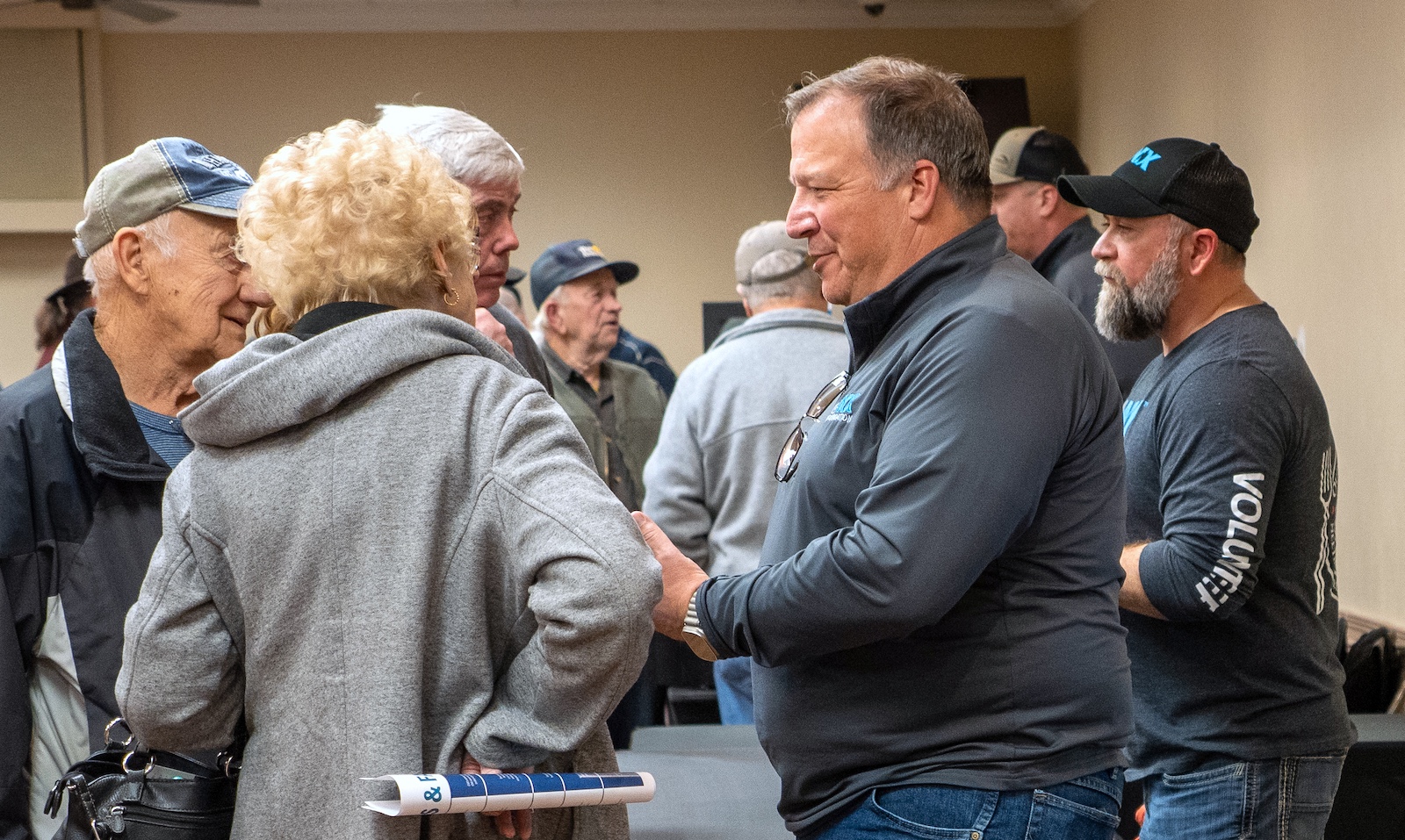
By Positive Energy Hub Staff
CNX recently closed on the acquisition of Apex Energy’s assets in Pennsylvania, where we purchased approximately 36,000 acres in Westmoreland County – but we’re not new here. We’ve been a dedicated community partner in this region for years, investing in ways that make tangible and impactful differences while uplifting the communities that have powered western Pennsylvania, as well as the nation, for generations.
Growing in Westmoreland County and the broader Alle-Kiski Valley area – which we refer to as our Central Pennsylvania (CPA) operating region – presents exciting opportunities for our business, as well as for the people who live and work here.
High safety, environmental, and Appalachia First-focused community engagement standards, coupled with the Radical Transparency initiative collaboratively brought to the area by CNX, Governor Josh Shapiro, and the Pennsylvania Department of Environmental Protection, raises the bar for what it means to be a responsible energy producer.
“CNX’s Radical Transparency environmental monitoring and real-time disclosure initiative…provides local communities and residents with an even greater level of transparency into our operations, which we believe is second to none in our industry. We look forward to bringing the Apex assets into the CNX family,” commented Nick Deiuliis, CNX President and CEO.
We’re eager to get these newly acquired assets integrated into CNX operating standards. Residents within the former Apex footprint will soon learn how our Radical Transparency efforts to date in Westmoreland County help us learn about the unique characteristics of each community where we operate. This insight allows CNX to tailor operations to better meet individual community needs, ensuring that our practices align with local expectations and priorities.
For instance, in response to community feedback on light pollution, we have implemented the “dark sky” concept to minimize light use at night. Across five locations in the CPA region combined, we have completed 465 dark nights as of January 2025.

Another example where CNX has taken a hands-on approach to community engagement is through local infrastructure improvements such as the Kiski Water Line project. The $20 million investment not only supports our development efforts but also improves water reliability for local residents within the Municipal Authority of Westmoreland County (MAWC) footprint. In 2024, the water line eliminated more than 11,000 water trucks from roads in the CPA region and ensures the area is equipped to better manage its water resources during the Kiski River’s high flow periods. Additionally, the water line has the potential to support other business’ freshwater needs including agriculture, industrial, and manufacturing use.
The new North Apollo office that opened this past summer further supports our expanding operations in the CPA region, which serves as a central hub where landowners and stakeholders can meet with us, ask questions, and build important relationships and local dialogue with our team.
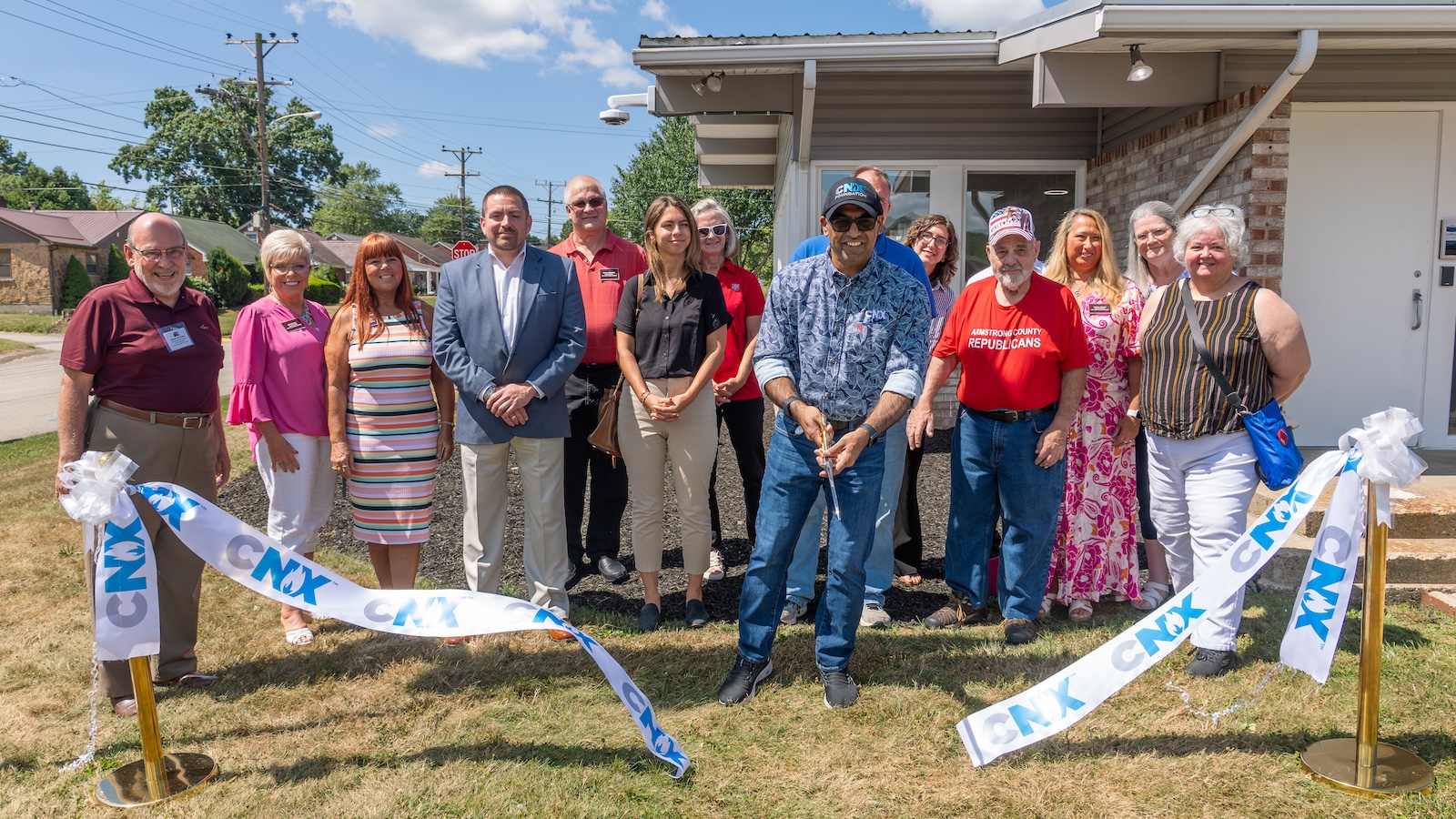
Strong Communities
We recognize that strong communities require strong foundations, and we’ve worked closely with local leaders to identify projects that make a lasting impact, all while respecting and honoring the region’s deep energy history.
One of our most impactful projects across our operating footprint has been our workforce training programs. Through the CNX Mentorship Academy, we’re helping to create pathways for students to enter high-demand careers, including in energy and the skilled trades, keeping the region’s workforce strong and engaged in emerging energy opportunities.
CNX employees, partners, and friends also regularly participate in community events, such as the annual golf outing at The Links in Spring Church, which funds school food pantries across the region and allowed us to zero out lunch debt across the Kiski Area School District. In addition, CNX Dream Fields investments revitalize athletic facilities – where five fields were transformed in 2024.
Most recently, CNX and CEO Nick Deiuliis announced a new initiative targeting school lunch debt, local veterans’ needs, and other socio-economic barriers like medical debt in the Alle-Kiski Valley. This exciting new campaign and distinctive philanthropic approach prioritizes hyper-localized investments directly targeting individuals and entities most in need.
“We can’t think of anything more impactful to the goal of helping to build a vibrant middle class that will sustain our region and local communities for years to come,” Deiuliis said.
Investing in Our Future
Above all, CNX remains dedicated to strengthening the communities where we work and live. We know that natural gas development must be done the right way, and we hold ourselves to the highest operational, safety, and environmental standards while ensuring that local communities continue to benefit from responsible natural gas development.
By honoring the region’s past and investing in the future, we are ensuring that these vital communities not only remain strong but continue to thrive for generations to come. As we continue to evolve to meet the energy and economic needs of our community, we will keep investing in people, projects, and programs that drive real, lasting change while preserving the energy-rich legacies of Appalachia.
Related Articles

With Apex Acquisition, CNX Doubles Down on Unique Approach in the Alle-Kiski Valley
By Positive Energy Hub Staff
CNX recently closed on the acquisition of Apex Energy’s assets in Pennsylvania, where we purchased approximately 36,000 acres in Westmoreland County – but we’re not new here. We’ve been a dedicated community partner in this region for years, investing in ways that make tangible and impactful differences while uplifting the communities that have powered western Pennsylvania, as well as the nation, for generations.
Growing in Westmoreland County and the broader Alle-Kiski Valley area – which we refer to as our Central Pennsylvania (CPA) operating region – presents exciting opportunities for our business, as well as for the people who live and work here.
High safety, environmental, and Appalachia First-focused community engagement standards, coupled with the Radical Transparency initiative collaboratively brought to the area by CNX, Governor Josh Shapiro, and the Pennsylvania Department of Environmental Protection, raises the bar for what it means to be a responsible energy producer.
“CNX’s Radical Transparency environmental monitoring and real-time disclosure initiative…provides local communities and residents with an even greater level of transparency into our operations, which we believe is second to none in our industry. We look forward to bringing the Apex assets into the CNX family,” commented Nick Deiuliis, CNX President and CEO.
We’re eager to get these newly acquired assets integrated into CNX operating standards. Residents within the former Apex footprint will soon learn how our Radical Transparency efforts to date in Westmoreland County help us learn about the unique characteristics of each community where we operate. This insight allows CNX to tailor operations to better meet individual community needs, ensuring that our practices align with local expectations and priorities.
For instance, in response to community feedback on light pollution, we have implemented the “dark sky” concept to minimize light use at night. Across five locations in the CPA region combined, we have completed 465 dark nights as of January 2025.
Another example where CNX has taken a hands-on approach to community engagement is through local infrastructure improvements such as the Kiski Water Line project. The $20 million investment not only supports our development efforts but also improves water reliability for local residents within the Municipal Authority of Westmoreland County (MAWC) footprint. In 2024, the water line eliminated more than 11,000 water trucks from roads in the CPA region and ensures the area is equipped to better manage its water resources during the Kiski River’s high flow periods. Additionally, the water line has the potential to support other business’ freshwater needs including agriculture, industrial, and manufacturing use.
The new North Apollo office that opened this past summer further supports our expanding operations in the CPA region, which serves as a central hub where landowners and stakeholders can meet with us, ask questions, and build important relationships and local dialogue with our team.
Strong Communities
We recognize that strong communities require strong foundations, and we’ve worked closely with local leaders to identify projects that make a lasting impact, all while respecting and honoring the region’s deep energy history.
One of our most impactful projects across our operating footprint has been our workforce training programs. Through the CNX Mentorship Academy, we’re helping to create pathways for students to enter high-demand careers, including in energy and the skilled trades, keeping the region’s workforce strong and engaged in emerging energy opportunities.
CNX employees, partners, and friends also regularly participate in community events, such as the annual golf outing at The Links in Spring Church, which funds school food pantries across the region and allowed us to zero out lunch debt across the Kiski Area School District. In addition, CNX Dream Fields investments revitalize athletic facilities – where five fields were transformed in 2024.
Most recently, CNX and CEO Nick Deiuliis announced a new initiative targeting school lunch debt, local veterans’ needs, and other socio-economic barriers like medical debt in the Alle-Kiski Valley. This exciting new campaign and distinctive philanthropic approach prioritizes hyper-localized investments directly targeting individuals and entities most in need.
“We can’t think of anything more impactful to the goal of helping to build a vibrant middle class that will sustain our region and local communities for years to come,” Deiuliis said.
Investing in Our Future
Above all, CNX remains dedicated to strengthening the communities where we work and live. We know that natural gas development must be done the right way, and we hold ourselves to the highest operational, safety, and environmental standards while ensuring that local communities continue to benefit from responsible natural gas development.
By honoring the region’s past and investing in the future, we are ensuring that these vital communities not only remain strong but continue to thrive for generations to come. As we continue to evolve to meet the energy and economic needs of our community, we will keep investing in people, projects, and programs that drive real, lasting change while preserving the energy-rich legacies of Appalachia.
Related Articles
With Apex Acquisition, CNX Doubles Down on Unique Approach in the Alle-Kiski Valley
With Apex Acquisition, CNX Doubles Down on Unique Approach in the Alle-Kiski Valley
By Positive Energy Hub Staff
CNX recently closed on the acquisition of Apex Energy’s assets in Pennsylvania, where we purchased approximately 36,000 acres in Westmoreland County – but we’re not new here. We’ve been a dedicated community partner in this region for years, investing in ways that make tangible and impactful differences while uplifting the communities that have powered western Pennsylvania, as well as the nation, for generations.
Growing in Westmoreland County and the broader Alle-Kiski Valley area – which we refer to as our Central Pennsylvania (CPA) operating region – presents exciting opportunities for our business, as well as for the people who live and work here.
High safety, environmental, and Appalachia First-focused community engagement standards, coupled with the Radical Transparency initiative collaboratively brought to the area by CNX, Governor Josh Shapiro, and the Pennsylvania Department of Environmental Protection, raises the bar for what it means to be a responsible energy producer.
“CNX’s Radical Transparency environmental monitoring and real-time disclosure initiative…provides local communities and residents with an even greater level of transparency into our operations, which we believe is second to none in our industry. We look forward to bringing the Apex assets into the CNX family,” commented Nick Deiuliis, CNX President and CEO.
We’re eager to get these newly acquired assets integrated into CNX operating standards. Residents within the former Apex footprint will soon learn how our Radical Transparency efforts to date in Westmoreland County help us learn about the unique characteristics of each community where we operate. This insight allows CNX to tailor operations to better meet individual community needs, ensuring that our practices align with local expectations and priorities.
For instance, in response to community feedback on light pollution, we have implemented the “dark sky” concept to minimize light use at night. Across five locations in the CPA region combined, we have completed 465 dark nights as of January 2025.
Another example where CNX has taken a hands-on approach to community engagement is through local infrastructure improvements such as the Kiski Water Line project. The $20 million investment not only supports our development efforts but also improves water reliability for local residents within the Municipal Authority of Westmoreland County (MAWC) footprint. In 2024, the water line eliminated more than 11,000 water trucks from roads in the CPA region and ensures the area is equipped to better manage its water resources during the Kiski River’s high flow periods. Additionally, the water line has the potential to support other business’ freshwater needs including agriculture, industrial, and manufacturing use.
The new North Apollo office that opened this past summer further supports our expanding operations in the CPA region, which serves as a central hub where landowners and stakeholders can meet with us, ask questions, and build important relationships and local dialogue with our team.
Strong Communities
We recognize that strong communities require strong foundations, and we’ve worked closely with local leaders to identify projects that make a lasting impact, all while respecting and honoring the region’s deep energy history.
One of our most impactful projects across our operating footprint has been our workforce training programs. Through the CNX Mentorship Academy, we’re helping to create pathways for students to enter high-demand careers, including in energy and the skilled trades, keeping the region’s workforce strong and engaged in emerging energy opportunities.
CNX employees, partners, and friends also regularly participate in community events, such as the annual golf outing at The Links in Spring Church, which funds school food pantries across the region and allowed us to zero out lunch debt across the Kiski Area School District. In addition, CNX Dream Fields investments revitalize athletic facilities – where five fields were transformed in 2024.
Most recently, CNX and CEO Nick Deiuliis announced a new initiative targeting school lunch debt, local veterans’ needs, and other socio-economic barriers like medical debt in the Alle-Kiski Valley. This exciting new campaign and distinctive philanthropic approach prioritizes hyper-localized investments directly targeting individuals and entities most in need.
“We can’t think of anything more impactful to the goal of helping to build a vibrant middle class that will sustain our region and local communities for years to come,” Deiuliis said.
Investing in Our Future
Above all, CNX remains dedicated to strengthening the communities where we work and live. We know that natural gas development must be done the right way, and we hold ourselves to the highest operational, safety, and environmental standards while ensuring that local communities continue to benefit from responsible natural gas development.
By honoring the region’s past and investing in the future, we are ensuring that these vital communities not only remain strong but continue to thrive for generations to come. As we continue to evolve to meet the energy and economic needs of our community, we will keep investing in people, projects, and programs that drive real, lasting change while preserving the energy-rich legacies of Appalachia.
Related Articles

CNX’s 2024 Wrapped
By Positive Energy Hub Staff
As a play on Spotify’s annual “Wrapped,” we’re sharing our own year-in-review highlighting key projects and milestones throughout 2024 that showcase our commitment to responsible, transparent operations, environmental stewardship, and uplifting the communities where we work.
Just like Spotify Wrapped reveals personalized insights, CNX 2024 Wrapped reflects the greatest hits of our team innovating, driving change, and delivering long-term, sustainable energy solutions for Appalachia:
“All Out” RT
As CNX’s novel Radical Transparency program advanced across operating areas, initial results from continuous monitoring by Clean Air Engineering this year demonstrated CNX site-level emissions are far below nationally-designated air quality standards. Importantly, no sustained levels of asthma-inducing PM2.5 or cancer-causing BTEX were observed during any phase of development.
Within the first year of the Radical Transparency program, hundreds of thousands of datapoints have been collected, reported to PA DEP, and transparently posted simultaneously on CNXRadicalTransparency.com. The number of sites equipped with Radical Transparency monitoring equipment continues to grow, with 15 active and archived sites (both well pads and compressor stations) contributing to the real-time feed of air, water, and chemical data.
At its core, Radical Transparency is about open-sourcing environmental data, but its also our way of being open with stakeholders and constantly fielding questions and seeking feedback. Through the program, we’re learning more about our communities’ individual needs and are able to adapt operations to best fit each operating area. This is done through a combination of data-driven efforts and hosting community open houses so local residents can directly interact with CNX employees.
- Related: Radical Transparency is also gaining traction among local industry players, with longstanding chemical provider Chemstream announcing in February their operations are fully compliant with the initiative.
Bold GHG Reductions
With Appalachian natural gas already boasting the lowest methane intensity of all producing regions in the nation, CNX takes these qualities to the next level through an Emission Reduction Task Force that’s always innovating to further reduce our emissions footprint. As outlined in this year’s Corporate Sustainability Report, we reduced operational methane intensity by 52% in our production segment and 31% in our gathering and boosting segment between 2020 and 2023.
Additionally, with a mission to further reduce methane in our midstream segment, we invested $5 million into various technologies, including switching to electric-driven pumps at the Mamont Compressor Station. This singular upgrade translated to an 88% drop in emissions. What’s more, the Mamont station is also part of our Radical Transparency program, feeding air quality data to CNXRadicalTransparency.com in real-time.
H2 Advancements
Appalachia’s hydrogen hub aspirations became closer to reality throughout the year as official funding agreements were finalized via the Appalachian Regional Clean Hydrogen Hub (ARCH2). On top of joining industry-wide initiatives to help jumpstart clean hydrogen development and use in the region, the team was actively working on policy measures to ensure the benefits of the federal Inflation Reduction Act (IRA) and Infrastructure Investment and Jobs Act (IIJA) can materialize in Appalachian communities.
Importantly, U.S. Treasury recognized the value captured waste coal mine methane (CMM) presents as a feedstock for clean hydrogen production in their final tax credit rules (45V). We’re encouraged by this milestone, but remain committed to advocating for opportunities to fully realize the benefits this ultra-low carbon intensity fuel source can unlock in our region and beyond.
Tangible & Local Investments
Work in Westmoreland County and the Alle-Kiski valley came into focus this year as the team geared up for activity in 2025. Importantly, the $20 million Kiski Water Line Project was completed in June and is designed to better serve our local operations while delivering water resource solutions for area residents. The 20″ line is expected to serve as the primary alternative to water purchased from the Municipal Authority of Westmoreland County (MAWC) during voluntary or mandatory water conservation periods. The water line also significantly reduces the need for CNX to utilize water trucking, further reducing community impact.
Complementing this growing operational footprint in our Central PA (CPA) region, we opened an office in North Apollo this past summer to provide residents, local businesses, landowners, and community members with a place to access the CNX team. With the planned acquisition of Apex Energy’s upstream and midstream assets in Westmoreland County, this office location will serve as a meeting area for new landowners, community members, and other stakeholders to get to know us.
Moving a little farther to the south, CNX also established new regional headquarters in Richlands, Virginia. Ground zero for our mine methane capture operations, the expanded presence will enhance CNX’s unique opportunities to help meet rapidly expanding energy demand in a way that advances energy security and decarbonization goals.

- Related: Our first carbon project, the Appalachian Valley Improved Forest Management (IFM) Project, was launched in Virginia this year. Partnering with ClimeCo, we’re preserving over 34,000 forest acres in Virginia, which enhances carbon storage capabilities and reduces greenhouse gas emissions. Importantly, this effort helps protect local wildlife and keeps our forests thriving for generations to come.
CNG & OFS Developments
2024 was another year of differentiation at CNX, advancing oilfield services solutions that provide cost, safety, and environmental efficiencies for the industry. April saw the launch of the AutoSepSM Technologies (AutoSep) joint venture with Deep Well Services (DWS), which introduced an automated flowback system for the completions process that leverages CNX’s technical development capabilities and the service quality standard DWS provides to the industry.
We also reached new CNG milestones during the year, notably completing the first full year of deploying CNG water-hauling trucks in southwestern Pennsylvania with FORCE Environmental Solutions. By using CNG, these trucks reduce emissions by 30% and related operating costs by 50%. During that period, CNX used 49,525 gallons (GGE) of CNG, which displaced ~36,192 gallons of diesel. Significant operational efficiencies, such as load time, were equally realized.
Teaming up with NuBlu Energy, 2024 also saw the launch of ZeroHP CNG™, a cutting-edge technology that eliminates the need for mechanical compressors. The new process displays myriad advances including drastic reductions in capital and operating costs, environmental footprint, required maintenance, and trailer fill time. With the capability to fill the largest virtual pipeline trailers in about an hour without the need for refrigeration, the patent-pending approach furthers CNX’s strategic position to meet the growing demand for clean and affordable energy.
- Related: The announcement with NuBlu also launched the Clean mLNG system, a micro-scale LNG liquefaction solution that leverages both Geobaric Energy and NuBlu’s methane-only refrigeration technology (Mlng). Leveraging cutting-edge processes and patent-pending technologies, Clean mLNG achieves cost savings and environmental benefits exceeding those of traditional mega-scale LNG processes, marking a significant industry milestone by enabling the cost-effective production of small-scale LNG without compromising performance, and by providing a path to zero Scopes 1 and 2 upstream emissions.
Workforce & Job Training
Equally as important as the operational investments made in 2024 are the unique career readiness programs the CNX Mentorship Academy provides. Over the last three years, the Academy has been opening doors for local youth by helping them learn from the region’s best and brightest. In February 2024, the CNX Board of Directors approved CEO Nick Deiuliis’ request to make another $1.5 million compensation donation to the CNX Foundation in support of the Mentorship Academy – further expanding the program’s offerings and partnerships.
2024 was clearly a busy year for the CNX team, launching a range of new technologies and achieving significant milestones that directly tie back to our commitment to making Appalachia stronger. While we are incredibly proud of our team and partners, we look forward to what’s ahead for us in 2025 as we continue looking for new and improved ways to develop, transport, and use abundant, Appalachian energy.
Related Articles

CNX’s 2024 Wrapped
By Positive Energy Hub Staff
As a play on Spotify’s annual “Wrapped,” we’re sharing our own year-in-review highlighting key projects and milestones throughout 2024 that showcase our commitment to responsible, transparent operations, environmental stewardship, and uplifting the communities where we work.
Just like Spotify Wrapped reveals personalized insights, CNX 2024 Wrapped reflects the greatest hits of our team innovating, driving change, and delivering long-term, sustainable energy solutions for Appalachia:
“All Out” RT
As CNX’s novel Radical Transparency program advanced across operating areas, initial results from continuous monitoring by Clean Air Engineering this year demonstrated CNX site-level emissions are far below nationally-designated air quality standards. Importantly, no sustained levels of asthma-inducing PM2.5 or cancer-causing BTEX were observed during any phase of development.
Within the first year of the Radical Transparency program, hundreds of thousands of datapoints have been collected, reported to PA DEP, and transparently posted simultaneously on CNXRadicalTransparency.com. The number of sites equipped with Radical Transparency monitoring equipment continues to grow, with 15 active and archived sites (both well pads and compressor stations) contributing to the real-time feed of air, water, and chemical data.
At its core, Radical Transparency is about open-sourcing environmental data, but its also our way of being open with stakeholders and constantly fielding questions and seeking feedback. Through the program, we’re learning more about our communities’ individual needs and are able to adapt operations to best fit each operating area. This is done through a combination of data-driven efforts and hosting community open houses so local residents can directly interact with CNX employees.
- Related: Radical Transparency is also gaining traction among local industry players, with longstanding chemical provider Chemstream announcing in February their operations are fully compliant with the initiative.
Bold GHG Reductions
With Appalachian natural gas already boasting the lowest methane intensity of all producing regions in the nation, CNX takes these qualities to the next level through an Emission Reduction Task Force that’s always innovating to further reduce our emissions footprint. As outlined in this year’s Corporate Sustainability Report, we reduced operational methane intensity by 52% in our production segment and 31% in our gathering and boosting segment between 2020 and 2023.
Additionally, with a mission to further reduce methane in our midstream segment, we invested $5 million into various technologies, including switching to electric-driven pumps at the Mamont Compressor Station. This singular upgrade translated to an 88% drop in emissions. What’s more, the Mamont station is also part of our Radical Transparency program, feeding air quality data to CNXRadicalTransparency.com in real-time.
H2 Advancements
Appalachia’s hydrogen hub aspirations became closer to reality throughout the year as official funding agreements were finalized via the Appalachian Regional Clean Hydrogen Hub (ARCH2). On top of joining industry-wide initiatives to help jumpstart clean hydrogen development and use in the region, the team was actively working on policy measures to ensure the benefits of the federal Inflation Reduction Act (IRA) and Infrastructure Investment and Jobs Act (IIJA) can materialize in Appalachian communities.
Importantly, U.S. Treasury recognized the value captured waste coal mine methane (CMM) presents as a feedstock for clean hydrogen production in their final tax credit rules (45V). We’re encouraged by this milestone, but remain committed to advocating for opportunities to fully realize the benefits this ultra-low carbon intensity fuel source can unlock in our region and beyond.
Tangible & Local Investments
Work in Westmoreland County and the Alle-Kiski valley came into focus this year as the team geared up for activity in 2025. Importantly, the $20 million Kiski Water Line Project was completed in June and is designed to better serve our local operations while delivering water resource solutions for area residents. The 20″ line is expected to serve as the primary alternative to water purchased from the Municipal Authority of Westmoreland County (MAWC) during voluntary or mandatory water conservation periods. The water line also significantly reduces the need for CNX to utilize water trucking, further reducing community impact.
Complementing this growing operational footprint in our Central PA (CPA) region, we opened an office in North Apollo this past summer to provide residents, local businesses, landowners, and community members with a place to access the CNX team. With the planned acquisition of Apex Energy’s upstream and midstream assets in Westmoreland County, this office location will serve as a meeting area for new landowners, community members, and other stakeholders to get to know us.
Moving a little farther to the south, CNX also established new regional headquarters in Richlands, Virginia. Ground zero for our mine methane capture operations, the expanded presence will enhance CNX’s unique opportunities to help meet rapidly expanding energy demand in a way that advances energy security and decarbonization goals.
- Related: Our first carbon project, the Appalachian Valley Improved Forest Management (IFM) Project, was launched in Virginia this year. Partnering with ClimeCo, we’re preserving over 34,000 forest acres in Virginia, which enhances carbon storage capabilities and reduces greenhouse gas emissions. Importantly, this effort helps protect local wildlife and keeps our forests thriving for generations to come.
CNG & OFS Developments
2024 was another year of differentiation at CNX, advancing oilfield services solutions that provide cost, safety, and environmental efficiencies for the industry. April saw the launch of the AutoSepSM Technologies (AutoSep) joint venture with Deep Well Services (DWS), which introduced an automated flowback system for the completions process that leverages CNX’s technical development capabilities and the service quality standard DWS provides to the industry.
We also reached new CNG milestones during the year, notably completing the first full year of deploying CNG water-hauling trucks in southwestern Pennsylvania with FORCE Environmental Solutions. By using CNG, these trucks reduce emissions by 30% and related operating costs by 50%. During that period, CNX used 49,525 gallons (GGE) of CNG, which displaced ~36,192 gallons of diesel. Significant operational efficiencies, such as load time, were equally realized.
Teaming up with NuBlu Energy, 2024 also saw the launch of ZeroHP CNG™, a cutting-edge technology that eliminates the need for mechanical compressors. The new process displays myriad advances including drastic reductions in capital and operating costs, environmental footprint, required maintenance, and trailer fill time. With the capability to fill the largest virtual pipeline trailers in about an hour without the need for refrigeration, the patent-pending approach furthers CNX’s strategic position to meet the growing demand for clean and affordable energy.
- Related: The announcement with NuBlu also launched the Clean mLNG system, a micro-scale LNG liquefaction solution that leverages both Geobaric Energy and NuBlu’s methane-only refrigeration technology (Mlng). Leveraging cutting-edge processes and patent-pending technologies, Clean mLNG achieves cost savings and environmental benefits exceeding those of traditional mega-scale LNG processes, marking a significant industry milestone by enabling the cost-effective production of small-scale LNG without compromising performance, and by providing a path to zero Scopes 1 and 2 upstream emissions.
Workforce & Job Training
Equally as important as the operational investments made in 2024 are the unique career readiness programs the CNX Mentorship Academy provides. Over the last three years, the Academy has been opening doors for local youth by helping them learn from the region’s best and brightest. In February 2024, the CNX Board of Directors approved CEO Nick Deiuliis’ request to make another $1.5 million compensation donation to the CNX Foundation in support of the Mentorship Academy – further expanding the program’s offerings and partnerships.
2024 was clearly a busy year for the CNX team, launching a range of new technologies and achieving significant milestones that directly tie back to our commitment to making Appalachia stronger. While we are incredibly proud of our team and partners, we look forward to what’s ahead for us in 2025 as we continue looking for new and improved ways to develop, transport, and use abundant, Appalachian energy.
Related Articles
CNX’s 2024 Wrapped
By Positive Energy Hub Staff
As a play on Spotify’s annual “Wrapped,” we’re sharing our own year-in-review highlighting key projects and milestones throughout 2024 that showcase our commitment to responsible, transparent operations, environmental stewardship, and uplifting the communities where we work.
Just like Spotify Wrapped reveals personalized insights, CNX 2024 Wrapped reflects the greatest hits of our team innovating, driving change, and delivering long-term, sustainable energy solutions for Appalachia:
“All Out” RT
As CNX’s novel Radical Transparency program advanced across operating areas, initial results from continuous monitoring by Clean Air Engineering this year demonstrated CNX site-level emissions are far below nationally-designated air quality standards. Importantly, no sustained levels of asthma-inducing PM2.5 or cancer-causing BTEX were observed during any phase of development.
Within the first year of the Radical Transparency program, hundreds of thousands of datapoints have been collected, reported to PA DEP, and transparently posted simultaneously on CNXRadicalTransparency.com. The number of sites equipped with Radical Transparency monitoring equipment continues to grow, with 15 active and archived sites (both well pads and compressor stations) contributing to the real-time feed of air, water, and chemical data.
At its core, Radical Transparency is about open-sourcing environmental data, but its also our way of being open with stakeholders and constantly fielding questions and seeking feedback. Through the program, we’re learning more about our communities’ individual needs and are able to adapt operations to best fit each operating area. This is done through a combination of data-driven efforts and hosting community open houses so local residents can directly interact with CNX employees.
- Related: Radical Transparency is also gaining traction among local industry players, with longstanding chemical provider Chemstream announcing in February their operations are fully compliant with the initiative.
Bold GHG Reductions
With Appalachian natural gas already boasting the lowest methane intensity of all producing regions in the nation, CNX takes these qualities to the next level through an Emission Reduction Task Force that’s always innovating to further reduce our emissions footprint. As outlined in this year’s Corporate Sustainability Report, we reduced operational methane intensity by 52% in our production segment and 31% in our gathering and boosting segment between 2020 and 2023.
Additionally, with a mission to further reduce methane in our midstream segment, we invested $5 million into various technologies, including switching to electric-driven pumps at the Mamont Compressor Station. This singular upgrade translated to an 88% drop in emissions. What’s more, the Mamont station is also part of our Radical Transparency program, feeding air quality data to CNXRadicalTransparency.com in real-time.
H2 Advancements
Appalachia’s hydrogen hub aspirations became closer to reality throughout the year as official funding agreements were finalized via the Appalachian Regional Clean Hydrogen Hub (ARCH2). On top of joining industry-wide initiatives to help jumpstart clean hydrogen development and use in the region, the team was actively working on policy measures to ensure the benefits of the federal Inflation Reduction Act (IRA) and Infrastructure Investment and Jobs Act (IIJA) can materialize in Appalachian communities.
Importantly, U.S. Treasury recognized the value captured waste coal mine methane (CMM) presents as a feedstock for clean hydrogen production in their final tax credit rules (45V). We’re encouraged by this milestone, but remain committed to advocating for opportunities to fully realize the benefits this ultra-low carbon intensity fuel source can unlock in our region and beyond.
Tangible & Local Investments
Work in Westmoreland County and the Alle-Kiski valley came into focus this year as the team geared up for activity in 2025. Importantly, the $20 million Kiski Water Line Project was completed in June and is designed to better serve our local operations while delivering water resource solutions for area residents. The 20″ line is expected to serve as the primary alternative to water purchased from the Municipal Authority of Westmoreland County (MAWC) during voluntary or mandatory water conservation periods. The water line also significantly reduces the need for CNX to utilize water trucking, further reducing community impact.
Complementing this growing operational footprint in our Central PA (CPA) region, we opened an office in North Apollo this past summer to provide residents, local businesses, landowners, and community members with a place to access the CNX team. With the planned acquisition of Apex Energy’s upstream and midstream assets in Westmoreland County, this office location will serve as a meeting area for new landowners, community members, and other stakeholders to get to know us.
Moving a little farther to the south, CNX also established new regional headquarters in Richlands, Virginia. Ground zero for our mine methane capture operations, the expanded presence will enhance CNX’s unique opportunities to help meet rapidly expanding energy demand in a way that advances energy security and decarbonization goals.
- Related: Our first carbon project, the Appalachian Valley Improved Forest Management (IFM) Project, was launched in Virginia this year. Partnering with ClimeCo, we’re preserving over 34,000 forest acres in Virginia, which enhances carbon storage capabilities and reduces greenhouse gas emissions. Importantly, this effort helps protect local wildlife and keeps our forests thriving for generations to come.
CNG & OFS Developments
2024 was another year of differentiation at CNX, advancing oilfield services solutions that provide cost, safety, and environmental efficiencies for the industry. April saw the launch of the AutoSepSM Technologies (AutoSep) joint venture with Deep Well Services (DWS), which introduced an automated flowback system for the completions process that leverages CNX’s technical development capabilities and the service quality standard DWS provides to the industry.
We also reached new CNG milestones during the year, notably completing the first full year of deploying CNG water-hauling trucks in southwestern Pennsylvania with FORCE Environmental Solutions. By using CNG, these trucks reduce emissions by 30% and related operating costs by 50%. During that period, CNX used 49,525 gallons (GGE) of CNG, which displaced ~36,192 gallons of diesel. Significant operational efficiencies, such as load time, were equally realized.
Teaming up with NuBlu Energy, 2024 also saw the launch of ZeroHP CNG™, a cutting-edge technology that eliminates the need for mechanical compressors. The new process displays myriad advances including drastic reductions in capital and operating costs, environmental footprint, required maintenance, and trailer fill time. With the capability to fill the largest virtual pipeline trailers in about an hour without the need for refrigeration, the patent-pending approach furthers CNX’s strategic position to meet the growing demand for clean and affordable energy.
- Related: The announcement with NuBlu also launched the Clean mLNG system, a micro-scale LNG liquefaction solution that leverages both Geobaric Energy and NuBlu’s methane-only refrigeration technology (Mlng). Leveraging cutting-edge processes and patent-pending technologies, Clean mLNG achieves cost savings and environmental benefits exceeding those of traditional mega-scale LNG processes, marking a significant industry milestone by enabling the cost-effective production of small-scale LNG without compromising performance, and by providing a path to zero Scopes 1 and 2 upstream emissions.
Workforce & Job Training
Equally as important as the operational investments made in 2024 are the unique career readiness programs the CNX Mentorship Academy provides. Over the last three years, the Academy has been opening doors for local youth by helping them learn from the region’s best and brightest. In February 2024, the CNX Board of Directors approved CEO Nick Deiuliis’ request to make another $1.5 million compensation donation to the CNX Foundation in support of the Mentorship Academy – further expanding the program’s offerings and partnerships.
2024 was clearly a busy year for the CNX team, launching a range of new technologies and achieving significant milestones that directly tie back to our commitment to making Appalachia stronger. While we are incredibly proud of our team and partners, we look forward to what’s ahead for us in 2025 as we continue looking for new and improved ways to develop, transport, and use abundant, Appalachian energy.
Related Articles

In the Field with Kelly ‘Hoss’ Dunbar

By the CNX Human Resources Team
CNX prides itself on a 100% local workforce comprised of Appalachia’s most capable, skilled, and talented workers who safely and proudly develop the region’s abundant natural gas. To give stakeholders boots-on-the-ground insights about this work, CNX will be spotlighting the way various teams drive innovation to deliver energy solutions for today and tomorrow through a new ‘In the Field’ video series.
For the first episode, In the Field with Kelly “Hoss” Dunbar, viewers hear from a Drilling Site Representative shedding light on CNX’s industry-leading drilling operations, as well as Kelly’s perspective on the company and industry’s impact on local jobs, energy security, and benefits for our shared communities.
Kelly has been developing natural gas and oil since 1997 and was part of the team that first drilled Utica wells in Greene County. Tapping the Utica Shale is a key part of CNX’s development plans in Appalachia, as it can be easily converted to lower-emission compressed natural gas (CNG) and liquefied natural gas (LNG) for alternative fuel use.
In his role as, Kelly provides front line management for safely and efficiently executing all drilling operations. He brings over 20 years of invaluable industry expertise to CNX production processes, ensuring the way we produce energy in Appalachian communities is in the most efficient, safest, and sustainable way possible.
We are excited to continue working with Kelly in his new role!
Read More Perspectives
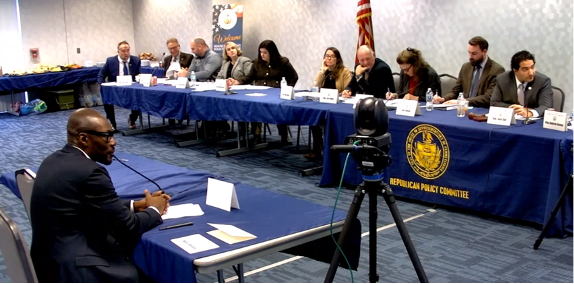


Reducing Emissions is not only Good Business, it’s the Right Thing to do in our Communities
By Positive Energy Hub Staff
From 2020 through 2023, CNX reduced the methane intensity in our company-wide gathering and boosting segment by 31% through continuously analyzing systems and identifying opportunities for enhancements. In 2024, the company invested an additional $5 million into methane reduction efforts, with a goal of eliminating 85,000 tons of CO2e. The Midstream group made significant progress toward that number by upgrading one of its compression facilities.
Mamont Compressor Station gathers gas from well sites in northern Westmoreland County and southern Indiana County. The facility currently moves approximately 30 million standard cubic feet of gas per day. Untreated gas comes into the facility at low pressure (~125-150psi) and is saturated with water. Before the gas can be sold to downstream customers like utility companies, it needs to be compressed to meet pressure requirements (~800-900psi), and most of the water must be removed.
To remove the water, the facility has two dehydration units. Currently only one unit is running at any given time, while the other serves as a backup. Each dehydration unit (dehy) uses triethylene glycol to remove water from the gas stream. The dehy is a regenerative system that circulates glycol, pulling water from the gas and then boiling that water out of the glycol.

The gas and glycol flow in opposite directions through a contact tower where the glycol pulls water from the gas stream. The dry gas can then flow to sales while the saturated glycol must be regenerated to remove the water. The glycol/water mixture goes through filtration and enters a reboiler, which heats the mixture to boil off the water. Then the dry glycol is ready to be circulated back to the contact tower to start this process over again.
The glycol leaving the reboiler requires a pump to send it back to the contact tower. The original glycol pump is an energy-exchange style pump, which brings a small amount of methane along with the glycol returning from the contact tower. At older stations like Mamont, this methane is captured in the flash tank and then released into the atmosphere.
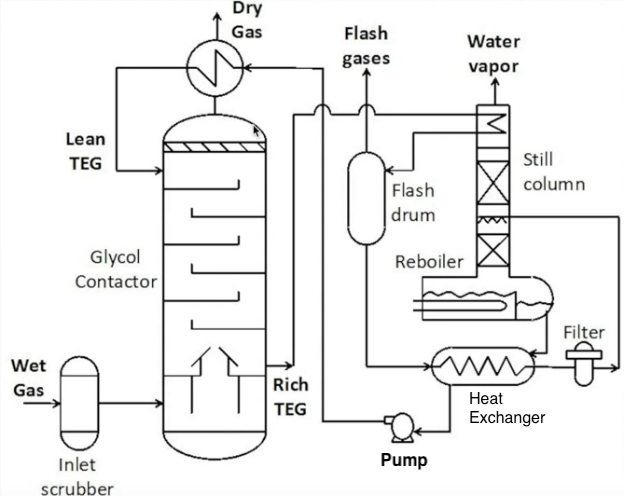
Newer dehys use electric-driven pumps that allow the contact tower to hold a higher liquid level. This means the only methane that returns to the flash tank is a very small quantity of gas entrained in the rich glycol. Mamont was identified as one of the highest methane-emitting midstream facilities in all of CNX operations at a calculated rate of 15,475 tons CO2e per year. The installation of electric-driven pumps eliminated the void where methane could enter the pump from the contact tower. As a result, the team was able to reduce dehy methane emissions at the station by 88%.
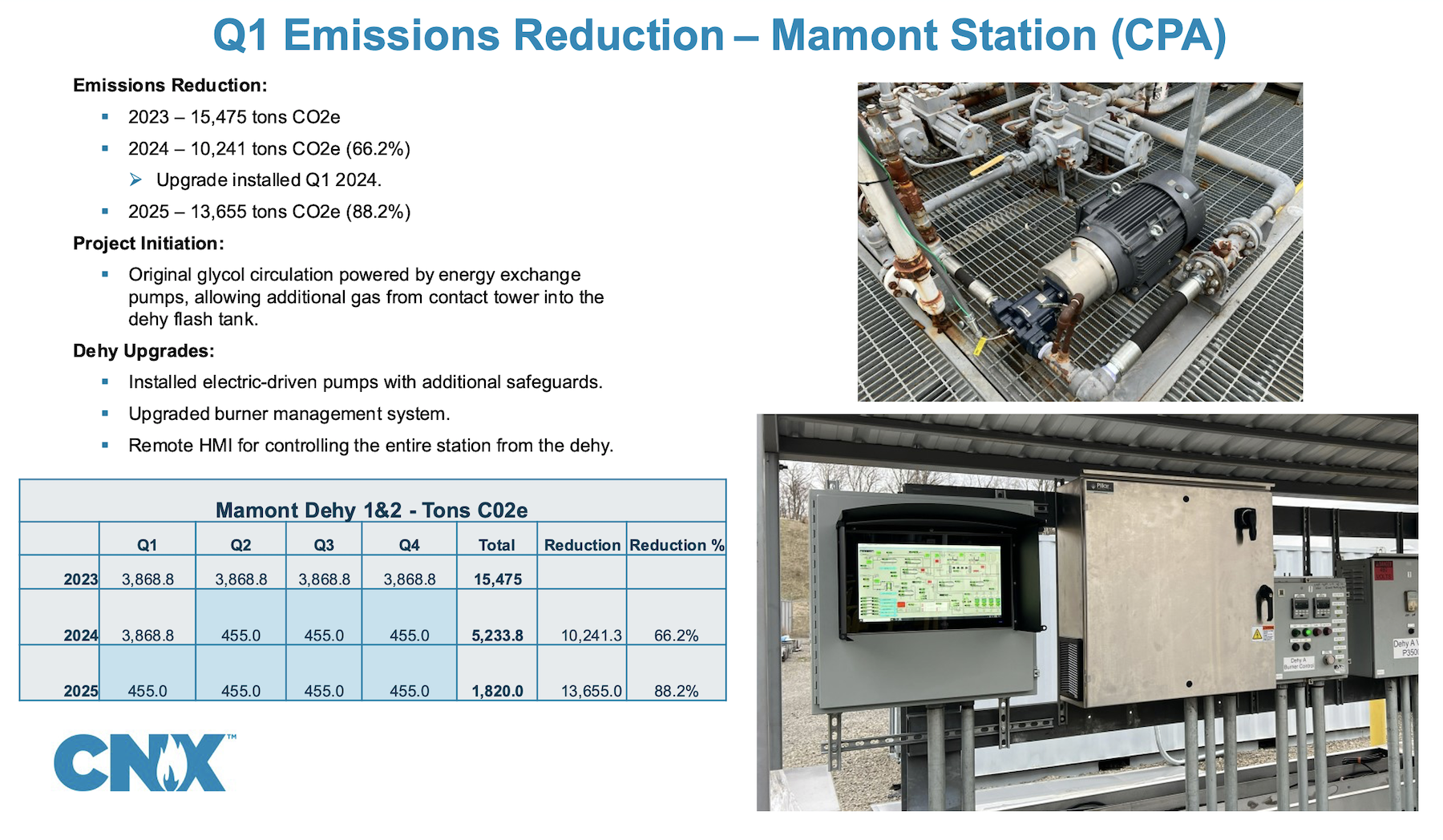
In addition, the team improved safety and reliability by installing additional automation and upgrading the burner management system. They also added a control panel at the dehy skid where the plant operator can control the entire facility.
Mamont Station is also part of the Radical Transparency initiative whereby realtime air quality reports are provided at this and other CNX facilities across southwest Pennsylvania. To see the live data, visit CNXRadicalTransparency.com.
You May Also Like…


Reducing Emissions is not only Good Business, it’s the Right Thing to do in our Communities
By Positive Energy Hub Staff
From 2020 through 2023, CNX reduced the methane intensity in our company-wide gathering and boosting segment by 31% through continuously analyzing systems and identifying opportunities for enhancements. In 2024, the company invested an additional $5 million into methane reduction efforts, with a goal of eliminating 85,000 tons of CO2e. The Midstream group made significant progress toward that number by upgrading one of its compression facilities.
Mamont Compressor Station gathers gas from well sites in northern Westmoreland County and southern Indiana County. The facility currently moves approximately 30 million standard cubic feet of gas per day. Untreated gas comes into the facility at low pressure (~125-150psi) and is saturated with water. Before the gas can be sold to downstream customers like utility companies, it needs to be compressed to meet pressure requirements (~800-900psi), and most of the water must be removed.
To remove the water, the facility has two dehydration units. Currently only one unit is running at any given time, while the other serves as a backup. Each dehydration unit (dehy) uses triethylene glycol to remove water from the gas stream. The dehy is a regenerative system that circulates glycol, pulling water from the gas and then boiling that water out of the glycol.
The gas and glycol flow in opposite directions through a contact tower where the glycol pulls water from the gas stream. The dry gas can then flow to sales while the saturated glycol must be regenerated to remove the water. The glycol/water mixture goes through filtration and enters a reboiler, which heats the mixture to boil off the water. Then the dry glycol is ready to be circulated back to the contact tower to start this process over again.
The glycol leaving the reboiler requires a pump to send it back to the contact tower. The original glycol pump is an energy-exchange style pump, which brings a small amount of methane along with the glycol returning from the contact tower. At older stations like Mamont, this methane is captured in the flash tank and then released into the atmosphere.
Newer dehys use electric-driven pumps that allow the contact tower to hold a higher liquid level. This means the only methane that returns to the flash tank is a very small quantity of gas entrained in the rich glycol. Mamont was identified as one of the highest methane-emitting midstream facilities in all of CNX operations at a calculated rate of 15,475 tons CO2e per year. The installation of electric-driven pumps eliminated the void where methane could enter the pump from the contact tower. As a result, the team was able to reduce dehy methane emissions at the station by 88%.
In addition, the team improved safety and reliability by installing additional automation and upgrading the burner management system. They also added a control panel at the dehy skid where the plant operator can control the entire facility.
Mamont Station is also part of the Radical Transparency initiative whereby realtime air quality reports are provided at this and other CNX facilities across southwest Pennsylvania. To see the live data, visit CNXRadicalTransparency.com.
You May Also Like…


A Milestone for the Future of CNG
By Positive Energy Hub Staff
Compressed Natural Gas (CNG) has the potential to revolutionize the transportation industry and beyond. Compared to conventional fuels, it reduces greenhouse gas emissions, improves fuel efficiency in fleet vehicles, and reduces maintenance costs because it is non-corrosive and burns cleaner. But compressing and storing natural gas at more than 3,000 pounds per square inch requires large mechanical compressors and other infrastructure that doesn’t exist at scale.
Enter ZeroHP CNGTM, a first-of-its-kind technology that eliminates the need for mechanical compressors. Instead, ZeroHP CNG utilizes high pressure (Geobaric Energy) from deep shale formations to compress the gas and fill CNG trailers on the sites where it is drilled. The technology is portable, allowing it to be deployed at microscale and generate fuel-grade CNG for a variety of uses in the field.
One such use is powering CNX’s electric frac fleet, which converts natural gas to electricity for hydraulic fracturing operations. Conventionally, the electric frac fleet uses gas from pipelines to fuel its electric turbine. When pipelines are not accessible (such as on a new well site), ZeroHP CNG can provide a low-emissions substitute fuel.
CNX recently completed the first implementation of this process, providing ZeroHP CNG to a new well site in Wadestown, WV that lacked existing infrastructure. Natural gas was produced, refined, and compressed at a mature well site in southwest PA and then trucked to the new site in WV. The ZeroHP CNG technology delivered 201 truckloads of CNG to fuel the frac fleet over 10 days. During this process, the team saw the following results:
- Natural gas compressed from ~800 psi to 3,900 psi for transport
- Each trailer filled in under 60 minutes
- 2 Trailers loaded at a time
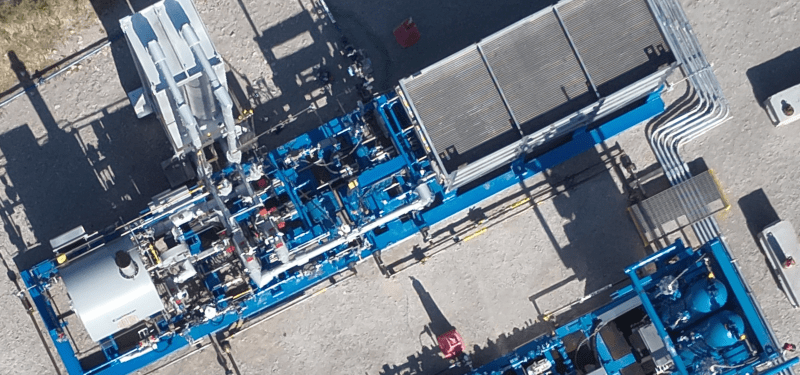
In addition to use in CNX operations, ZeroHP CNG can also be sold directly to customers from the well pad on which it was produced. CNX sold 18 truckloads to customers during the first deployment, signifying a major milestone for the potential of microscale CNG.
One MMBtu (a Metric Million British Thermal Unit) of compressed natural gas produces approximately the same energy as seven gallons of diesel fuel, making it highly economical while greatly reducing the environmental impact. Tailpipe SOx and NOx are reduced by approximately 40% and 90% respectively by substituting CNG for conventional fuels. ZeroHP CNG also reduces production-related carbon intensity by 35% compared to conventional CNG.
Once scaled, ZeroHP CNG and Clean mLNG—a similar microscale solution for liquifying natural gas—have the potential to displace 56% of transatlantic and transpacific petroleum imports, reducing global emissions by 80 million metric tonnes CO2e every year.
Related Articles


Celebrate Giving Tuesday with CNX Foundation’s Spirit of Generosity
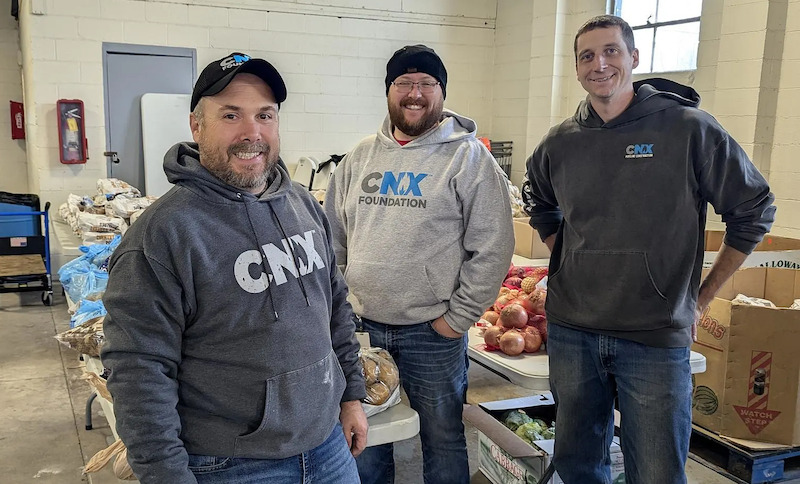
By Positive Energy Hub Staff
Each year on the Tuesday after Thanksgiving, Giving Tuesday inspires people across the globe to come together, give back, and celebrate the generosity that shapes communities throughout the year. Rooted in the belief that every act of giving matters, it’s a powerful reminder to support the causes and initiatives that make a difference in our lives and communities.
At CNX Resources, the CNX Foundation embodies our Appalachia First mission by driving meaningful and measurable change across the region. Building on the support we provide year-round, we launched CNX Impact – our season of giving – to amplify community efforts through hands-on employee volunteerism. Already, our team has packed food for local food banks, volunteered at the Corner Cupboard Food Bank, collected gifts for a variety of toy drives, and organized a cleanup day at Washington Lakes, all aimed at strengthening the communities we call home.
This Giving Tuesday, we encourage you to join us in supporting a selection of initiatives and organizations that reflect the diversity and impact of our core focus areas. These include:
In addition, throughout the year, CNX supports Outreached Arms, an organization that serves food to the hungry and provides basic necessities to those in need. CNX Foundation funds the meals provided every Tuesday, and CNX employees help serve the dinner on the first and second Tuesday of every month.
Another way to make an impact is by supporting one of the many nonprofit organizations that now call the Headquarters at CNX home. This initiative provides affordable, professional office space for nonprofits, charitable groups, women and minority-owned businesses, and underrepresented organizations. This space is more than an office—it’s a hub where organizations can grow their missions and collaborate with like-minded professionals. While these organizations may differ in focus, they share a common goal: improving the lives of individuals and families across our region. Together, they play a vital role in advancing the Appalachia First vision.
Our commitment to addressing issues like food insecurity, substance use disorder, and children’s health and wellness extends far beyond the holiday season. This Giving Tuesday, we celebrate all the ways people choose to give—whether through volunteering, donating, or simply helping a neighbor. As we look to 2025, we’re excited to build on the progress we’ve made and to continue supporting families, neighborhoods, and communities across Appalachia.
To learn more about CNX Foundation and the key areas we support, visit https://www.cnx.com/about-us/cnx-foundation.
Related Articles


CNX Foundation Launches New Veterans Support Pillar with Memorial Dedication in Saltsburg, PA
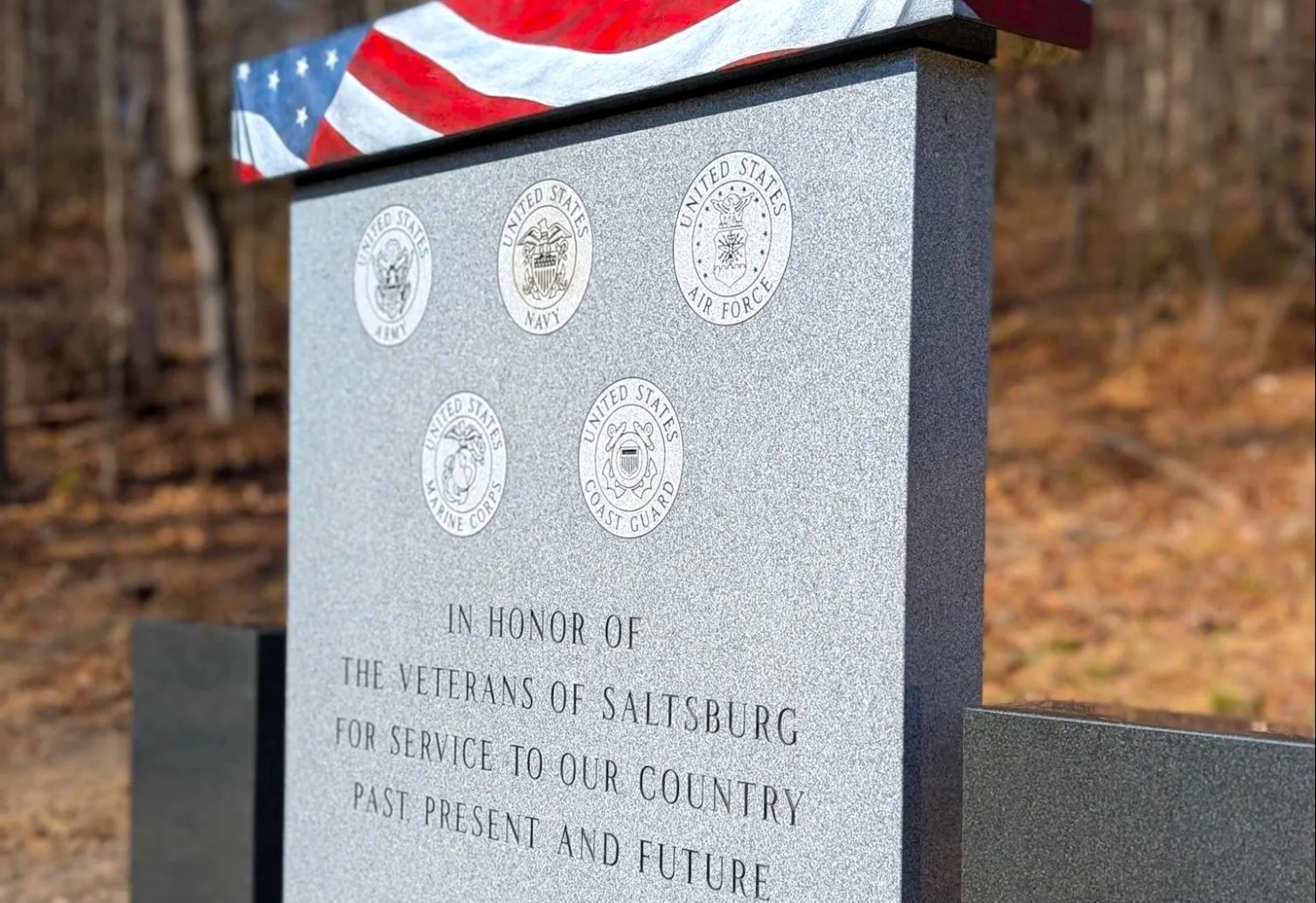
By Positive Energy Hub Staff
From the moment CNX Resources employee Mike Virgin visited American Legion Post 57 in Saltsburg, Pennsylvania, he knew he wanted to find a way to contribute to the organization. As a former Marine who served in Iraq and Afghanistan, Virgin understands that continuing the legacy of the generations who served in the past is a privilege and a duty. As his relationship with the veterans of Post 57 grew, he learned about their desire for a memorial – one that would honor the area’s history of service while saving room for future service members.
Eighteen months ago, the CNX Foundation began hosting wing nights for veterans throughout the region. It was during the inaugural wing night at Post 57 when Virgin connected with several of the legion’s members and learned about the desire for a memorial reflecting the region’s breadth of service.
“I am lucky to work for an organization committed to three core values: responsibility, ownership and excellence,” said Virgin. “All three are important, but the one that resonates with me the most is ownership. I knew I wanted to take ownership of this memorial and see it through.”
While Virgin was working with Post 57 to determine what should be included in the memorial, CNX Foundation, the philanthropic arm of CNX Resources, was establishing a new key pillar to support veterans’ initiatives. Since its beginning, the Foundation has focused its support in nine pillars in addition to its flagship initiative, The Mentorship Academy:
- Food insecurity
- Children’s health and wellness
- Broadband and information technology access
- Domestic abuse and awareness
- Career readiness
- Water quality safety and awareness
- Recidivism and reentry
- Opioid epidemic and its societal impact
“From a foundation perspective, we’ve collaborated on different events with veteran organizations since our inception,” said Tim Bedard, Executive Vice President, General Counsel and Corporate Secretary for CNX Resources and Navy veteran. “Over time, we realized we all felt compelled to further our commitment. Mike’s passion for creating this memorial drove us to form our eighth pillar. By contributing financially and dedicating our time, we are able to honor their service in a way that reflects our gratitude.”
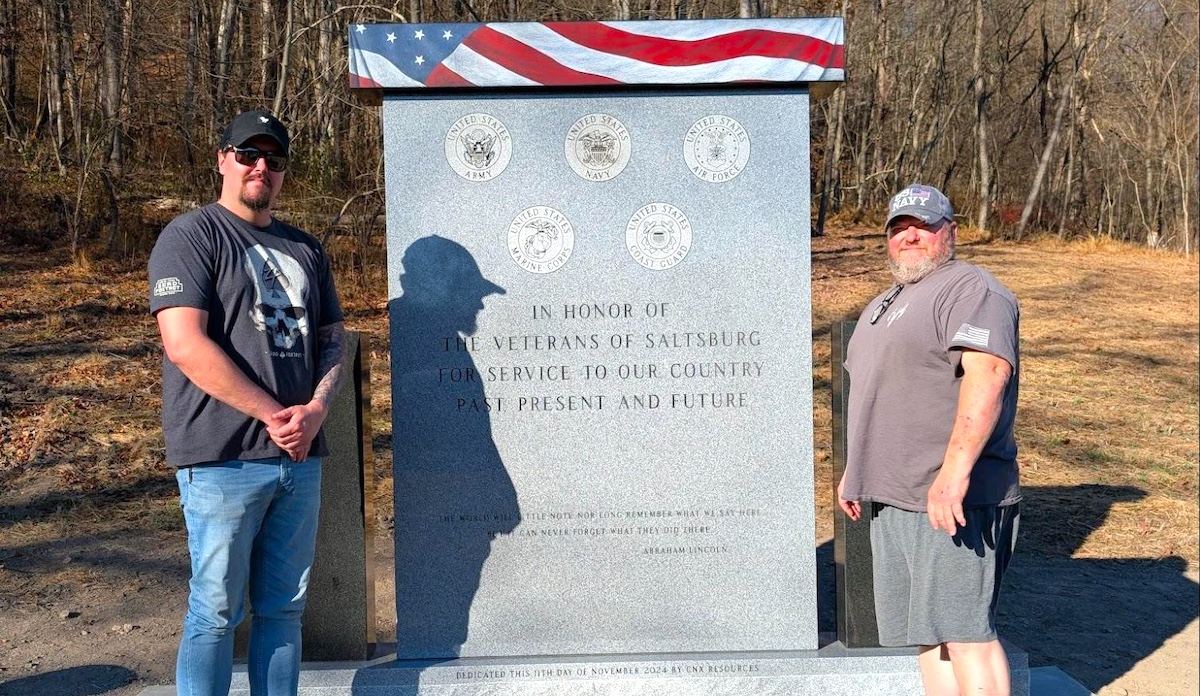
The memorial is 11 feet tall and 10 feet wide and forged from U.S.-made Virginia Mist and Silver Cloud granite. Currently, the pillars are blank so Post 57 can formulate all Saltsburg veterans and have them properly engraved. The memorial is inscribed with the following quote from President Abraham Lincoln’s Gettysburg Address:
The world will little note, nor long remember what we say here, but it can never forget what they did here.
The American Legion is a cornerstone of veteran support, advocating for veterans’ rights, engaging in community service and support, sponsoring a wide variety of youth programs and education and providing veterans with strong connections to one another.
“CNX really helped us bring the idea of this memorial to fruition, and it’s just awesome,” said Bradley McClure, American Legion Post 57 Commander and Young Township Supervisor. “Our relationship started with the wing nights they sponsor and has grown over time. This memorial means a lot to this community and we are thankful to CNX.”
In addition to supporting the memorial, in the last year, CNX Foundation has worked with the Greene County Veterans Club to help remodel their restroom to make it handicap accessible, contributed funds for veteran wing nights throughout the region and contributed funds for the Guardian Angels Service Dog project. The Foundation has also partnered with veteran programs to provide gifts and food to families throughout the holiday season.
“The CNX Foundation is committed to making a tangible, impactful and local difference throughout Appalachia,” said Virgin. “This memorial embodies all three of those values, and it’s a visual representation of the high bar our predecessors have set for us with their commitment to their country.”
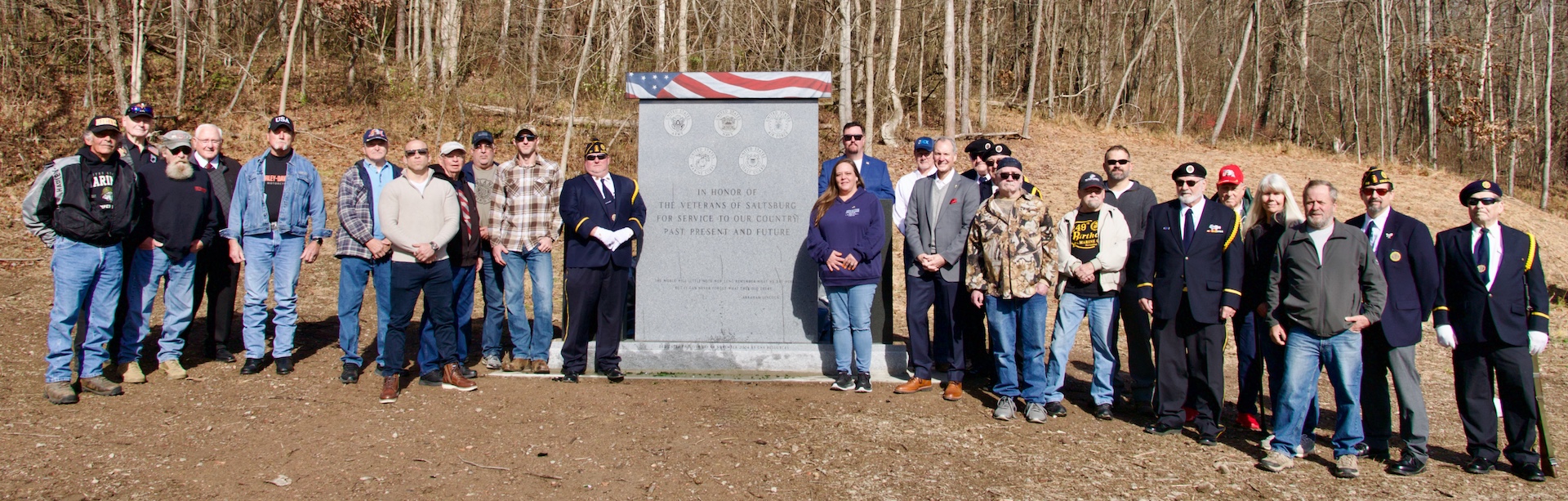
Related Articles

CNX Foundation Launches New Veterans Support Pillar with Memorial Dedication in Saltsburg, PA
By Positive Energy Hub Staff
From the moment CNX Resources employee Mike Virgin visited American Legion Post 57 in Saltsburg, Pennsylvania, he knew he wanted to find a way to contribute to the organization. As a former Marine who served in Iraq and Afghanistan, Virgin understands that continuing the legacy of the generations who served in the past is a privilege and a duty. As his relationship with the veterans of Post 57 grew, he learned about their desire for a memorial – one that would honor the area’s history of service while saving room for future service members.
Eighteen months ago, the CNX Foundation began hosting wing nights for veterans throughout the region. It was during the inaugural wing night at Post 57 when Virgin connected with several of the legion’s members and learned about the desire for a memorial reflecting the region’s breadth of service.
“I am lucky to work for an organization committed to three core values: responsibility, ownership and excellence,” said Virgin. “All three are important, but the one that resonates with me the most is ownership. I knew I wanted to take ownership of this memorial and see it through.”
While Virgin was working with Post 57 to determine what should be included in the memorial, CNX Foundation, the philanthropic arm of CNX Resources, was establishing a new key pillar to support veterans’ initiatives. Since its beginning, the Foundation has focused its support in nine pillars in addition to its flagship initiative, The Mentorship Academy:
- Food insecurity
- Children’s health and wellness
- Broadband and information technology access
- Domestic abuse and awareness
- Career readiness
- Water quality safety and awareness
- Recidivism and reentry
- Opioid epidemic and its societal impact
“From a foundation perspective, we’ve collaborated on different events with veteran organizations since our inception,” said Tim Bedard, Executive Vice President, General Counsel and Corporate Secretary for CNX Resources and Navy veteran. “Over time, we realized we all felt compelled to further our commitment. Mike’s passion for creating this memorial drove us to form our eighth pillar. By contributing financially and dedicating our time, we are able to honor their service in a way that reflects our gratitude.”
The memorial is 11 feet tall and 10 feet wide and forged from U.S.-made Virginia Mist and Silver Cloud granite. Currently, the pillars are blank so Post 57 can formulate all Saltsburg veterans and have them properly engraved. The memorial is inscribed with the following quote from President Abraham Lincoln’s Gettysburg Address:
The world will little note, nor long remember what we say here, but it can never forget what they did here.
The American Legion is a cornerstone of veteran support, advocating for veterans’ rights, engaging in community service and support, sponsoring a wide variety of youth programs and education and providing veterans with strong connections to one another.
“CNX really helped us bring the idea of this memorial to fruition, and it’s just awesome,” said Bradley McClure, American Legion Post 57 Commander and Young Township Supervisor. “Our relationship started with the wing nights they sponsor and has grown over time. This memorial means a lot to this community and we are thankful to CNX.”
In addition to supporting the memorial, in the last year, CNX Foundation has worked with the Greene County Veterans Club to help remodel their restroom to make it handicap accessible, contributed funds for veteran wing nights throughout the region and contributed funds for the Guardian Angels Service Dog project. The Foundation has also partnered with veteran programs to provide gifts and food to families throughout the holiday season.
“The CNX Foundation is committed to making a tangible, impactful and local difference throughout Appalachia,” said Virgin. “This memorial embodies all three of those values, and it’s a visual representation of the high bar our predecessors have set for us with their commitment to their country.”
Related Articles

Agricultural Sources of Particulate Matter
By Carrie Crumpton, CNX Vice President of Environmental Strategy
Through our Radical Transparency program, we not only monitor and disclose raw data in real time to state regulators and the public, but we also leverage the program as an opportunity to investigate when we see an anomaly in the data. Each operational location has its own unique characteristics, and we view any data anomaly as an opportunity to study, learn, improve, and customize our operating practices to the benefit of each local community. In other words, the program has provided an ancillary benefit beyond simply sharing data and providing the public with first-of-its kind transparency from the natural gas industry; it’s an opportunity for our industry to learn, adapt, and enhance operations in real time.
In that vein, we occasionally see readings of PM2.5 (particulate matter measuring 2.5 micrometers in diameter) that are higher than expected for the activity (or lack of activity) that is occurring on a pad location. As you’ll recall from previous Context Corner editions, PM2.5 sources can be emissions from combustion of gasoline, oil, diesel fuel, wood, or other biomass; or dusts and dirt from unsealed roads, construction, landfill, and agriculture. Some pollens and molds can also contribute to particulate matter that can register on certain devices that record PM2.5. When we are alerted to these ‘higher than expected’ readings, our team responds to review the conditions on location to ensure our process and equipment are working as designed. Our team often observes adjacent activity that could be contributing to the readings we are recording.
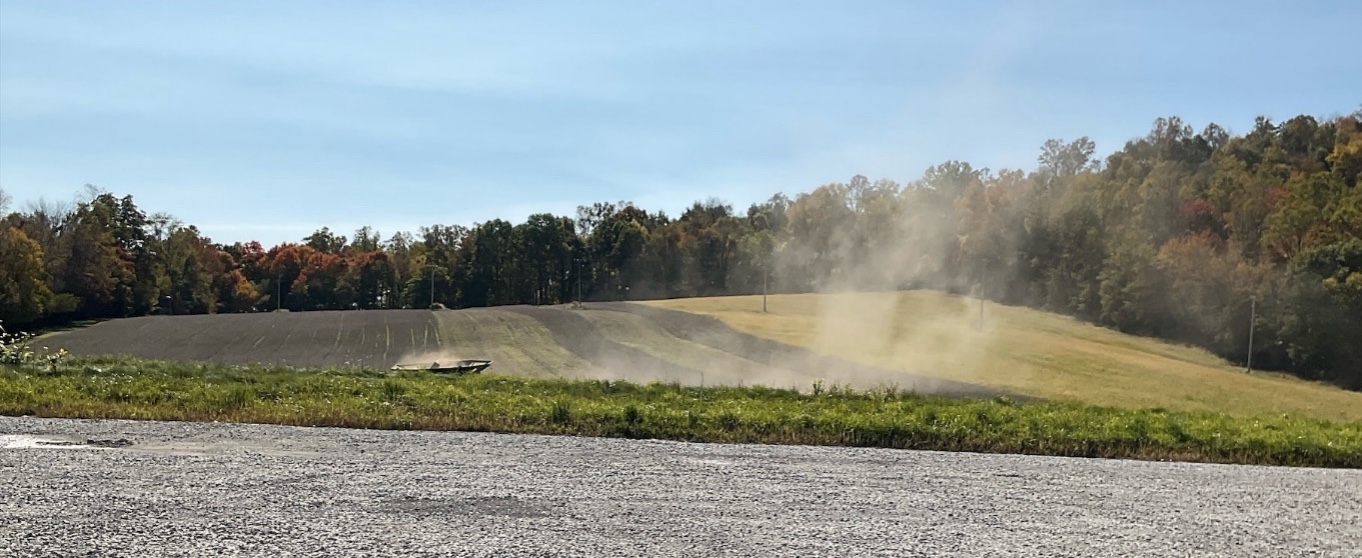
As we consider possible contributing factors for these unexpected readings, one thing to remember is that well pads are not large industrial complexes that are isolated from other typical activities in the region. Well pads in Appalachia are sited alongside other activities such as coal mining operations and, more often, near agricultural activity, which is prominent within our operating footprint. USDA’s 2023 State Agricultural Overview reports there are over 49,000 Farm Operations totaling more than 7,100,000 acres with agricultural operations in Pennsylvania. CNX well pads are alongside and often surrounded by some of these agricultural activities. Activities occurring on these working farms can contribute to the air quality readings we see at our pad locations. The monitors we utilize do not differentiate from where the PM2.5 originates. Exhaust, dust, smoke, and pollen from these agricultural activities are detected and recorded as well.
CNX recognizes that unique air quality challenges exist in agriculture. From application of pesticides and fertilizers, plowing and tilling, etc., to the management of livestock waste and burning of crop residues, agricultural practices release contaminants including volatile organic compounds and particulate matter, among others. CNX is taking steps to help better understand the region’s PM2.5 by looking for contributions from well pad/development activity and hope that others can utilize the robust dataset to explore other possible sources of PM2.5. We view this as an opportunity for innovation and transformation. CNX believes that the data we record and provide can help advance air quality across the region and could innovate opportunities outside of the sphere of natural gas, like opportunities to move forward sustainable agricultural practices such as conservation tillage, precision farming, or integrated pest management.
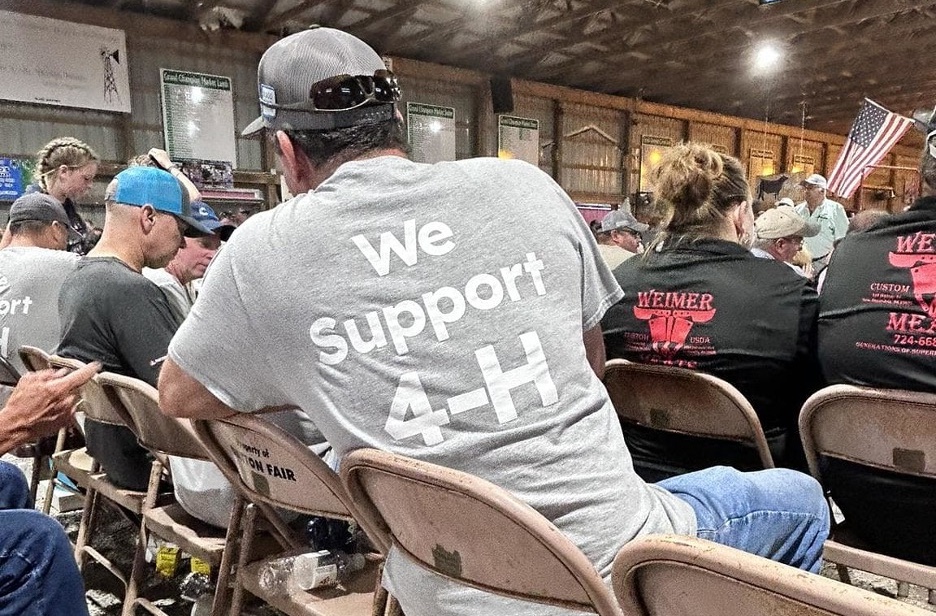
CNX appreciates the mutually beneficial opportunity to develop natural gas alongside agriculture in Appalachia and is proud to contribute to the direct economic benefit for the agricultural community. These synchronous activities have cemented the opportunity for multi-generational family farms to continue for generations to come by providing supplemental income to families and improving opportunities for investments in new technology and equipment. These investments and the efficiencies that are gained preserve the Appalachian region’s farming culture and help preserve the competitive viability of the family farm in Appalachia. Tangible data leads to innovative, impactful solutions that benefit everyone in the (local) region.


CNX Caring Cart Program Expands to the IRMC Cancer Center, in partnership with UPMC Hillman Cancer Center in Indiana, PA
By Positive Energy Hub Staff
Cancer patients undergoing chemotherapy often face several hours of treatment at a time. The appointments can be physically uncomfortable, and filling the expanse of time can be challenging. That’s where the CNX Caring Cart—a cart filled with snacks, throat lozenges, lip balm, puzzles, blankets, backscratchers, and more—has helped to provide some comfort and occupy patients’ treatment times since 2015. Launched in collaboration with UPMC Hillman Cancer Center Volunteer Services, this initiative has since expanded to the Indiana Regional Medical Center (IRMC) Cancer Center, in partnership with UPMC Hillman Cancer Center.
According to Rachel Wyzkowski, lead coordinator, UPMC Hillman Volunteer and Community Services, the fact that volunteers bring the cart around makes it particularly special.
“When patients see the cart coming around the corner, it’s an opportunity for them not only to grab some fun items, but it’s also a distraction from their medical treatment. They know the person delivering the items is one of our volunteers and is not there to talk about medicine or protocols. It sounds small, but it really makes a difference,” she said.
Since 2015, CNX has provided over $325,000 to UPMC Hillman Cancer Center, beginning at its flagship location in Shadyside. Most of the funds support the caring cart initiative, which Ms. Wyzkowski and CNX’s external relations manager, Amy Hopkins, like to keep fresh with a balance of items that may help ease the side effects of treatment along with fun items that help provide distraction.
Ms. Wyzkowski said backscratchers are popular all year round, but bucket hats became a favorite over the summer.
Recognizing a need for this service beyond UPMC Hillman in Shadyside, the CNX Foundation, CNX’s philanthropic arm founded in 2021, increased its support for the program to provide a cart to the IRMC Cancer Center in Indiana, PA.
“We are really excited to extend this program to an additional UPMC Hillman location,” Ms. Hopkins said. “It’s our way of hopefully brightening a patient’s day and filling a need at the cancer center as well.”

In December, CNX Resources employees volunteer to take the cart to patients on each floor of the cancer center. During the rest of the year, UPMC Hillman volunteers bring the cart to patients throughout the center, offering various care items.
“Undergoing cancer treatment can be a tremendous challenge,” said Tim Bedard, executive vice president, general counsel, and corporate secretary of CNX Resources. “We hope that the caring carts help bring some joy and comfort to patients and their families during a difficult period in their lives.”
Philanthropic impact can take many forms, from individual donations to teams of people working together.
“The caring cart program requires financial support, of course. But it also relies on regular volunteers and the creativity and thoughtfulness that goes into selecting the items,” said Shannon Kroskie Smith, community relations coordinator for UPMC Hillman Cancer Center.
To learn more about the CNX Caring Cart program and how your organization can help support UPMC Hillman Cancer Center, contact the Development Office at 412-623-4700 or givetohillman@upmc.edu.
Related Articles

CNX Caring Cart Program Expands to the IRMC Cancer Center, in partnership with UPMC Hillman Cancer Center in Indiana, PA
By Positive Energy Hub Staff
Cancer patients undergoing chemotherapy often face several hours of treatment at a time. The appointments can be physically uncomfortable, and filling the expanse of time can be challenging. That’s where the CNX Caring Cart—a cart filled with snacks, throat lozenges, lip balm, puzzles, blankets, backscratchers, and more—has helped to provide some comfort and occupy patients’ treatment times since 2015. Launched in collaboration with UPMC Hillman Cancer Center Volunteer Services, this initiative has since expanded to the Indiana Regional Medical Center (IRMC) Cancer Center, in partnership with UPMC Hillman Cancer Center.
According to Rachel Wyzkowski, lead coordinator, UPMC Hillman Volunteer and Community Services, the fact that volunteers bring the cart around makes it particularly special.
“When patients see the cart coming around the corner, it’s an opportunity for them not only to grab some fun items, but it’s also a distraction from their medical treatment. They know the person delivering the items is one of our volunteers and is not there to talk about medicine or protocols. It sounds small, but it really makes a difference,” she said.
Since 2015, CNX has provided over $325,000 to UPMC Hillman Cancer Center, beginning at its flagship location in Shadyside. Most of the funds support the caring cart initiative, which Ms. Wyzkowski and CNX’s external relations manager, Amy Hopkins, like to keep fresh with a balance of items that may help ease the side effects of treatment along with fun items that help provide distraction.
Ms. Wyzkowski said backscratchers are popular all year round, but bucket hats became a favorite over the summer.
Recognizing a need for this service beyond UPMC Hillman in Shadyside, the CNX Foundation, CNX’s philanthropic arm founded in 2021, increased its support for the program to provide a cart to the IRMC Cancer Center in Indiana, PA.
“We are really excited to extend this program to an additional UPMC Hillman location,” Ms. Hopkins said. “It’s our way of hopefully brightening a patient’s day and filling a need at the cancer center as well.”
In December, CNX Resources employees volunteer to take the cart to patients on each floor of the cancer center. During the rest of the year, UPMC Hillman volunteers bring the cart to patients throughout the center, offering various care items.
“Undergoing cancer treatment can be a tremendous challenge,” said Tim Bedard, executive vice president, general counsel, and corporate secretary of CNX Resources. “We hope that the caring carts help bring some joy and comfort to patients and their families during a difficult period in their lives.”
Philanthropic impact can take many forms, from individual donations to teams of people working together.
“The caring cart program requires financial support, of course. But it also relies on regular volunteers and the creativity and thoughtfulness that goes into selecting the items,” said Shannon Kroskie Smith, community relations coordinator for UPMC Hillman Cancer Center.
To learn more about the CNX Caring Cart program and how your organization can help support UPMC Hillman Cancer Center, contact the Development Office at 412-623-4700 or givetohillman@upmc.edu.
Related Articles

Q3 2024 CNX Resources Earnings Conference Call
<!–
Sysco is the global leader in selling, marketing and distributing food products to restaurants, healthcare and educational facilities, lodging establishments and other customers who prepare meals away from home. Its family of products also includes equipment and supplies for the foodservice and hospitality industries. With more than 76,000 colleagues, the company operates 340 distribution facilities worldwide and serves approximately 730,000 customer locations. For fiscal year 2024 that ended June 29, 2024, the company generated sales of more than $78 billion.
–>
Sysco is the global leader in selling, marketing and distributing food and related products to customers who prepare meals away from home. This includes restaurants, healthcare and educational facilities, lodging establishments, entertainment venues, and more. Sysco operates 337 distribution centers, in 10 countries, with 75,000 colleagues serving approximately 730,000 customer locations. The company generated sales of more than $81 billion in fiscal year 2025 that ended June 28, 2025.

Newest Class of Mentorship Academy Students Find Energy Industry Inspiring and Daunting
By Positive Energy Hub Staff
“Growth.” “Success.” “Big Aspirations.” These are just some of the words students from this year’s Mentorship Academy class use to describe their vision for the future.
The 2024/2025 Mentorship Academy kicked off with CNX Resources’ second annual Intro to Energy Day. The students learned about areas of the industry that appealed to them – like the developing role artificial intelligence plays in natural gas development – as well as areas that didn’t, like (for some) working up high on a natural gas rig. Their goals for the future are as individual as they are, and over the course of their time with the Mentorship Academy, they will have the opportunity to explore career paths in hospitality, healthcare, building trades, manufacturing and more.
.jpeg)
.jpeg)
“It takes such a wide range of individuals and organizations to make Intro to Energy such a success,” said Mentorship Academy founder, CNX President and CEO Nick Deiuliis. “We want to thank our mentors, partners and staff not only for today but for the commitment they are making to the students over the course of the year.”
The students tell their stories best. To hear about Intro to Energy and the Mentorship Academy in their own words, watch here.
Related Articles


EMS and Community Rig Tour Highlights CNX Resources’ Safety Protocols for Residents, Employees and Environment
By Positive Energy Hub Staff
In late July, CNX Resources hosted a community day at its MAM 15 operation site in Apollo, Westmoreland County Pennsylvania. The day featured operational site tours for the Washington Township Volunteer Fire Company and the Bell Township Fire Department. Tours for nearby landowners were also designed to increase understanding of CNX operations as well as safety and environmental compliance protocols. The day served as an opportunity for individuals and emergency responders to ask questions and learn first-hand about CNX’s commitment to employee and community safety.
“We take pride in the work we do, the benefits we provide to quality of life in the region, and we take our role in the community very seriously,” said Navneet Behl, CNX’s Chief Operating Officer. “It’s very important for us to demonstrate the safety and environmental protection measures we have in place for our employees and the community.”
For emergency medical personnel, the opportunity to get a high-level view of the operational site helps them understand the various phases of production and potential areas of concern that could arise during an emergency or incident.
“Whether a worker would have a cardiac problem or a sprained ankle, as first responders we need to understand the different obstacles that might be present when it comes to reaching them. If an incident were to occur on a rig, we need to know how to get them down from it. The more we understand what’s happening and how to solve it, the better off everyone is,” said Jay Morgan, President of the Washington Township Volunteer Fire Company.
CNX Resources goes to great lengths to ensure it takes every possible measure to protect its employees, contractors, and the surrounding communities, and is deeply committed to protecting the environment. CNX employees live in the area where the company operates, which is not the case with many energy companies – they camp, fish, hunt, and kayak – and understand the necessity of protecting the environment and operating in the safest possible manner.
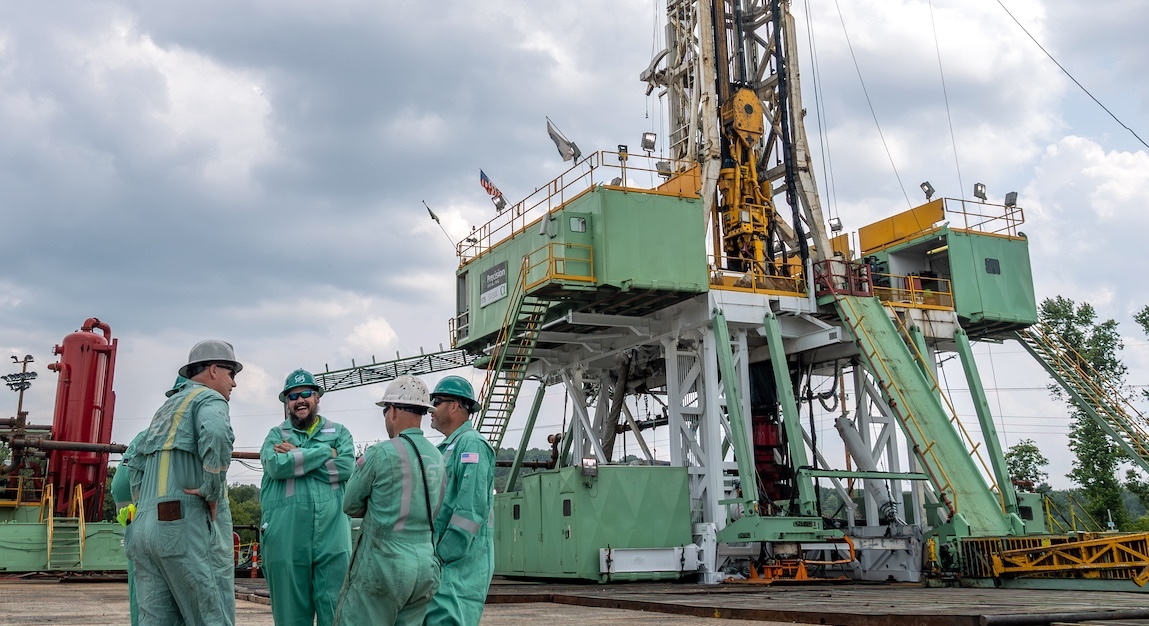
“This area is stunningly beautiful. The tour was really educational for our members and helped us understand the scope of the worksite and everything CNX is doing to ensure it’s safe,” said Steve Master, Fire Chief with the Bell Township Fire Department. “It’s important for our community to understand what’s happening here so we can support and work with CNX.”
The rig tour and community day is one small piece of CNX’s Appalachia First vision, which amplifies the values CNX has lived for 160 years: putting the people of Appalachia first by prioritizing investments and utilizing home-grown resources that truly make a tangible, impactful, and local difference in our communities.
Related Articles
