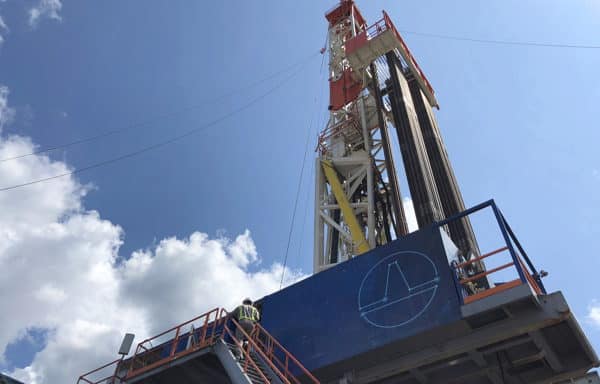
WFN13

Air Quality MonitoringWater Protection Monitoring
At this time, air quality monitoring activities for WFN13 are being led by the Pennsylvania Department of Environmental Protection (PADEP) pursuant to the Statement of Mutual Interests executed between Governor Shapiro’s Administration and CNX, which provides PADEP with the lead role in conducting independent air monitoring before, during, and after well development to support a comprehensive evaluation of emissions and environmental impacts.

Because the monitoring program at WFN13 is being conducted under PADEP’s independent study, the resulting data will be managed through PADEP’s monitoring effort and will not be displayed on CNX’s Air Quality Monitoring tab.

A series of pre- and post-drill water samples are collected at private water sources within 2,500 feet of each discrete surface hole location. The samples are collected by third-party environmental consultants and are sent to state-certified laboratories for analysis against a list of parameters that surpasses regulatory requirements. The results are shared with the landowners and state regulatory agencies. If a landowner consents, their results are shown below.

Follow this link for more information about water quality monitoring.


ACAA4

Air Quality MonitoringRadiation MonitoringChemical Additive DisclosuresAir Monitoring Historical

Air Quality Monitoring

Upwind and downwind air quality monitoring equipment measuring PM2.5 (particulate matter) and VOCs known as BTEX was installed within 500’ of the well pad by a qualified third party, Clean Air Engineering.

The prevailing wind direction for this region is from the southwest. Clean Air Engineering positioned the PM2.5 monitors such that one would be subject to winds from upwind of the well pad and the other would be in the path of wind traveling across the well pad (downwind).

For more information about the air quality monitoring program, click here.

Follow this link to see more information on CNX methane emission monitoring and mitigation efforts.

Due to the pre-existing monitoring configuration and constraints of the property (airport security restrictions) near the ACAA 4 Well Pad, standard spacing considerations for the placement of BAM monitors—ideally sited at a minimum distance of 500 feet—were not achievable. As a result, the location of the monitor placed in the prevailing upwind location may influence data interpretation due to its proximity to development activities, and users should consider this constraint when evaluating the measurements presented.

Under Maintenance

Ambient Radiation

An ambient gamma radiation monitor was installed onsite by a qualified third party, Onterris. The location of the monitor was selected to ensure it is representative of overall site conditions. On site ambient levels are displayed below as an hourly average.

Follow this link for more information about the ambient radiation monitoring program.

Prior to drilling and hydraulic fracturing operations on site, the chemical additives proposed for use are posted below. After operations are complete, the final disclosures are posted.

Follow this link to see more information about the chemical additive disclosures.

Trip 1

Proposed Additives

Drilled and/or completed prior to Radical Transparency launch in November of 2023. No data available.

Actual Additives

ACAA4 Drilling Fluid Additives
ACAA4 Hydraulic Fracturing Fluid Additives

The Radical Transparency program includes monitoring of well pads in the construction, drilling, and completions phases of development through approximately 6 months of production. The first phase of air monitoring for this site was archived under the Radical Transparency program. Data from the archived, first phase is shown below.