

METHANE TRANSPARENCY AND REDUCTION
Leading with Data. Delivering Measurable Results.
At CNX, methane management is not a standalone initiative—it is a core element of our Radical Transparency program and strategy and our broader commitment to responsible energy development.
By providing clear, accessible data, we enable our communities, regulators, and stakeholders to better understand how natural gas is produced—and the role it plays in both the economy and environmental progress in Appalachia.
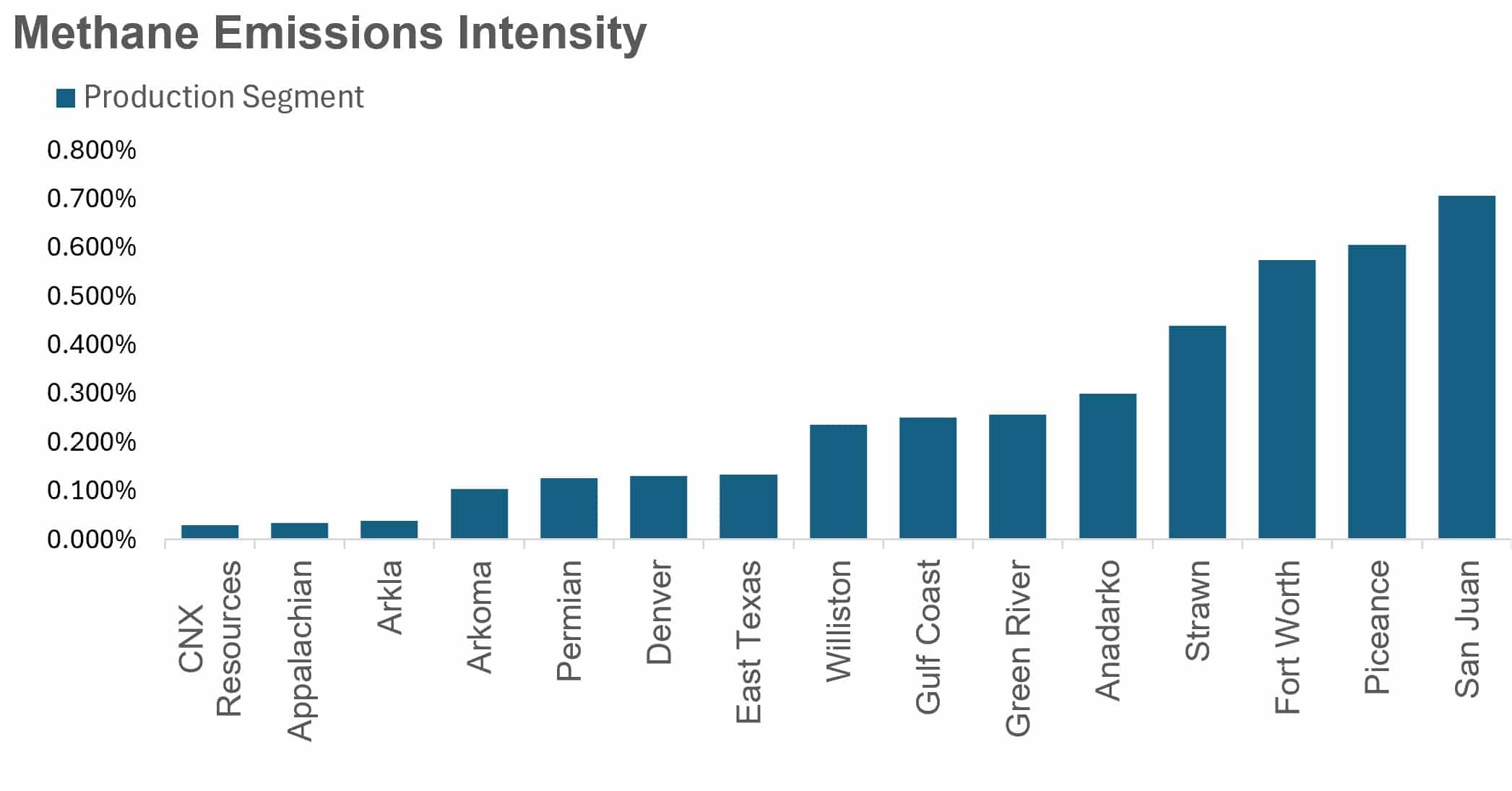
Click image to view larger
Our Performance
From 2020 to 2024, we delivered consistent, measurable improvements in methane emissions:
reduction in methane intensity in our production segment
reduction in gathering and boosting methane intensity over the same period
achieved methane intensity across both segments
reduction in absolute methane emissions company-wide
These results reflect a sustained focus on identifying high-impact opportunities and executing targeted operational improvements, primarily by controlling vented emissions from our pneumatic devices and by managing emissions related to water handling during well liquid unloading events.
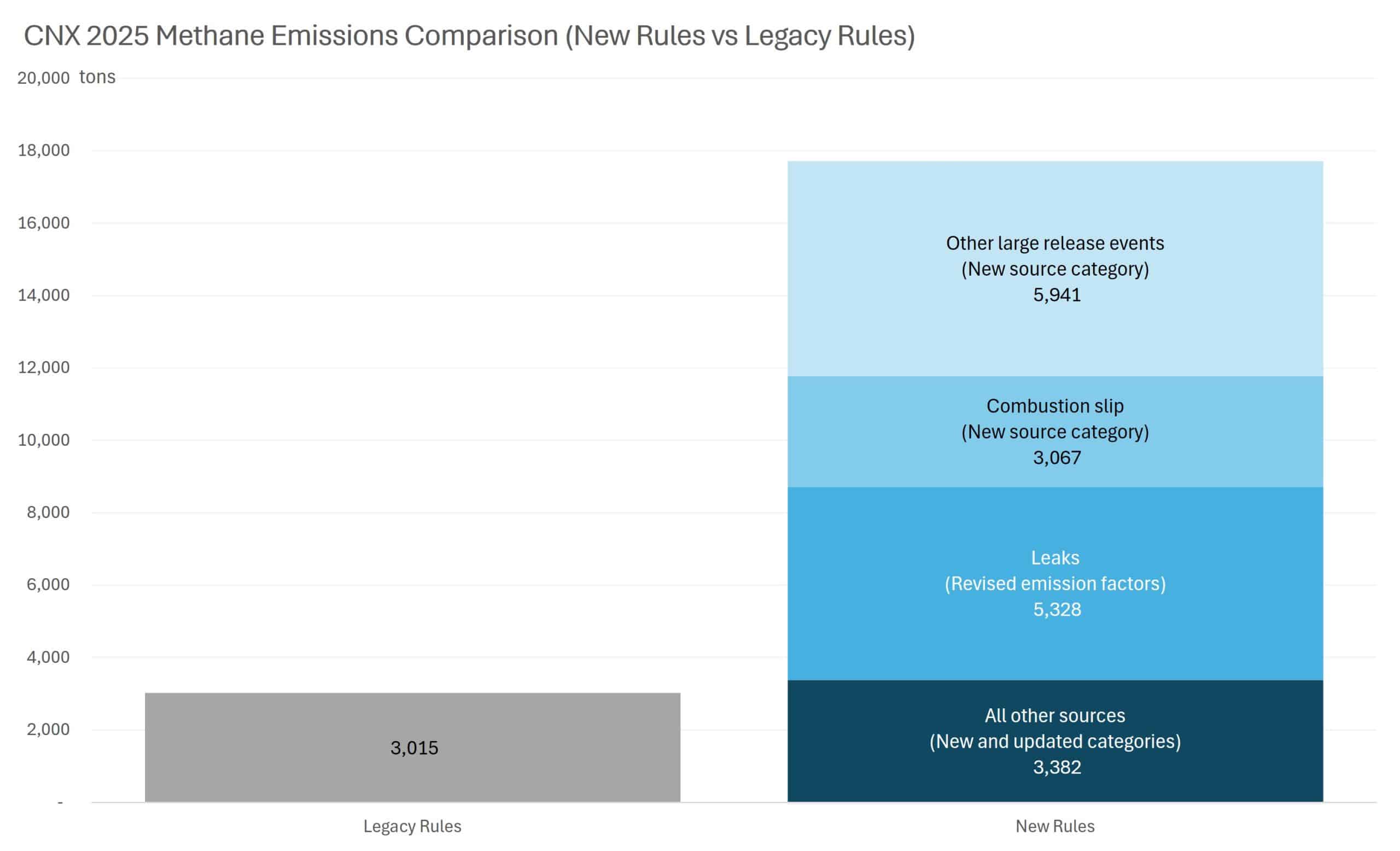
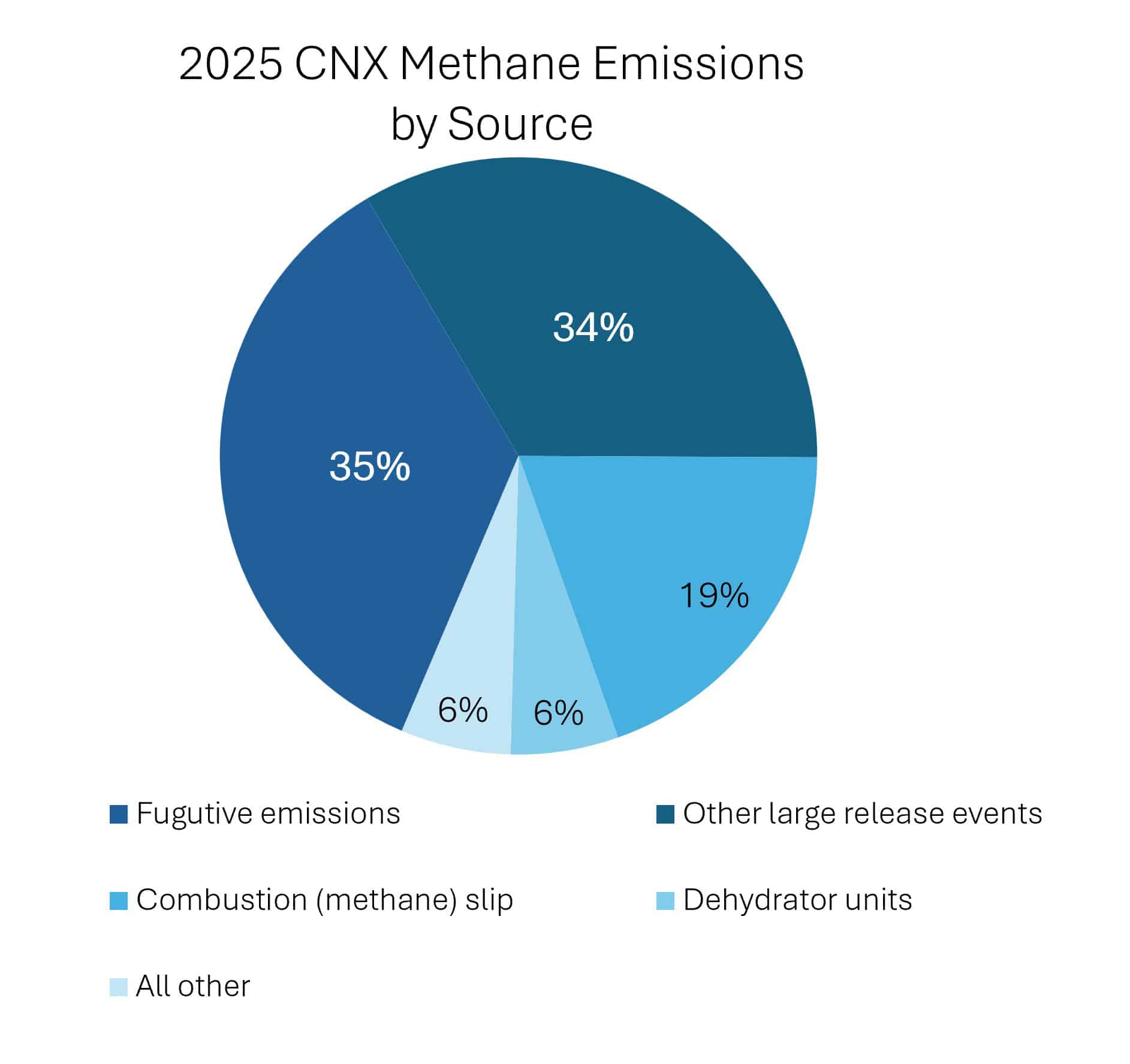
In 2025 we had a baseline reset when EPA’s revised Subpart W methodology went into effect for the 2025 reporting year, introducing new source categories and updated emission factors. CNX’s reported intensity increased – but the underlying operational performance remains strong.
The revised methodology adds “gap fillers” – new source categories and updated emission factors that were not captured under the legacy approach. New “gap filler” source categories include:
- Methane slip – unburned methane passing through reciprocating and centrifugal compressor combustion equipment
- Storage vessel flashing – dissolved gas released when produced liquids transfer to atmospheric storage
- Other large release events (OLREs) – any instantaneous emission ≥ 100 kg/hr is now a reportable event
- Updated population emission factors – for calculated emissions from pneumatics, compressors, and Leak Detection and Repair (LDAR) components
- Crankcase venting and drilling mud degassing – new source categories added bringing reporting completeness closer to OGMP 2.0 Level 5 standards.
Click image to view larger
These changes reflect increases related to better measurement, not more emissions. They have expanded the scope of what we measure, introducing new source categories and updated emission factors that provide a more accurate accounting of our emissions profile. That more complete inventory is now the foundation for our continued focus on reductions. Our ERTF will use the same rigor that we brought in 2020 to the highest impact opportunities, set quantified reduction targets, and track progress against a new baseline that reflects the full picture of our operational emissions.
2026 Performance
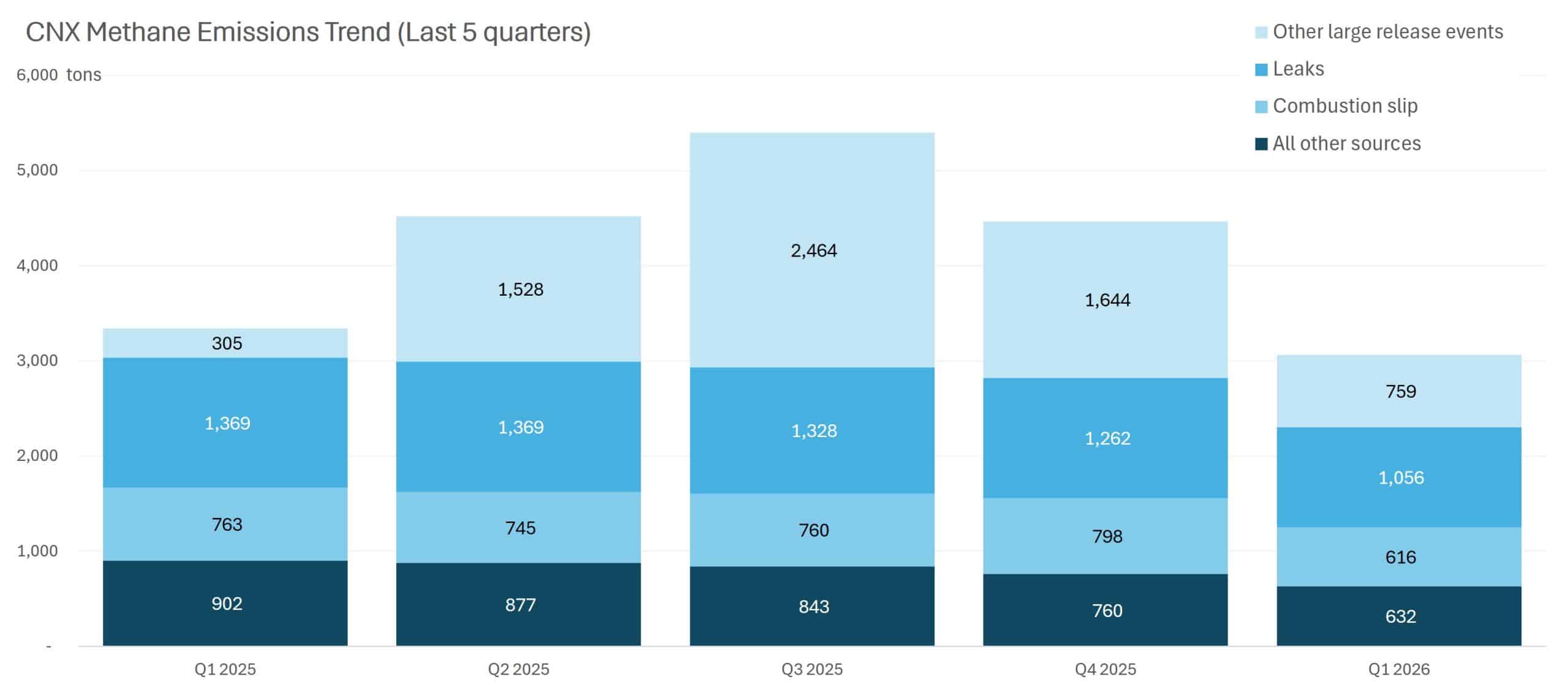
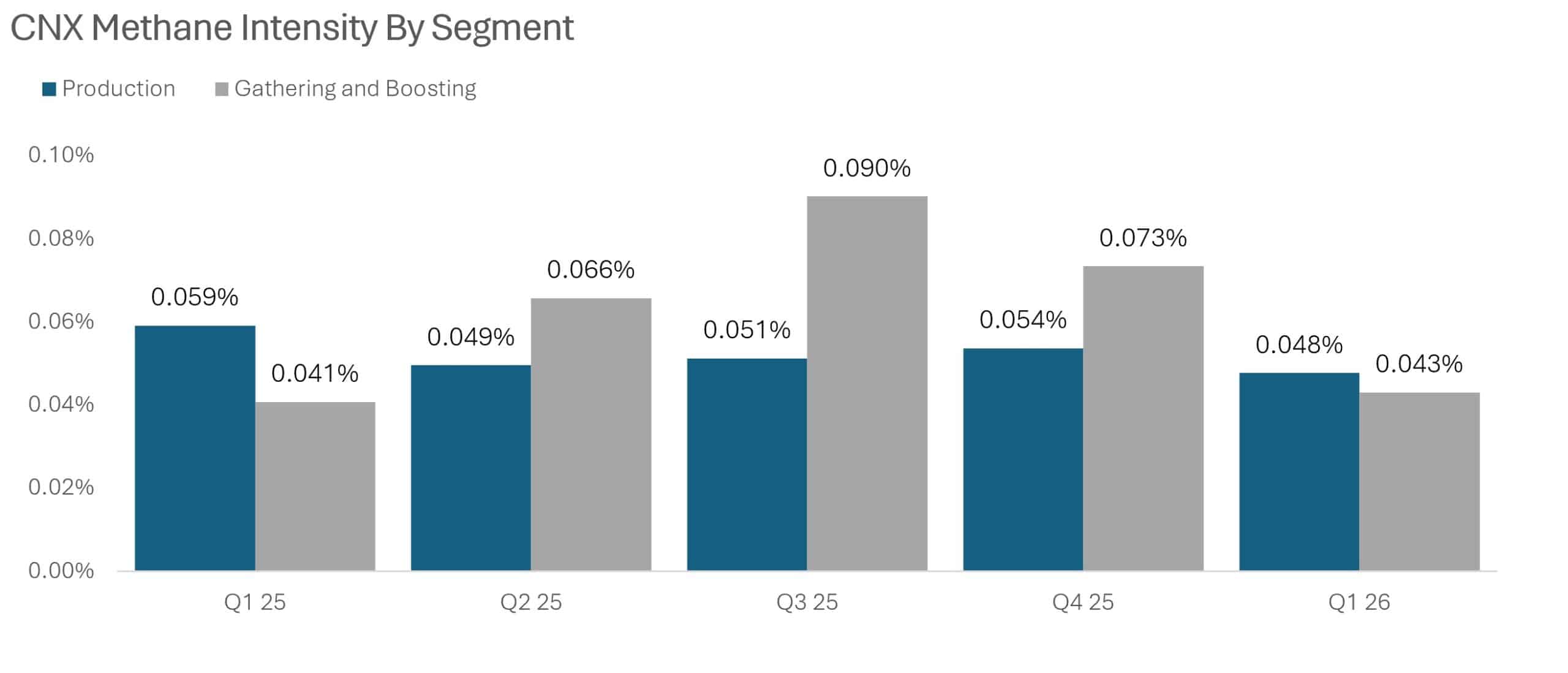
We observed that the new category of OLREs was a significant portion of our emissions during 2025. We learned from this and for 2026 the goal is straightforward: find releases faster, fix them sooner, and prevent them from occurring in the first place. We are doing this primarily through increased surveillance and machine learning and predictive maintenance (see more in our Innovation Spotlight below). We have seen some success in Q1 2026 and our results can be seen below:
Click image to view larger
Click image to view larger
Quarterly results can also be found at Quarterly ESG Scorecard – CNX
Governance & Accountability
Methane reduction is embedded in how we manage the business:
Emission Reduction Task Force
A cross-functional Emission Reduction Task Force (ERTF) prioritizes the highest-impact reduction opportunities.
- Members from various operational, environmental, engineering, and data management teams meet regularly.
Executive Compensation
Executive compensation is directly tied to methane intensity targets, reinforcing accountability at the highest levels.
See more here: Pay for Performance and ESG Metrics – CNX
Capital Deployment
Capital is deployed toward initiatives that deliver measurable emissions reductions and operational efficiency.
Global Frameworks
We measure our performance against leading global frameworks:
- OGCI target: Methane intensity well below 0.2%
- Global Methane Pledge: 30% reduction in emissions from 2020 levels by 2030
How We Reduce Methane
Our methane reduction strategy combines technology, process improvements, and disciplined operations:
Equipment & Facility Design
- Replacement of high-emitting pneumatic devices with low- or zero-emission alternatives
- Over the three-year period ending 2024, we reduced the number of non-ESD pneumatic devices by over 90%.
- Ongoing upgrades to dehydration systems and other infrastructure
Operational Improvements
- Enhanced management of liquids unloading events using plunger lift systems, and eliminating the flow to tank practice altogether where possible
- Liquids unloading is when it is necessary to expel built up water from a well bore to restore the productivity of a well.
- Process changes to reduce venting and improve emissions efficiency
Continuous Optimization
- Data-driven identification of emissions sources
- Regular evaluation and prioritization of reduction projects through the ERTF
Methane Beyond Our Operations
CNX also plays a leading role in reducing methane emissions beyond our own footprint.
Through our waste methane abatement initiatives, we:
- Capture approximately 9 million tons CO₂e of methane annually
- Convert emissions from coal mining into usable energy
- Reduce methane that would otherwise be released directly to the atmosphere
This work results in net methane reductions that exceed our operational emissions, amplifying our overall environmental impact.
See More – Remediated Mine Gas (RMG) – CNX

Click image to view larger
Detection, Monitoring & Transparency
We combine regulatory compliance with advanced monitoring and proactive detection:
Leak Detection & Repair (LDAR)
- Proprietary software tracks leaks from detection through repair
- Automated work orders ensure rapid response well within regulatory timelines
- Performance data is continuously refreshed and shared
Multi-Layered Detection Systems
- Ground-based OGI (optical gas imaging) surveys
- Aerial surveys using remote sensing technologies
- Continuous monitoring with stationary detection systems
- Drone-based inspections and advanced analytics
- Operational data signatures
CNX has Project Canary ground monitoring sensors that cover a substantial portion of the gas we sell to market. Project Canary delivers auditable and verifiable environmental attributes for Responsibly Sourced Gas and publishes those results to a registry that provides transparency to stakeholders.
Innovation Spotlight: Continuous Monitoring
At select facilities, CNX is deploying next-generation monitoring systems:
- Continuous methane detection with 24/7 camera-based monitoring
- Real-time operational data signatures streamed to operations control centers
- Ability to remotely shut down equipment if required
These technologies enhance both speed of detection and operational control, reducing potential emissions.
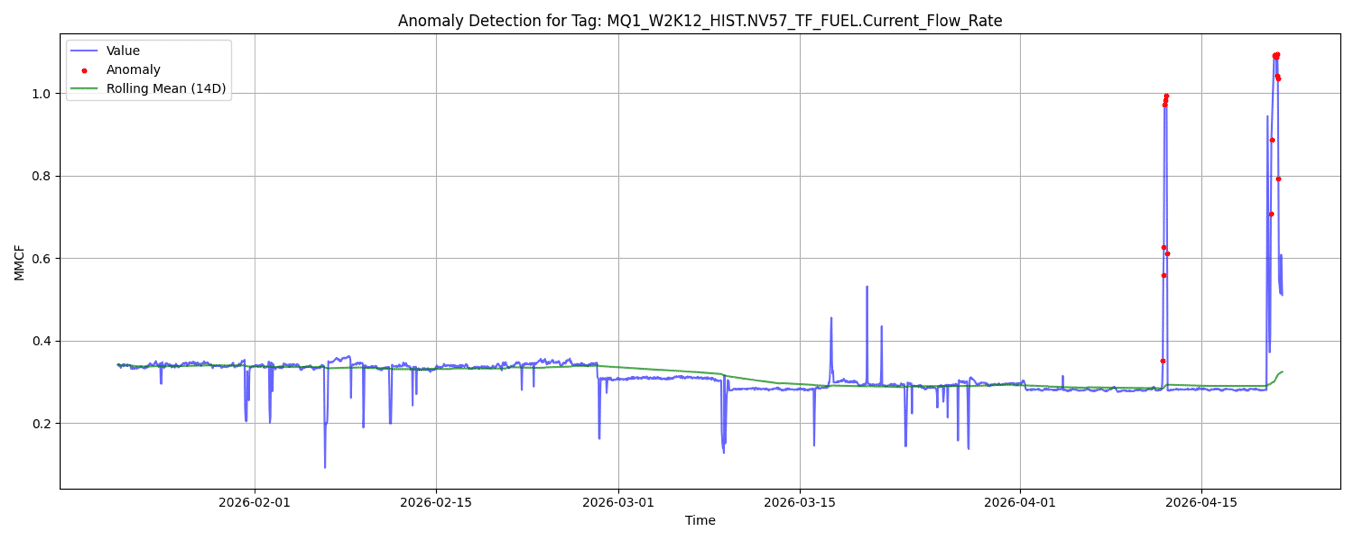
CNX’s AI and machine learning program moves the emissions management model from reactive to predictive. By applying machine learning to well and equipment performance data, CNX can identify conditions that historically precede methane releases – enabling intervention before a release begins. Machine Learning assisted analysis of OGI camera video and aerial sensor data accelerates source identification and prioritizes the highest emitting components for earliest attention. Operational data streams integrated with the emissions inventory enable real-time reconciliation so anomalies surface immediately. Applied consistently, this predictive approach reduces both the frequency and the magnitude of fugitive mission events.
Click image to view larger
Radical Transparency in Practice
CNX goes beyond traditional reporting by providing ongoing, site-level visibility into emissions performance.
Data is updated quarterly
Data is updated quarterly rather than annually to provide stakeholders with more current and actionable performance visibility.
Leak detection and repair metrics
Leak detection and repair metrics are openly disclosed to provide transparency into operational performance and mitigation effectiveness.
Asset-Level emissions
Asset-level emissions sources are transparently documented and continuously monitored.
Industry Collaboration & Independent Validation
CNX is a founding participant in the Appalachian Methane Initiative (AMI), a coalition of leading U.S. natural gas companies, independent methane monitoring survey providers, technical consultants, and top-tier universities engaged in scientific analysis focused on improving methane measurement and reduction across the basin.
Key Findings from Recent Basin-Wide Analysis include:
- The Appalachian Basin has the lowest methane intensity of any major U.S. oil & gas basin
- Methane intensities across AMI operators measured below 0.1%
- Coal mining is a significantly larger source of methane emissions than oil and gas operations
This work—supported by independent scientific institutions—helps ensure that emissions data is rigorous, scalable, and representative.
Regulatory Alignment & Methodology
CNX calculates methane emissions using the EPA’s Subpart W Greenhouse Gas Reporting Program, incorporating:
- Direct measurement data
- Engineering calculations
- Emission factors derived from empirical research
- Site-specific operational data
Effective methane management begins with a knowledge of precisely what you have – we maintain a comprehensive inventory of every piece of equipment and every event that generates methane emissions across our operational footprint. This detailed inventory of emissions sources ensures accuracy, completeness, and credibility in reporting and allows us to identify the highest impact reduction opportunities, track progress with precision, and ensure that mitigation efforts tarte the sources that matter the most.
Click image to view larger
Our Commitment
Minimizing methane loss is both an environmental and operational priority.
We will continue to:
- Invest in advanced detection and monitoring technologies
- Improve operational practices to reduce emissions further
- Provide transparent, real-time performance data
- Align our business strategy with measurable environmental outcomes
Deliver reliable energy while continuing to reduce methane emissions—and prove it through transparent, data-driven performance.
Leak Detection and Repair Program – Transparent Monthly Data
CNX’s leak detection and repair (LDAR) program is designed to mitigate methane emissions related to unintended releases. Its effectiveness is based on how accurately we can identify the source and limit the duration of a leak. Optimal identification requires frequent deployment of leak detection technology across all potential sources, while limiting duration is measured by (1) how quickly new leaks can be found and (2) how quickly the leak is repaired after it is found. The charts below are refreshed monthly with current data to provide transparency around the effectiveness of our LDAR program. The Leak Details slide provides all the significant information that we collect for each of the leaks we find and allows the user to see this data in tabular form by right clicking the chart.
OGI Surveys
As prescribed by EPA regulations, we conduct quarterly leak detection surveys with an OGI camera at all major CNX well sites and compressor stations. Additionally, we voluntarily conduct quarterly OGI surveys across sites that have less frequent requirements. These surveys cover any component on the site that has the potential to emit fugitive emissions of methane, such as valves, connectors, pressure relief devices, open-ended lines, flanges, covers and closed vent systems, thief hatches or other openings on a storage vessel, compressors, instruments, meters, and yard piping.
If a leak is detected during the survey, we utilize proprietary software, developed in-house, to provide automated repair work order notifications and leak detection tracking. This process allows for timely repair of leaks well within regulatory requirements.
Advanced Methane Detection Surveys
We complement our regulatorily required OGI surveys with multiple detection technologies in combination with one another to focus and optimize our methane mitigation efforts. These alternative advanced methane detection surveys range from satellite surveys, aerial flyovers using remote sensing technology that screen hundreds of sites in a single deployment, to on-site sensor networks that deliver continuous real-time monitoring.
For these supplemental surveying techniques, we have developed a process where we investigate all methane detections. Any detection that is determined to be a leak is logged into our LDAR program where it is tracked to timely repair.